 Social Suit
Educational information, not individual medical or legal advice. Practical examples are hypothetical and do not describe clients or study participants. This article is not represented as reviewed by a clinician or attorney. How we prepare our guides.
Describe the event before judging the plan
A scrolling setback is an occasion when your use moves away from the intention you set. You might continue through recommendations after answering a message, stay online beyond a planned break, or reopen a feed after beginning an evening routine. The term does not establish a diagnosis or mean that every long session is a problem. It identifies a mismatch you want to understand. Begin with the actual event: when it happened, what you meant to do, what happened instead, and which activity was affected. That description creates a place to make a useful repair.
Avoid turning one event into a statement about your entire ability to change. A plan can work under some conditions and fail under others. Stress, fatigue, illness, an unexpected message, a difficult task, and an unclear response expectation can all change a routine. Naming the condition is not making an excuse; it is identifying the situation the next plan must handle. 'I browsed while avoiding the first paragraph of a difficult assignment' provides more information than 'I have no discipline.' The first statement points toward both a browsing route and a task that may need support.
Keep the account proportional. If you delayed a household task, say which task and by how much if you know. If you missed a conversation, note that. If you simply disliked how the session felt, describe the feeling without inventing a major consequence. Exaggeration can make a practical repair seem inadequate because the problem has been described as total collapse. Understatement can hide a serious recurring impact. A factual account allows you to distinguish an inconvenient afternoon from a pattern that deserves broader professional support.
The first action after a setback is often ordinary restoration. Close the unplanned route when you notice it, return to the next manageable activity, and make a brief note if the event is useful to review. You do not need to complete a full analysis while you are tired or distressed. The review can happen later at a chosen time. Separating immediate restoration from later reflection keeps the setback from becoming another long session devoted to monitoring, arguing with yourself, or searching for a perfect explanation in the same feed.
Find the point where the purpose changed
Reconstruct the beginning of the visit. You may have opened the phone for a legitimate task: checking transit, reading an assignment, answering a friend, or finding a reference. That useful purpose can remain worth preserving even if the session drifted afterward. Identify the moment it ended. Did you finish the reply and tap a recommendation? Did a search result lead to unrelated clips? Did a group discussion prompt repeated reaction checks? The transition is often a more useful target than the entire app or device.
If you cannot remember the exact transition, identify the last purposeful item you recall and the first point when you noticed drift. Do not force a detailed reconstruction by reopening every item. That can create more exposure without improving the account. A rough description may be enough to choose the next experiment. For example, you might know that a useful tutorial became a recommendation stream even if you cannot name the third clip. The guide on recognizing the short-video rabbit hole explores that transition in more detail.
Distinguish a chosen extension from an unnoticed extension. You may have decided to spend a leisure period online and later concluded that the timing did not fit your day. That is a planning issue. Alternatively, you may have continued without recognizing that the original task was complete. That is a route and stopping-point issue. Both can be changed, but the repair differs. A clearer schedule helps the first; a direct route or visible endpoint may help the second. Treating both as the same failure loses the information that makes the next plan precise.
Also consider whether the original purpose was too broad to finish. 'Catch up on everything' or 'find out what is happening' can leave the endpoint entirely to the feed. Replace it with a question, selected sources, or a defined period when appropriate. If the session involved uncertainty, write what remains unknown and when a meaningful update is likely to matter. The guide on a practical way to reduce doomscrolling explains how an unanswered question can be acknowledged without making continuous checking the only available response.
Restore the next normal boundary
After an overrun, return to the next boundary that already has a useful purpose. If you planned a feed-free meal, protect that meal. If you intended to leave recommendations during a work interval, begin the next interval with a clear task. If the evening routine has started, restore the routine rather than reviewing the entire day online. This keeps one event from spreading into the rest of the schedule. You are not erasing what happened. You are preventing the repair itself from becoming a reason to postpone ordinary activity further.
Avoid compensating automatically with an extreme ban. A broader restriction may sometimes be a deliberate choice, but it should follow a clear reason and preserve necessary functions. Imposing it while frustrated can create practical problems and encourage a cycle of dramatic rules followed by abandonment. A neutral repair is often smaller: reduce the alert that reopened the app, define the next check, prepare the work step, or move the shortcut that began the visit. The size of the response should match the information you gathered about the sequence.
If an important task was missed, address the task directly. Send an appropriate update if someone needs one, reschedule what can be rescheduled, or complete a manageable next step. Do not make the person affected responsible for evaluating your entire digital habit. A concise factual explanation can be enough. The goal is to repair the practical consequence and then improve the route that contributed to it. Excessive self-criticism can consume time while leaving the actual responsibility unresolved. Restoration is an action, not a prolonged judgment about whether you deserve to resume the day.
Leave room for rest. If the setback occurred late at night or during illness, the next useful action may be a simple routine rather than trying to recover every lost minute. A plan that treats all overrun time as a debt can make ordinary needs harder to honor. Ask what matters now and what can wait. The boundary should support sleep, relationships, and responsibilities according to the circumstances. It should not replace app demands with a new demand to compensate perfectly for the app session.
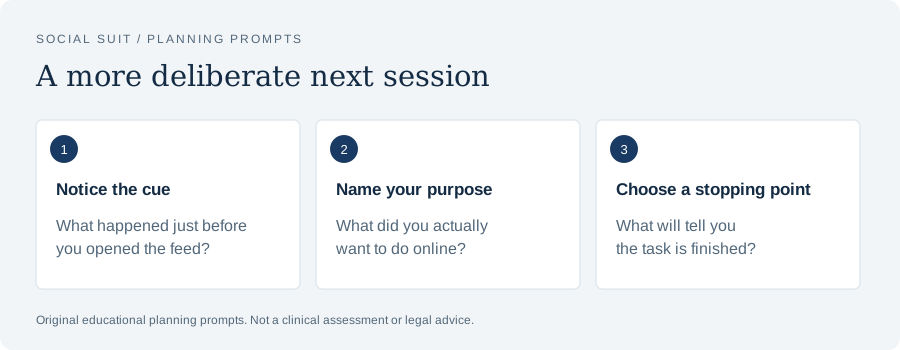
- Notice the cueWhat happened just before you opened the feed?
- Name your purposeWhat did you actually want to do online?
- Choose a stopping pointWhat will tell you the task is finished?
Check whether the boundary was realistic
A boundary can fail because it did not fit the situation. Perhaps the chosen time overlapped with necessary coordination. Perhaps the limit grouped work and entertainment together. Perhaps the plan assumed a quiet evening during a recurring caregiving window. Inspect those mismatches before concluding that more determination is needed. The guide on setting limits you can realistically keep emphasizes a clear purpose, recognizable endpoints, and practical exceptions. A workable boundary can be firm about optional drift while flexible about functions that genuinely need to remain available.
Ask what the boundary protected. An arbitrary number may be harder to interpret than an uninterrupted meal, a selected study interval, or a bedtime sequence. If the purpose was unclear, rewrite it in everyday terms. The endpoint should be connected to that purpose. A timer can support the plan, but it cannot tell you why stopping matters or what happens next. If you routinely override the reminder, inspect whether the interval is appropriate, whether the route remains unbounded, and whether the next activity is ready to begin.
Review exceptions. A useful exception describes a function, such as answering a necessary message directly, not a broad permission to keep browsing because something might be important. If an exception repeatedly expands into the feed, narrow the route. If it is too restrictive to preserve a real obligation, broaden it honestly. You want an arrangement you can explain and test. A rule that pretends a necessary task does not exist will repeatedly fail, while a rule that treats every interesting item as necessary will reveal little about the intended boundary.
Compare ordinary circumstances with unusual ones. Travel, an urgent event, illness, or a major deadline may justify a temporary plan. State what changed and when to review it. An exception can be legitimate without becoming the permanent default. Conversely, if the same circumstance appears every week, it is part of ordinary life and deserves a built-in arrangement. Labeling a recurring responsibility as an unexpected disruption can prevent you from designing for it. The repair should fit the life you actually have, including its predictable variation.
Separate the cue from the need
A cue is what starts the route. A need is what you are trying to obtain or avoid. The cue might be a vibration, a pause, an icon, or a location. The need might be information, connection, entertainment, relief from discomfort, or escape from a difficult task. These can overlap, but changing one does not necessarily change the other. If an alert began the visit, reducing that alert may help. If loneliness kept the visit going, the plan may also need a more direct form of connection. A useful review considers both without making a diagnosis from a single event.
Ask what the feed provided during the session. It may have offered humor, a sense of company, novelty, or temporary distance from an unpleasant task. Acknowledging that function does not mean the unwanted consequence was acceptable. It helps you choose an alternative that has some chance of serving the same need. A plan to replace social browsing with a solitary chore may not fit if the main need is contact. A plan to remove every pause may not fit if the need is rest. The alternative should be practical and connected to the function you observed.
For task avoidance, inspect the task's first step. Is the instruction clear? Is the scope manageable? Do you need information or permission from someone else? Is the task emotionally difficult? You might need to write a question, divide the work, ask for help, or seek support for a broader concern. Moving the phone can create a pause, but the task still needs a route into it. The guide on single-tasking when your phone is nearby explores how a visible work product can make a protected interval easier to assess.
For connection, identify the people or spaces you value. A direct message, a planned call, a smaller community, or a deliberate visit may preserve the benefit with less unbounded browsing. Accessibility, distance, and available support matter. Do not assume that offline contact is always available or preferable. The practical question is whether a narrower route can meet the need. If it cannot, a timing or content boundary may be more appropriate than withdrawing from the platform entirely. A repair that ignores a meaningful benefit is less likely to remain useful.
Review alerts that restarted the visit
If the setback began or resumed through a notification, examine the category. Did it carry a direct message, a required update, a recommendation, or a promotional invitation? The app name alone may combine all of those. Keep necessary contact and reduce the categories that do not serve the protected period. Read current settings and official help material, since options and labels can change. The guide on making your notifications less demanding provides a fuller way to assess purpose, urgency, and delivery without treating every alert as equally important.
Consider the surface that mattered. A sound can interrupt, a vibration can prompt reaching, a banner can expose content, and a badge can create a persistent feeling of unfinished work. A setting that changes one may leave another active. Check secondary devices if the same alert appears on a watch or computer. The aim is not to silence every device. It is to understand the route that actually restarted the session and decide which part should remain. Test the preserved signal if an important responsibility depends on it.
Clarify urgent contact. If another person relies on a timely response, agree on a route that fits both people's communication needs. Some people cannot use calls easily or have limited connectivity, so do not assume one universal method. A reliable distinction between routine and urgent can reduce manual checking after alerts are quieter. Without that distinction, you may feel compelled to open the app repeatedly to make sure nothing has arrived. The repair then needs an expectation as well as a setting. Technology cannot resolve an unstated social rule on its own.
After changing delivery, watch the result. Did the protected activity become easier? Did useful contact arrive? Did you begin checking manually more often? Those findings reveal whether the alert was the main cue or only one part of the sequence. If manual checking remains, inspect the uncertainty or task difficulty behind it. Do not keep adding notification controls without a new observation that justifies them. A specific repair should answer the specific question raised by the setback. Broader changes can follow later if the evidence points there.
Add a pause without making useful access fragile
Friction can create a moment of recognition at an automatic route. You might move the shortcut, use a direct bookmark, or place the phone outside immediate reach during one activity. Choose the step based on the sequence you observed. The guide on using friction to interrupt a scrolling habit explains how to match the change to the cue. The step should be large enough to notice and small enough to remain compatible with necessary access. Inconvenience is a cost to assess, not proof that the experiment is effective.
Preserve account security and ownership. Do not create a habit barrier by making recovery unreliable, sharing credentials casually, or disabling important access without understanding the consequences. A reversible change is usually enough to test whether a pause helps. If an optional login step is practical, use the service's official guidance and keep legitimate recovery available. If it is burdensome or risky, choose another form. The repair should not introduce a problem more serious than the unwanted session it is intended to address.
Pair the pause with a question or next action. 'What did I open this for?' can make the route visible. A note of the next task can direct attention after the pause. Without that connection, the extra step may become part of the habit: open the folder, tap the app, continue as before. If that happens, revise the mechanism rather than escalating the obstacle indefinitely. You are looking for a place to choose, not a technical contest in which every bypass demands a stronger restriction.
Count deliberate decisions honestly. If you pause and choose a planned leisure visit, the friction may have worked. The goal was awareness and fit, not automatic refusal. If the visit then runs long, review its endpoint separately. A plan that treats every opening as failure can hide the distinction between intentional use and unwanted drift. That distinction is central to a useful repair. Keep enjoyable and supportive use available while changing the route or timing that displaced something important.
Prepare for the situation that tripped you up
A setback can identify a recurring situation worth planning for. If tired evenings lead to open-ended browsing, decide the endpoint earlier and prepare a simple routine. If waiting leads to checking, choose an available alternative for that specific pause. If a difficult message leads to reaction monitoring, decide how you will respond and when you will review replies. The plan should name the situation, the useful response, and the return point. A small preparation can reduce the number of decisions you must make while already absorbed in the feed.
Keep alternatives realistic. A short queue cannot accommodate a long walk. A shared workspace may not allow loud audio. A person with accessibility needs may require a device for the alternative itself. Choose something that fits the actual duration, environment, and abilities. The alternative can be ordinary: a note, a change of posture, a direct message, a prepared task step, or simply waiting. You do not have to transform every pause into an achievement. Its purpose is to provide another available route when the old cue appears.
If the situation involves a recurring work or school obligation, clarify expectations. Perhaps a team sends nonurgent updates late, or an assignment platform mixes necessary material with a feed. Define when the information needs attention and how you will reach it. A direct task route may help more than avoiding the app entirely. Where you lack control, state the limitation and focus on what can change. A repair should not blame you for meeting a real requirement, nor should it treat the requirement as permission for every unrelated recommendation that follows.
Give the preparation a review point. After a few comparable opportunities, ask whether it helped and what it cost. If the original situation has not occurred, wait for a relevant opportunity rather than declaring success from silence. If the plan works only under unusually favorable conditions, adapt it. The useful output is a response that fits enough of your real circumstances to remain practical. A setback is information about those circumstances. The repair should turn that information into a route you can actually use next time.
Avoid turning the review into another rabbit hole
Searching online for the perfect explanation can become a continuation of the same pattern. You might read endless productivity advice, compare restrictions, or take unvalidated quizzes after a long session. That may feel like repair while delaying the next ordinary activity. Set a modest review task: describe the event, identify one likely mismatch, and choose one adjustment. If you need authoritative information or professional help, use the appropriate direct route. The review does not need a complete theory of every digital habit before you can restore a meal, a task, or an evening routine.
Be careful with labels. The word addiction is sometimes used casually for frequent use or difficulty stopping, but those descriptions are not interchangeable with an individualized professional assessment. A viral checklist cannot determine the full explanation for your experience. Focus on observable behavior and impact. If you want an assessment, seek a qualified professional who can consider the wider situation. The practical concern remains real even when you do not assign a diagnosis. You can ask for help because the pattern troubles you, not because a feed has supplied a dramatic name for it.
Limit repeated inspection of reports. A device total can inform a baseline, but checking it constantly may become another monitoring habit. Review it at a useful interval and add context from the event. Avoid using the number as a daily verdict about worth or progress. A person may have high necessary use, or a low total that still repeatedly interrupts valued activities. The guide on building a screen-time baseline that is actually useful explains how to make the report a tool for decisions rather than a substitute for understanding.
End the review with an action outside the analysis. Restore the next boundary, prepare the task, communicate a needed update, or schedule appropriate support. A repair becomes concrete when something changes in the route or responsibility. If the same event repeatedly leads to lengthy self-analysis without a practical adjustment, simplify the review. You may need another person's help to identify the next step. Reflection is useful when it informs action; it does not have to become an additional obligation that consumes the time the feed already displaced.
Handle the evening with proportionate care
If the setback occurs near bedtime, prioritize a workable evening sequence. Finish necessary communication through the direct route, note any task that can wait, and leave nonessential recommendations. Preserve the functions you need overnight, such as accessibility, caregiving, or an alarm. Test settings when appropriate. Do not assume that everyone can charge a phone in another room. The practical arrangement is the one that reduces optional reopening while remaining dependable. The guide on protecting the last hour before bed develops that sequence more fully.
The National Heart, Lung, and Blood Institute's healthy sleep guidance discusses regular routines and avoiding bright artificial light near bedtime. That supplies general context, not proof that the scrolling event caused a particular sleep problem. If you notice a pattern, describe timing and impact and seek healthcare advice for persistent concerns. A browsing adjustment can support an evening routine without being a treatment plan. Keep observations distinct from explanations that would require assessment or stronger evidence.
Avoid compensating for a late session by creating another late task. You may be tempted to finish all delayed work, reorganize every setting, or write a long review before allowing yourself to rest. Ask what is genuinely necessary now. The remainder can be noted for tomorrow. This is a practical prioritization, not permission to ignore responsibilities. A clear next-day step can protect the responsibility while preventing the repair from extending the disruption. The plan should support ordinary needs rather than treating rest as something you must earn after perfect digital behavior.
If nighttime checking repeats, examine the route. An alert may wake you, the device may be within automatic reach, or a wakeful moment may prompt a search for distraction. Those are different observations. A placement change, a tested urgent contact route, or professional help for a broader sleep concern may be relevant. Do not assume one explanation from the presence of the phone. Bringing concrete examples to a professional can make the discussion more useful than saying only that you spend too much time online.
Support another person without becoming their monitor
If someone tells you about a setback, ask what they intended and what they want help with. They may need practical problem-solving, a brief conversation, or support for a broader concern. Avoid immediately prescribing the strongest restriction you can imagine. Their device may serve functions you do not see. A respectful discussion can identify which benefit to preserve and which route to change. You can help them prepare a next step without taking control of every decision or treating the event as evidence that they cannot manage their life.
Agree on the role you will play. A friend might offer a check-in at a chosen time, join a planned activity, or help clarify a task. Those are different from continuous surveillance or demands for screenshots. The person should know what information is shared and why. If a more structured support arrangement is desired, discuss its limits and review it. Do not quietly turn ordinary friendship into responsibility for enforcing another person's digital behavior. Support should make useful choices easier and preserve trust, not create a new source of pressure.
For children and teenagers, combine clear expectations with curiosity. Ask what the session provided, what became difficult, and which practical support might help next time. The U.S. Surgeon General's advisory on social media and youth mental health discusses broader benefits, risks, and protective action, but it does not assess an individual child's setback. The household response should fit age, school requirements, accessibility, and supportive contact. Adults can model a neutral review of their own drift instead of presenting perfect behavior as the standard only for children.
Respond separately to serious safety concerns. If the event involved threats, bullying, exploitation, or other harmful interactions, the priority is appropriate safety and support. A timer or app limit does not resolve the underlying issue. Handle relevant records carefully and avoid unnecessary redistribution of distressing material. The person should not have to repeat exposure to prove that something happened. Practical habit changes can follow, but they should not obscure the need to address the actual harm or seek appropriate professional assistance.
Know when the pattern deserves wider support
One inconvenient session can often be reviewed through a practical adjustment. A recurring pattern that affects sleep, responsibilities, relationships, or daily functioning may deserve a broader conversation. You do not need to establish a particular diagnosis before seeking help. Explain why the pattern matters and what you have tried. A qualified professional can consider the behavior alongside mood, stress, attention, sleep, and other circumstances. A general guide cannot determine causation from your notes or tell you which treatment would fit. The value of the notes is clearer communication.
Bring a few representative examples rather than an exhaustive archive. Include the intention, the sequence, the consequence, and the context. Mention online benefits you want to retain. Explain which practical changes helped and which did not. This can prevent the conversation from being reduced to a total number of minutes. A professional may ask further questions or suggest ways to assess the broader situation. Let that process remain individualized. An app report, self-test, or another person's experience should not be treated as a substitute for it.
If there is immediate danger or an urgent health concern, use appropriate urgent assistance rather than waiting for a routine habit review. This article is about responding to unwanted browsing, and its techniques are not designed to handle emergencies. Keep the support route suited to the actual concern. For nonurgent difficulties, a planned conversation can still be worthwhile even if the pattern does not look dramatic to others. The effect on your life is the reason to seek help, and a concrete description can make that effect easier to understand.
Continue manageable practical changes while seeking support when they fit your circumstances. A clearer message route, a prepared work step, or a quieter recommendation category may still help. Do not treat them as proof that you should solve everything alone, or as evidence that professional help has failed if the pattern persists. Different tools address different parts of the situation. A broader assessment can coexist with small environmental adjustments. The plan should remain proportionate, accessible, and open to revision as you learn more.
A hypothetical setback repaired in stages
Imagine a hypothetical student who opens a platform to find an assignment update. They locate the instruction, then watch several suggested clips and lose the planned study interval. Their first step is to record the assignment requirement elsewhere and prepare one manageable problem. They do not spend the rest of the evening deleting every app or trying to make up all the lost work at once. They identify the practical consequence and the next task. The immediate restoration is small enough to carry out while the event is still fresh.
During a later review, the student maps the transition: the assignment instruction was complete, but the platform remained open and supplied recommendations. They choose a direct route to the assignment area and a visible note asking what the visit is for. They also prepare the first study step before checking updates. The route and the task support serve different functions. This is a hypothetical example, not a claim that every platform offers the same controls or every assignment fits the same method. The actual arrangement would need to match the student's tools and requirements.
The next week, one visit stays bounded, while another drifts after a difficult message from a friend. The student records that difference. The second event may need a direct conversation or appropriate support rather than a stronger assignment restriction. They preserve necessary contact and clarify when a message needs immediate attention. This keeps the repair tied to the observed need. The first adjustment helped with the assignment route; it was never meant to solve every emotional situation that might lead to browsing. The review can acknowledge both findings honestly.
At the end of several opportunities, the student keeps the direct route, simplifies an unhelpful timer, and uses a planned check-in for routine group updates. Study intervals become easier to start, although some sessions still drift. The result is practical and limited. It does not establish a diagnosis, a treatment effect, or a guarantee about future behavior. It shows how a setback can lead to a more precise arrangement. The student has a clearer account of what works and a concrete example to discuss if broader support becomes necessary.
Define progress by restored choices
Progress can mean noticing drift sooner, returning to the next activity more easily, preserving useful contact through a direct route, or making a boundary fit a recurring responsibility. It does not have to mean never having another setback. Choose the measure that reflects the original concern. If the concern was missed study, assess the study interval. If it was a disrupted meal, assess the meal. If it was distressing news exposure, assess the information route and transition. The measure should follow the practical impact rather than a general demand for flawless behavior.
Notice repairs that become simpler. At first, you may need notes and deliberate setup. Later, the useful route may feel ordinary. That is a reason to reduce monitoring, not add new restrictions to keep the process dramatic. Review when circumstances change or the original mismatch returns. A durable plan has a clear purpose and enough flexibility to accommodate real life. It should not require a daily public score or a constant debate about whether you are improving. The attention recovered can go toward the activities the plan was meant to protect.
The social media resource collection links this review with limits, friction, notifications, sleep, and interpreting patterns. Use the guide that matches the point of difficulty. A setback can reveal a delivery problem, a missing endpoint, an unclear task, a need for connection, or a broader concern. Those findings deserve different responses. The resources offer practical questions and examples, not an individualized assessment. If safety or health needs are significant, involve the appropriate support rather than expecting another browsing rule to address the whole situation.
After a scrolling setback, the useful sequence is simple: describe what happened, restore the next ordinary activity, identify the point of drift, and make one proportionate repair. Preserve what the technology does well and change the route that displaced something important. Review the result under comparable conditions. Seek help when the pattern affects daily functioning or the concern exceeds a settings problem. The event becomes useful information when it leads to a clearer next choice, rather than a verdict that makes the rest of the day harder to begin.
Keep any accountability arrangement specific. If another person is helping, agree on whether they will ask about a task, join an activity, or discuss the pattern at a chosen time. They do not need unrestricted access to your accounts or private conversations to provide ordinary support. Review whether the arrangement helps both people and end or revise it when its purpose has been met.
Sources and further reading
These primary resources provide context. Our practical examples and planning suggestions are original educational material, not validated treatment protocols. Linked organizations do not endorse Social Suit.