 Social Suit
Educational information, not individual medical or legal advice. Practical examples are hypothetical and do not describe clients or study participants. This article is not represented as reviewed by a clinician or attorney. How we prepare our guides.
Support comes before a complete explanation
When a child tells you that something online upset them, your first task is not to obtain a perfect account. It is to understand whether they are safe and help them access the support they need now. They may be frightened, embarrassed, confused, angry, or unable to describe the event clearly. A calm acknowledgment can make the next step easier: “I am glad you told me. Let us work out what you need.” This response does not promise that everything will disappear. It tells the child that they do not have to handle the situation alone.
An upsetting experience can mean many things. A child may have seen disturbing content, received an abusive message, felt excluded, been pressured for private information, or encountered a direct threat. These situations require different responses. Begin with the immediate safety question, then gather the information needed for the relevant action. Do not treat every incident as ordinary screen-time conflict, and do not assume that every upset reaction proves a clinical condition. The facts and the child’s functioning matter.
This article offers general educational guidance and original practical examples. It is not a diagnosis, therapy plan, legal assessment, or substitute for emergency support. If someone is in immediate physical danger, use appropriate emergency services. In the United States, call 911 for a life-threatening emergency; the 988 Suicide & Crisis Lifeline provides suicide and mental-health crisis support. Do not delay urgent help while trying to complete a family discussion or report form.
For a broader conversation about online life, use our guide to talking with a teenager about social media. After an upsetting disclosure, however, the sequence is different: safety, immediate support, appropriate action, and later review. The child does not need to prove that they followed every rule before receiving help. A broken household boundary can be discussed separately when the immediate concern is stable enough to do so.
Ask what would help in the next few minutes
Offer a few simple options rather than demanding a full emotional explanation. The child may want to leave the screen, sit with you, have a drink, move to a quieter place, or contact another trusted person. Ask which option feels useful. A small choice can restore some control without making the child responsible for solving the incident. If they do not know, provide a calm place and remain available. The response should fit the child’s age, communication needs, and current state.
Do not insist on a particular display of emotion. Some children cry, some become quiet, and some appear matter-of-fact. Their response does not necessarily reveal the seriousness of the event. A child may minimize an experience because they are embarrassed or unsure how an adult will react. Another may be visibly distressed by content an adult would dismiss. Take the account seriously and ask focused questions. Avoid requiring them to perform distress to justify support.
Keep the immediate environment manageable. Reduce unnecessary noise or questioning if that helps. If other family members are present, consider a private space where the child does not have to explain in front of an audience. Do not make secrecy the goal; appropriate adults may need information. Privacy at the first moment simply gives the child room to speak and reduces unnecessary exposure. The conversation should be about their needs, not about satisfying everyone else’s curiosity.
If the child wants to stop talking temporarily and there is no urgent risk requiring more information, explain how you will return to the topic. A clear later check-in is better than abandoning the concern or repeatedly asking whether they are ready every few minutes. If safety questions remain unanswered, state what you need to know now and why. The amount of immediate detail should follow the action required, not the adult’s desire to understand every part of the story at once.
Check whether the source can still reach the child
Ask whether a person is continuing to message, whether the content keeps appearing, or whether there is a planned meeting or another immediate contact route. The answer helps you identify what must change now. A child who saw a disturbing video has a different exposure problem from a child receiving repeated threats. A public post may create effects at school even if direct messages stop. Map the relevant routes without turning the first conversation into an exhaustive account inventory.
If blocking or another platform control is appropriate, use current official guidance. Interfaces and effects change, so do not assume that a remembered control removes every form of contact. A person may still reach the child through another account or offline setting. Explain what the action is intended to do and what it cannot guarantee. If the behavior is threatening, coercive, or exploitative, seek appropriate safety support rather than treating a block as the entire response.
Preserve necessary functions while reducing the unwanted route. The child may need the device for school, safety, accessibility, or contact with supportive people. A broad removal of access can create new problems or discourage future disclosure. Sometimes a temporary restriction is necessary, but identify its purpose and practical alternative. The goal is protection from the concerning interaction, not a symbolic removal of every digital activity regardless of function.
Check the route again after the initial action. Ask whether contact continues and whether the child knows what to do if it resumes. A simple help pathway is useful: do not engage with a threatening person, tell the trusted adult, and use appropriate official guidance. Avoid encouraging the child to test whether the person is still active or search for the content repeatedly. That can create renewed exposure without helping the immediate safety plan.
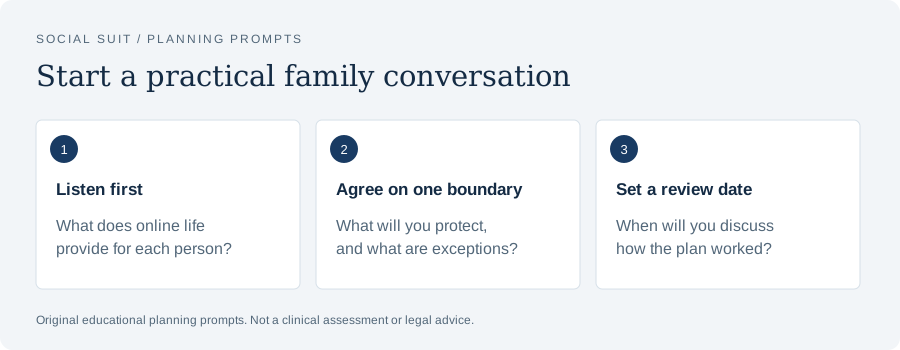
- Listen firstWhat does online life provide for each person?
- Agree on one boundaryWhat will you protect, and what are exceptions?
- Set a review dateWhen will you discuss how the plan worked?
Listen for the child’s meaning, not only the content category
The same type of content can affect children differently. A child may be upset because it resembled a real experience, because they fear it will happen to someone they love, or because another person used it to humiliate them. Ask what felt most difficult about the event. Do not force an explanation they cannot give. The answer may help you choose support, but the child can deserve care even when they cannot articulate why the reaction is strong.
Avoid dismissive comparisons. Saying that the material is not as bad as something else or that other children handle it can make disclosure harder. You can explain relevant context without ranking distress. A more useful response is to acknowledge the effect and clarify the next action. If the child misunderstood a fictional scene or a misleading claim, discuss that carefully. Correcting the misunderstanding and supporting the feeling can happen together.
Ask whether the experience changed a practical concern. They may fear going to school, worry that a private image will spread, or feel unable to sleep. These concerns point to specific support needs. A generic instruction to take a break from the app may not address them. The child may need a school plan, official reporting, a healthcare conversation, or reassurance about what is known and unknown. Use the actual concern to guide the response.
Do not interpret every reaction through your own experience. You may have encountered similar material without distress, or have a different understanding of the group’s dynamics. The child’s account contains information you do not have. Listen for it. At the same time, retain your role in assessing safety and seeking help. Empathy does not require accepting an unsafe plan; it requires understanding the experience well enough to explain the safer next step.
Avoid promises you cannot keep
Promises such as “You will feel fine tomorrow” or “Nobody will ever see that again” may be comforting in the moment but are outside your control. Offer commitments you can fulfill: you will help identify the next action, handle information carefully, seek appropriate support, and check in. A child can rely on a realistic commitment even when the outcome is uncertain. Honesty about uncertainty is not the same as leaving them unsupported.
If a report is needed, explain what the process may do without guaranteeing removal or punishment. A platform may review the content, request more information, or not act immediately. A school may have its own process and limits. An official service may need specific facts. The child should know that the adult will use the appropriate route and continue support, rather than making the child’s well-being depend on a promised result that may not arrive.
Do not promise absolute secrecy. Serious safety concerns may require trusted adults or qualified services. Explain who may need information and why, and keep sharing limited to the purpose. The child may be afraid that the whole family or school will hear the story. Careful communication can reduce that fear. If an urgent action occurs before you can discuss it, explain afterward when appropriate. Avoid treating the disclosure as public material.
If you previously made an unrealistic promise, correct it plainly. You might say that you cannot guarantee every copy disappears but can help use the current reporting process. The correction may be disappointing, yet it is more trustworthy than defending the original assurance. Pair the uncertainty with a concrete next step. A child benefits from knowing what the adult can do now and what requires another person or service’s decision.
Handle records without repeated exposure
Some incidents require relevant records for reporting. For cyberbullying, StopBullying.gov’s reporting guidance discusses documenting relevant details, avoiding forwarding abusive messages, blocking, and reporting. Keep the record connected to that purpose. Note dates, context, and identifiers where appropriate, and limit access. The child should not have to review the material repeatedly while the adult organizes it. Ask what information the current process needs rather than collecting everything indiscriminately.
Sensitive or potentially illegal material requires particular care. Do not download, copy, or circulate intimate content casually under a generic instruction to preserve evidence. Seek current official guidance for the type of material and jurisdiction. This article cannot determine the legal status of a file or the proper evidence-handling procedure. Describe the concern to an appropriate service without sending the content to unrelated people. The purpose is safe reporting, not creating more copies or exposure.
Keep an incident record separate from an ordinary family technology agreement. The agreement may include a help pathway, but it should not contain the child’s detailed disclosure or a peer’s private messages. A shared household note is not an appropriate archive for sensitive information. Store relevant records securely according to the guidance you receive, and avoid retaining unnecessary material indefinitely. Different records serve different purposes and should not be combined merely for convenience.
Explain the record’s purpose to the child when circumstances allow. They may worry that you are collecting material to punish them or show others. State who needs access and what action it supports. If you do not yet know what should be preserved, say that you will obtain appropriate advice. The child should understand that the process is intended to address the incident, not to force them to prove their distress through repeated viewing.
Use the right reporting route for the behavior
A platform report may be relevant for abusive messages, harmful content, impersonation, or another policy concern. Use the current official process and the category that matches the conduct. Do not add unrelated private information in an attempt to make the report sound more serious. A clear factual account is more useful. Keep a reference number where appropriate and ask what support is needed while the review occurs.
For suspected child sexual exploitation or online enticement, the National Center for Missing & Exploited Children’s online enticement guidance identifies the CyberTipline as a reporting route. Consult current official instructions for your situation. If there is immediate danger, emergency action may be required as well. Do not ask the child to negotiate with a threatening person or test their identity. A serious exploitation concern requires appropriate adult and official support.
For image-based abuse, the Federal Trade Commission’s current consumer guidance explains relevant removal and reporting options. The appropriate process depends on the facts and applicable requirements. This article does not promise that one request will remove every copy or resolve every consequence. Use the official resource directly rather than relying on a summary when deciding what information to submit.
School-related conduct may need a school report even when it occurred outside the classroom. Ask the appropriate school professional about the current process and available support. Do not assume that a school can control every online interaction or guarantee a particular outcome. It may still help with attendance, peer contact, learning, or safety arrangements. The route should fit the behavior and the child’s practical needs, not simply the platform where the first incident appeared.
Support the next school day when the incident affects it
Ask what the child expects to face at school. They may worry about seeing a person involved, being asked about the incident, or concentrating in class. Identify a trusted adult they can approach and a clear way to seek help during the day. If a school professional needs information, share relevant facts through the appropriate channel. The child should not have to tell the full story to every teacher or peer to receive support.
Discuss what the child wants others to know, while explaining any safety information adults must share. A short statement may be enough for ordinary questions: they do not want to discuss it, or they are handling it with a trusted adult. Do not force them to provide a public explanation to prevent rumors. If rumors or harassment continue, address that conduct through the relevant process. The child’s privacy should not depend on persuading an audience to approve their response.
Consider academic effects. If concentration, attendance, or an assignment is affected, ask the school what support is available. Do not guarantee an accommodation or outcome before the school’s process is understood. Describe the practical difficulty and relevant observations. Our guide to homework phone rules distinguishes task support from ordinary distraction boundaries. After an upsetting event, the student may need support beyond a rule about the device.
Check in after the day without demanding a detailed report of every interaction. Ask whether the support route worked and whether anything new requires attention. The child may want time to settle before talking. If there is an urgent concern, act promptly; otherwise, choose a calm point. A brief practical review can provide information while allowing the child to have an ordinary evening rather than continuing the incident through hours of questioning.
Keep familiar routines flexible
Ordinary routines can provide structure, but they should not become a demand to behave as if nothing happened. The child may need a simpler meal, a quieter activity, or a different transition to bed. Keep what is supportive and adapt what is difficult. A familiar story, game, or conversation may help one child; another may prefer space. Ask rather than assuming. The purpose is a manageable environment, not a performance of immediate recovery.
The National Institute of Mental Health’s guidance on children after traumatic events emphasizes safety, basic needs, supportive routines, and not forcing discussion before a child is ready. Not every upsetting online event is a traumatic event, and this article does not make that determination. The broader practical principle is to support the child’s needs while seeking qualified help when the concern warrants it.
Reduce repeated exposure to the upsetting material where possible. Do not ask the child to search for more examples to explain the incident to you. If you need information for reporting, obtain appropriate guidance and limit the task to what is necessary. A routine activity should not repeatedly bring the child back to the content. If the platform continues recommending similar material, consider a different route for necessary communication or information while the concern is addressed.
Do not make all enjoyable activity conditional on discussing the event. A child may need ordinary play, friendship, or a chosen interest alongside support. That does not mean the incident is forgotten. It means their life contains more than the disclosure. Keep a route open for further questions and continue relevant safety steps. A supportive routine allows attention to move between care, responsibilities, and ordinary experiences without requiring the child to remain focused on the incident all day.
Protect sleep without turning the evening into another conflict
Ask what makes bedtime difficult after the experience. The child may fear the content will return, worry about a message, or find quiet time brings the memory back. These are different from ordinary reluctance to stop entertainment. A practical bedtime plan can include a trusted adult available, nonessential prompts reduced, and a familiar transition. Preserve essential safety and accessibility functions. Do not assume that removing the device alone resolves the concern.
Avoid asking for a complete account immediately before sleep unless safety requires it. A later calm conversation may be more appropriate for nonurgent details. The child can know when the topic will be revisited and whom to contact if something changes. A clear plan can reduce uncertainty. If a report must be made promptly, explain that step and keep the child’s involvement limited to what is necessary for the process.
If sleep problems persist, become severe, or interfere with functioning, consult a qualified healthcare professional. This guide cannot assess the cause or recommend treatment. Bring observations about timing, changes, and daily effects rather than assuming the event explains everything. A supportive evening routine may be useful, but it should not be represented as a clinical solution. The child deserves help appropriate to the concern, not only a stronger household rule.
Be careful with promises about the next morning. You can say that you will check in and help with the school plan. You cannot guarantee that the child will feel completely better. A realistic commitment leaves room for a changing response. If they wake upset, address the current need rather than treating it as evidence that the previous evening’s support failed. Recovery and adjustment are not always linear, and a website cannot predict their course for an individual child.
Preserve supportive contact while changing access
Identify which online relationships help the child. A relative, friend, school group, or community may provide meaningful support. If an access change is needed, consider a safer route for those contacts. Do not remove every connection because one interaction was harmful without examining the consequences. A restriction can target the concerning person, feature, or period while preserving necessary functions. The appropriate arrangement depends on age, development, risk, and available alternatives.
Ask how the child will receive practical updates. Transport, school instructions, or event plans may arrive through the same channel as the incident. A direct message route or another agreed source can reduce the need to return repeatedly to the concerning group. Test the alternative. A boundary that leaves necessary information unavailable may be difficult to sustain and may encourage hidden use. Clear logistics are part of a safer transition.
Our guide to group-chat pressure explains how to separate important plans from continuous conversation. After a harmful incident, however, safety may require a stronger response than an ordinary timing boundary. Do not ask the child to remain in an unsafe interaction merely to preserve the group’s approval. Identify supportive relationships elsewhere and seek appropriate guidance about the concerning conduct.
Check the emotional effect of an access change. The child may feel relieved and also miss the group. Acknowledge both. Missing a relationship does not prove that the restriction is wrong, and accepting the restriction does not mean every effect has disappeared. Ask what support remains needed. A practical plan should give the child a way to move forward, not leave them alone with the loss after the unwanted contact has been blocked.
Notice changes without turning them into a diagnosis
Observe functioning over time: sleep, school participation, relationships, appetite, concentration, and ordinary interests. Changes can provide context, but they do not establish a particular condition by themselves. A child may have several contributors to distress. If concerns persist, are significant, or affect safety, seek qualified support. Bring concrete observations and the relevant timeline. Avoid presenting a diagnosis inferred from a phone habit or one upsetting disclosure.
The NIMH child and adolescent mental-health resource explains when an evaluation may be useful and suggests starting with an appropriate healthcare professional. Use the current resource directly for details. This article does not specify a waiting period that must pass before you can ask for help. You can seek advice earlier when worried, and urgent danger requires immediate action rather than observation alone.
Do not ask the child to prove that distress is serious enough through repeated exposure or a detailed performance. Their account and functioning can guide an appropriate conversation with a professional. A clinician can assess circumstances that a general website cannot. Explain the purpose of seeking help in a way the child can understand. The goal is support, not a label used to win a family argument about technology.
If the child already receives care, contact the appropriate professional through the established route when relevant. Do not change a treatment plan or medication based on a website. Share necessary information carefully and follow individualized guidance. A household routine can support care, but it should not replace it. The online incident may be important context while still requiring a broader assessment of the child’s needs.
Support siblings without exposing the child’s private experience
Siblings may notice that something changed or that adults are concerned. Give an age-appropriate explanation without sharing details they do not need. You can say that the child had an upsetting experience and is receiving help. Explain any practical routine change, such as a quieter evening or a different device arrangement. The sibling does not need access to the content or a role in investigating the incident.
Do not ask siblings to monitor the child or report every online action. Adults retain responsibility for supervision and support. A sibling can know how to seek help if they notice an immediate safety concern, but that is different from becoming a routine observer. Turning siblings into monitors can create conflict and reduce privacy. Keep the safety pathway clear without making the family relationship depend on surveillance.
If a sibling saw the same content or was affected by the event, ask about their own needs separately. They may have a different reaction. Do not assume one child’s response represents everyone’s. Provide appropriate support and seek professional guidance where needed. Avoid requiring children to compare who was more upset. Each can receive care without turning distress into a competition for adult attention.
Keep public family sharing limited. A relative may ask for details out of concern, but concern does not automatically create a need to know. Share what supports care and explain the privacy boundary. If another adult must be involved for safety, use a suitable channel. The child should not discover that a private disclosure became a family story circulated widely while adults were deciding what to do.
Help the child answer ordinary questions
Peers or relatives may ask why the child is absent, using a different account, or less available. Help them choose a short response that protects privacy. They might say they are taking a break from a group, handling something with an adult, or not discussing it. The wording should fit their age and ordinary language. They do not owe a detailed explanation to everyone who notices a change.
Practice the response only if the child finds that helpful. Do not force a performance or insist that one script will prevent every reaction. Some people may continue asking. Discuss whom the child can approach if the questions become pressure or harassment. A boundary is a statement of what they will share, not a guarantee that others will behave respectfully. The adult can help address conduct that crosses that line.
For a school-related incident, coordinate with the appropriate school professional where needed. The child should know which adult can help if peer questions become overwhelming. Do not ask them to manage a public explanation alone to protect the school or family from inconvenience. The support plan can include privacy and practical responses without making the child’s recovery depend on controlling every rumor.
Avoid writing a public statement on the child’s behalf merely because it feels decisive. A statement can expose more information and may create a larger audience for the incident. If a formal communication is genuinely necessary, seek appropriate guidance and consider the child’s needs. Ordinary support often works better through focused private channels. The goal is a safer environment, not a public narrative that settles every person’s opinion.
Take care of your own response without asking the child to manage it
A caregiver may feel anger, guilt, or fear. Those feelings are understandable, but the child should not become responsible for calming the adult before receiving help. If you need a moment to settle and safety allows it, say that you are taking a short pause and will return. Seek support from appropriate adults or professionals. Keep the child’s private details limited to what is necessary for that support.
Avoid acting impulsively toward another child, family, or alleged perpetrator. An angry message may escalate the situation or expose information. Use relevant official, school, or professional routes where appropriate. The action should follow the risk and available process. A caregiver can be protective without making the response a public confrontation. If you are unsure what contact is safe, obtain guidance before reaching out.
Do not blame yourself on the assumption that perfect parenting would have prevented every online incident. Equally, do not use that reassurance to ignore a boundary that needs revision. Review the environment after the immediate concern is addressed. A new supervision arrangement, help pathway, or conversation may be useful. The review should focus on what can improve now, not on proving that someone could have controlled every circumstance in advance.
If you made an avoidable mistake in the initial response, acknowledge it and correct what you can. Perhaps you interrupted, used a label, or shared information too broadly. A clear repair models responsibility and can support trust. It does not require abandoning a necessary safety action. The child can see that adults also learn from a difficult event and that a mistake can lead to a changed response rather than denial.
Revisit household rules after the immediate concern
Once the situation is stable enough, discuss whether a rule needs clarification or change. If a boundary was broken, address that separately from the harm. The child did not deserve harassment, threats, or exploitation because they ignored a rule. Accountability for their choice can coexist with support. Keep the response proportionate and connected to the behavior. An unrelated or indefinite punishment may create more uncertainty without teaching the next safer action.
Ask what made the original rule difficult to follow. It may have blocked a legitimate contact, lacked a clear exception, or been misunderstood. The explanation does not automatically remove responsibility, but it can improve the future plan. Our guide to a family technology agreement explains how to write the purpose, behavior, exception, and review condition. The agreement should remain a practical reference rather than an archive of the incident.
Define any new supervision clearly. State what adults will review, why, and when the arrangement will be assessed. Preserve necessary school, safety, accessibility, and supportive contact where possible. The appropriate scope depends on the child’s needs and risk. If you are unsure, seek professional guidance. A clear plan is more understandable than declaring that the child has lost all privacy indefinitely.
Keep the help pathway prominent. The child should know that they can report a future concern even if they made a mistake. Explain that safety support comes first and that information will be handled carefully. Do not promise there will never be a restriction. Promise a response focused on protection, explanation, and proportionate action. That commitment can make future disclosure more possible while retaining the caregiver’s responsibility.
Questions caregivers often ask
Should I make the child explain every detail? No general rule requires a complete account at the first moment. Ask what is needed for safety and the relevant action, then allow appropriate space. A professional or official process may need more information, and that should be handled through the suitable route. Avoid repeated retelling merely to satisfy curiosity. The child can receive support even when they cannot immediately describe the event in a complete sequence.
Should I remove the device? The answer depends on the risk, age, developmental needs, and essential functions. A specific restriction may be necessary, but broad removal can also block support or required tasks. Identify what must stop and what alternative is needed. If the incident is serious or the balance is unclear, seek qualified guidance. This article cannot determine the right access arrangement for every child.
How long will the child feel upset? A general website cannot predict that. Reactions vary, and the event may have ongoing effects. Monitor functioning, keep support available, and seek professional advice when concerned. Do not promise a fixed recovery date or make the child feel they are failing because they remain affected. Urgent danger requires immediate help; other concerns can still justify an earlier professional conversation rather than waiting for an arbitrary threshold.
Does this mean the child has a legal claim? Not necessarily. Distress, an incident, and legal eligibility are different questions. A qualified professional must assess the facts and applicable requirements. For serious documented social-media harm and general information about potential legal review, visit the separate Social Suit legal-options page. Reading this support guide does not establish a diagnosis, liability, eligibility, or compensation. Immediate healthcare and safety needs should not wait for a legal inquiry.
A support plan in a manageable order
Begin with safety and the child’s immediate needs. Identify whether the source can still reach them and what relevant action is required. Handle information carefully, use the appropriate reporting route, and preserve necessary support while changing access. Plan for school, sleep, and ordinary routines according to the child’s needs. Seek qualified help when the concern warrants it. Later, review household boundaries and explain any change. The order can adapt when an urgent risk requires immediate action.
Write the next step in plain language. The child should know what happens today, who will be contacted, and when you will check in. You do not need a long document. A clear action and a reliable return point can reduce uncertainty. If you do not know an answer, state that you will seek appropriate guidance. The child benefits from a realistic plan more than from confident promises about outcomes nobody controls.
Your role is to make help available, not to demand instant recovery or a perfect explanation. A careful response recognizes the child’s experience, protects privacy, addresses the specific risk, and leaves room for ordinary life. It can be firm about safety while remaining compassionate. The most useful message is one you can support through action: the child does not have to manage the incident alone, and the next decision will be made with their needs and the relevant facts in view.
Sources and further reading
These primary resources provide context. Our practical examples and planning suggestions are original educational material, not validated treatment protocols. Linked organizations do not endorse Social Suit.