 Social Suit
Educational information, not individual medical or legal advice. Practical examples are hypothetical and do not describe clients or study participants. This article is not represented as reviewed by a clinician or attorney. How we prepare our guides.
Make the assignment the starting point
A homework phone rule should help a student do the assignment, not simply remove a visible source of conflict. Begin by asking what the work requires. The student may need a document, a research source, a calculator, a class portal, or a message clarifying instructions. The same device may also offer a feed, a game, or a busy group chat. A useful rule distinguishes the required action from unrelated activity. That distinction is more practical than assuming every screen is a distraction or accepting every open app as schoolwork.
The American Academy of Pediatrics’ guidance on helping teens succeed in school recognizes that much schoolwork occurs online and that a complete screen ban can be unrealistic. It encourages families to discuss ways to limit nonproductive use during study. The examples in this article develop that task-focused approach. They are practical options, not a prescribed treatment or a guarantee of improved grades. A student’s learning needs and school requirements should shape the plan.
Describe the concern in observable terms. Perhaps the student begins a problem, checks a message, and then struggles to return. Perhaps an assignment remains unopened while the family argues about whether the phone is needed. Perhaps the device rule is clear but the student does not understand the task. These are different problems. A boundary can reduce optional interruption, but it cannot supply a missing instruction or replace educational support. Understanding the sequence helps you choose a response that addresses the actual obstacle.
If the wider conversation is already tense, use our guide to talking with a teenager about social media before drafting a new rule. Start at a calm time, ask for the student’s view, and choose one practical outcome. The aim might be a clearer beginning to homework or fewer unrelated checks during one task. A small outcome is easier to assess than a sweeping demand for perfect concentration throughout every evening.
Identify the first useful step
“Do your homework” can refer to several actions at once: find the assignment, understand the instructions, gather materials, decide the order, and begin. A student who feels stuck may turn to a phone because the next academic step is unclear. Ask them to show the first place where they do not know what to do. The answer may reveal a problem that looks like distraction from the outside but is partly uncertainty. Clarify that point before adding more pressure.
A first step should be small and recognizable. Open the assignment, list the required parts, read the first question, or gather the materials needed for one subject. The step should lead into the task rather than become a substitute for it. A student can spend a long time decorating a plan without beginning the work. Keep preparation proportionate. Once the needed information is available, identify the action that produces progress on the assignment itself.
Avoid making the first step a test of character. If the student cannot begin, ask what is missing. They may need clarification, an example, an accessible format, or help managing the sequence. If difficulties recur, contact the school or an appropriate professional. Do not assume that stronger device restrictions are the only available support. A phone boundary can be part of the environment while the underlying learning issue receives attention through the right channel.
Write the first step where the student can see it if that helps. A brief note may be enough: read the instructions, answer the first two questions, then check the next task. The note should not contain a long motivational speech. Its function is to reduce the decisions required to start. A caregiver can help establish the sequence without doing the assignment. The student remains responsible for the work, with support matched to age and need.
List required digital tools for the current task
Ask which tool serves which purpose. A class portal may contain the instructions; a search engine may help locate a source; a shared document may allow collaboration. The list should be specific to the assignment. “I need the internet” is too broad to explain every app, while “No devices” may block the required work. A clear purpose gives the student a way to justify necessary use without turning each check into a fresh argument.
Keep the distinction flexible enough for legitimate changes. A research task may reveal a new source or require a teacher’s clarification. The student should know how to ask for that use. Do not require permission for every ordinary click in a way that makes the assignment impossible. Instead, agree on the category of needed activity and the route for an unexpected requirement. The rule should support learning, not transform homework into continuous supervision of minor technical actions.
If a tool also contains distracting features, discuss the practical route through it. The student may open the relevant conversation, obtain the instruction, and close it. They may use a direct bookmark rather than entering through a general feed. These options depend on the platform’s current design. Consult official documentation for technical controls, and avoid pretending that one interface works the same across every device. The task’s purpose remains the same even when the route changes.
Do not confuse a digital format with entertainment. A video assigned by a teacher may be required work, while an unrelated article can be optional browsing. Evaluate the function, source, and assignment context. Equally, do not assume that a school-related label makes every activity necessary. Ask what the student is trying to accomplish and how the action contributes. A coherent distinction is more credible than judging the work solely by whether the screen looks academic to an adult.
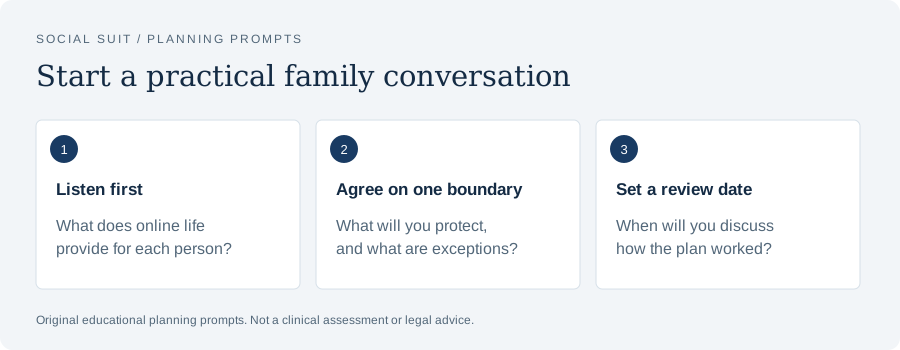
- Listen firstWhat does online life provide for each person?
- Agree on one boundaryWhat will you protect, and what are exceptions?
- Set a review dateWhen will you discuss how the plan worked?
Define a focused period with a clear endpoint
A focused period needs a beginning and an ending the student can understand. The endpoint might be completing a small set of questions, drafting an outline, or finishing a reading section. A time-based interval may fit another task, but its length should reflect the student’s needs and the work. This article does not prescribe one duration for everyone. The important feature is that the expectation is clear enough to use without repeated debate.
State what waits during that period. Unrelated browsing, optional game activity, and nonurgent group conversation can have a later place. Preserve required tools and essential contact. The rule might be “Complete the first section with only the needed sources open, then take the agreed break.” That is more precise than “Be responsible.” A student can tell whether the section is complete and what happens next. The caregiver can review the outcome rather than guessing how much effort occurred.
Avoid extending the period indefinitely because the student looked distracted. If the agreement uses a task endpoint, discuss whether the task was appropriately sized. If it uses time, honor the review or break point unless a clear reason requires a change. Moving the endpoint without explanation can make the rule feel unpredictable. The student needs to trust that the boundary means what the family said it means, even when the work is not finished perfectly.
For a long assignment, divide the work into manageable parts. Each part should contribute to the final result. A research project might begin with understanding the question, then selecting sources, then organizing notes, then drafting. Do not create so many tiny stages that planning becomes more work than the assignment. The sequence should make progress visible and reduce uncertainty. A phone rule is easier to follow when the student knows the academic destination of the period it protects.
Give breaks an actual place
A break can help separate parts of a task, but its function should be clear. The student may need movement, food, quiet, or a change in posture. They may also want a brief chosen entertainment activity. Discuss what fits the next transition. An open-ended feed can be difficult to leave because it supplies another item without an endpoint. That does not mean every online break is wrong. It means the break should have a cue and a prepared route back to the work.
Choose the return step before the break begins. The student might reopen the outline, answer the next question, or compare two sources. Leaving that decision until afterward can make the transition harder. A visible note or an open relevant document can help. The break’s end should not depend entirely on an adult repeatedly calling from another room. Agree on a cue the student can recognize and a response that is realistic for the chosen activity.
Consider whether the break actually meets the need. If the student is hungry, browsing does not provide food. If they are overstimulated, another busy stream may not feel restful. Ask what they want from the pause and what happened afterward. These are practical observations, not a clinical assessment. Our article on fatigue and the need to scroll explores the mismatch between a low-effort activity and an unmet need in more detail.
Do not use a break as a reward that disappears every time the work is difficult. A student can need a pause even when they are struggling. The appropriate arrangement depends on age, task, and learning needs. If a professional or school plan already specifies supports, follow that guidance. A family rule should not undermine an accommodation or turn basic care into something the student must earn through perfect performance.
Make a plan for getting stuck
The student should know what to do when a question is unclear. Possible steps include rereading the instruction, marking the point of confusion, checking an allowed resource, or asking an appropriate person. The route should fit the assignment and school expectations. Without a plan, the student may repeatedly leave the task for a feed, and the caregiver may focus only on the browsing. A clearer help procedure addresses both the distraction and the unresolved academic problem.
Ask for the specific point of difficulty. “I do not understand any of it” may be the student’s honest feeling, but it is hard to act on. Invite them to identify the first word, instruction, or example that becomes unclear. Do not demand that they know the answer before receiving help. The aim is to make the question concrete enough that a teacher, caregiver, or appropriate support person can respond. A small clarification can sometimes make the next step visible.
Respect the boundary between helping and doing the work. A caregiver can clarify instructions, help organize materials, or encourage an appropriate question to the teacher. Completing the assignment for the student may hide the difficulty and remove an opportunity for the school to see where support is needed. If expectations are unclear, ask the teacher what assistance is appropriate. The family should not have to guess whether a particular form of help is allowed.
If the student is repeatedly stuck across subjects or situations, seek educational guidance. Persistent difficulty may require a different explanation, support, or assessment. This article cannot identify the cause. Bring concrete examples rather than a label inferred from device use. A record that the student could not interpret a particular instruction is more useful than a general statement that they are lazy or addicted to the phone. The school can respond more accurately to a specific pattern.
Reduce avoidable prompts without blocking required contact
Nonessential notifications can pull attention toward another task. Review which prompts need to remain available during homework. A caregiver’s urgent call, an accessibility function, or a message from a project partner may be relevant. Most optional reactions or promotional prompts may not be. Current device settings can sometimes separate these categories, but capabilities vary. Consult official instructions and test important contact routes before relying on them.
Explain what a quiet setting does. It may silence sound while leaving a visible badge, hide a preview, or pause an app. Do not assume that one control removes every cue. The student should understand the practical effect and how to restore ordinary use after the focused period. A setting that creates confusion about missed essential messages may produce a new problem. The tool should support the task and the family’s communication needs.
Remember that a quiet device can still be opened by habit. Pair the setting with a clear academic next step and, where appropriate, a practical device location. If the student needs the phone for the assignment, keep the relevant tool available and distinguish it from unrelated browsing. The arrangement should not depend on pretending that required use never occurs. It should make the transition back to the work visible after a necessary check.
Avoid changing controls secretly as a routine strategy. Explain supervision and restrictions according to the child’s age and safety needs. The student should know what is active, why, and how to ask for an exception. If a serious risk requires immediate action, explain the change when appropriate. For ordinary homework boundaries, clarity is more useful than surprise. The goal is a routine the student can learn, not a technical trap that catches them without explaining the expectation.
Choose a workspace that exists in your home
A quiet desk in a private room is not available to every student. A kitchen table, shared room, library space, or another accessible location may be the realistic option. Identify what can be improved within the actual setting: materials ready, a clear place to sit, fewer avoidable interruptions, and an agreed period when others give the student room to work. Do not treat a family’s lack of space as a failure to care about learning.
The AAP’s guidance on developing homework habits discusses a regular work location and keeping materials nearby. The practical purpose is reducing the friction between intending to work and beginning. Adapt that purpose to your circumstances. A small container of needed materials or a clear section of a shared table may be more useful than an elaborate setup that cannot remain in place.
Ask about comfort and accessibility. Lighting, noise, posture, sensory needs, and the available format can affect whether the space is usable. If a student has an established accommodation, consider it in the home plan. Do not assume that sitting perfectly still or using the same arrangement as a sibling is necessary for learning. Appropriate professional or school guidance can help when the environment needs adaptation beyond ordinary household changes.
Make cleanup predictable. A shared table may need to return to another use. Agree on where unfinished work and materials go so the student does not have to reconstruct everything next time. This also protects other household members’ needs. A workspace rule should fit the shared environment rather than demanding permanent control of a space the family cannot spare. Clear storage and timing can reduce conflict without requiring a separate room.
Distinguish supervision from constant interruption
A caregiver may need to check that work has begun, but repeated commentary can become a distraction itself. Decide when support will be available and when the student will work independently, according to age and need. A short check-in at the beginning and a review afterward may fit one student. Another may need closer assistance. The arrangement should follow the student’s needs, not the adult’s anxiety about every visible movement.
Avoid interpreting every glance away as failure. A student may be thinking, checking a required source, or taking a brief pause. Ask what action is occurring before assigning a motive. If unrelated browsing appears, refer to the agreed boundary and the next task. A calm reminder can be more useful than a speech about character. Save a broader discussion for after the session when the student is not trying to work and defend themselves simultaneously.
Use the outcome to guide the review. Did the student complete the first step? Did they understand the task? Were required tools available? Did optional checks repeatedly interrupt the sequence? These questions provide a clearer picture than watching the device continuously. The caregiver can identify a pattern without inspecting every private message or assuming that a visible screen proves the wrong activity is occurring.
If the family needs close supervision for a specific safety or learning reason, state the scope and purpose. The student should know what information is reviewed and why. Appropriate privacy can still exist outside that scope. If you are unsure about the balance, consult a professional familiar with the child’s circumstances. A generic article cannot determine the right level of monitoring for every family, especially when there are complex developmental or safety concerns.
Handle group assignments without losing the whole evening
A group assignment may require communication with peers. Identify what needs to be decided and which channel carries the decision. The student might need to confirm roles, ask for a source, or review a shared draft. These tasks can have endpoints. A conversation that continues into unrelated jokes is a new activity, even if it occurs in the same chat. Help the student recognize when the school task has ended and when optional social participation begins.
Ask the group to make essential decisions clear. A brief summary of the final plan can prevent every student from reading a long stream to find one instruction. The student can request that the assigned part, deadline, and next meeting be stated directly. This is a practical communication skill rather than a criticism of peers. If the group’s arrangement is unworkable, the student may need to ask the teacher about expectations rather than remain continuously available to avoid missing a change.
Discuss reasonable availability. The student can tell partners when they will check messages and how urgent questions should reach them. Do not expect classmates to be available instantly, and do not make your child responsible for answering through the night. The group-chat pressure guide explains how to preserve logistics while changing constant-reply expectations. A school task should have a clear communication plan, not depend on uninterrupted monitoring of a busy social channel.
If conflict develops, separate the academic issue from the social issue. Missing work, unclear roles, exclusion, and harassment require different responses. The teacher may help with project expectations, while a safety concern may need another appropriate route. Avoid solving every problem by removing the device that carries the conversation. The tool may still be necessary. The response should address the conduct or missing information that prevents the assignment from progressing.
Work with school-managed devices appropriately
Some devices are managed by the school or district. Families may not control every setting, app, or account. Do not assume that a missing control can be fixed by bypassing the school’s management. Ask the school’s current support channel what options are available and what rules apply. The student should continue to have access to required tools. A home routine can reduce optional interruption without altering a managed system in an unauthorized way.
Describe the practical problem when contacting support. A nonessential notification may appear during work, an app may open automatically, or a required site may be unavailable. Include the relevant device and assignment context without sending unnecessary private information. The school can respond more accurately to a concrete issue than to a general complaint that technology is ruining homework. Do not include passwords or sensitive records in an ordinary support message.
If a personal device is also involved, distinguish its role. The school computer may contain the assignment while the phone carries unrelated conversation. A rule can place the optional device aside during a focused period while preserving essential contact. If the phone is required for an accessibility function or a specific task, state that exception. The presence of two devices is not automatically a problem, but the function of each should be clear.
Keep the student involved in understanding the setup. Explain which rules come from the school and which are household choices. A child may otherwise assume that every technical limitation is a parental punishment or that every available feature is school-approved. Clarify the source of the expectation without asking the child to arbitrate a dispute between adults and the school. The practical aim is a usable, authorized environment for completing the assignment.
Plan for fatigue and other basic needs
Homework often occurs after a demanding day. Ask whether the student needs food, a bathroom break, movement, quiet, or a short transition before beginning. These needs do not disappear because an assignment is due. A phone may become the easiest available pause while a more basic need remains unmet. The rule should address the sequence, not simply insist that the student work while hungry or uncomfortable. Basic care is not something to earn through perfect academic effort.
Choose a realistic start that fits the household schedule. Some students can begin soon after school; others have transport, care, employment, or activities that change the timing. Avoid treating one conventional routine as the only serious approach. The plan should identify when the student is available, what preparation is needed, and which task begins first. If the workload repeatedly exceeds the available time, discuss that with the school rather than relying only on stronger enforcement.
If fatigue is persistent, severe, unexplained, or interfering with daily life, seek appropriate healthcare advice. This guide cannot identify a medical cause or determine whether a device is responsible. Bring concrete observations about sleep, timing, and functioning. A practical homework routine can support organization, but it should not be presented as treatment for ongoing tiredness. Similarly, significant distress deserves appropriate support beyond an app limit.
Build a simpler version for a difficult day. The student may need to identify essential work, contact the teacher about a barrier, or complete the smallest useful step. Do not assume that every unfinished assignment requires staying awake until everything is done, regardless of health or safety. Follow school and professional guidance for the situation. A routine should make it easier to respond responsibly to real limits, not create an impossible demand that then produces more avoidance.
Respond to a lapse without restarting the argument
If the student begins unrelated browsing during the focused task, use the agreed reminder and point to the next step. Keep it brief. A long lecture can extend the interruption and make returning to work harder. After the session, ask what happened at the transition. Was the task unclear, the cue easy to dismiss, or a social concern pressing? The explanation may lead to a practical adjustment while still preserving the boundary.
Use a predictable response if lapses repeat. The family might change the device location, reduce prompts, shorten the first task, or add a check-in. If a restriction is appropriate, explain its scope and review condition. Avoid indefinite consequences such as losing all access until the adult feels trust again. The student should know what behavior is expected and how the plan will be assessed. Preserve required school, safety, and accessibility functions.
Do not turn a lapse into a diagnosis. A student checking a feed during a difficult assignment has not thereby proven addiction, anxiety, or another condition. If there is persistent impairment, seek qualified assessment. The routine concern can still be addressed without a clinical label. Concrete language leaves room for the student to understand the behavior and change it rather than defend their identity against a sweeping accusation.
Adults should examine their own interruptions too. A caregiver who repeatedly asks questions, starts a loud activity, or checks unrelated messages while demanding focus may affect the environment. You can acknowledge and change that behavior. This does not remove the student’s responsibility. It makes the shared plan more coherent. Homework occurs within a household, and the routine is shaped by more than the student’s phone alone.
Ask the teacher for clarification when the problem belongs at school
Contact the teacher when the assignment’s instructions, allowed tools, expected assistance, or workload are unclear. Keep the question specific. You might ask whether students may collaborate on a particular section, which source format is required, or how to handle an inaccessible resource. A clear answer can prevent repeated home conflict about whether a device is necessary. Do not ask the teacher to settle a broad family argument if the practical issue can be stated more narrowly.
Let the student participate in the question where appropriate. They can identify what they do not understand and use the school’s accepted communication route. A younger child may need an adult to help. An older student may be able to draft the question themselves. The purpose is building a usable help-seeking skill, not making the student prove independence by struggling silently. Follow the teacher’s expectations and any established support plan.
If a pattern continues, bring examples. Describe which step becomes difficult, what support was tried, and what happened. Avoid relying only on a screen-time number or a label about motivation. The school may need to evaluate instruction, accessibility, workload, or another educational factor. This guide cannot determine the cause. Specific observations give the appropriate professionals a better starting point than a general conclusion that the phone explains every difficulty.
Respect privacy in school communication. Share only relevant information through appropriate channels. Do not send private peer conversations or sensitive health details unless they are needed and the route is suitable. If bullying or another safety issue affects the assignment, use the relevant reporting process rather than burying it in an ordinary homework question. Academic clarification and safety reporting may require different people and different information.
Review the rule after the session
Choose a few questions linked to the goal. Did the first task begin? Were the needed tools available? Did the student know what to do when stuck? Did optional checks interrupt the sequence? Was the break usable? These questions help identify which part of the plan needs adjustment. A review should not become an audit of every tap or a contest over whether the student looked sufficiently busy.
Ask the student what helped and what remained difficult. They may suggest a shorter first task, a different workspace, or a clearer contact route. Evaluate the suggestion by whether it supports the purpose. A plan can improve because the student contributed information, even when the adult retains a necessary boundary. Participation should be meaningful enough that a relevant alternative is considered rather than rejected solely because it differs from the first idea.
Keep the review short and choose one adjustment. If the environment needs a larger change or professional support, identify that next step. Do not introduce many new rules after one difficult session. Multiple changes can make it hard to know what helped and can create more work than the assignment itself. A specific revision is easier to explain and test. Retain the parts that already support the task.
Record the current rule in a simple form if needed. Our article on creating a family technology agreement explains how to write a purpose, behavior, exception, and review date. Keep private incidents and a history of mistakes out of the ordinary reference. The document should guide future action, not remind the student of every previous conflict whenever they begin homework.
Three task-focused examples
For a reading assignment, the student opens the required text and identifies the section to complete. Unrelated notifications are reduced while essential contact remains available. The endpoint is a chosen part of the reading or another appropriate interval. If a word or instruction is unclear, the student uses the allowed resource or marks the question. The break has a place, and the next step is known. The phone rule protects the reading sequence rather than banning every digital tool.
For a research assignment, the student identifies the question, selects appropriate sources, and records relevant notes. A direct bookmark may reduce the need to enter through a general feed. The family distinguishes source checking from unrelated browsing. If the assignment requires a platform video or online discussion, that use remains available. The endpoint might be a small source set or an outline, according to the teacher’s requirements. The rule follows the work’s actual structure.
For a group project, the student confirms their role, obtains the final instructions, and sets a reasonable communication expectation with partners. The group summarizes important changes directly. During the individual work period, optional social conversation waits. If the group cannot agree or a partner’s conduct becomes concerning, the student uses the appropriate school route. A device remains a collaboration tool without requiring continuous monitoring of every unrelated message in the same channel.
These examples are illustrations, not universal prescriptions. A student’s age, accessibility needs, school plan, and assignment may require a different arrangement. The common feature is a clear relationship between the boundary and the task. When that relationship is visible, the family has a practical way to discuss exceptions and assess the outcome. The rule becomes a support for learning rather than a recurring symbol of who has authority over the phone.
Questions families often ask
Should the phone always be in another room? That may help in some situations, but it is not a universal rule. The student may need the device for an assignment, accessibility, safety, or essential contact. Identify the function and choose a practical arrangement. If optional use repeatedly interrupts the task and the phone is not needed, moving it may be worth trying. Preserve a suitable route for important communication and explain the purpose of the change.
What if the student says every app is required? Ask which action serves which part of the assignment. A clear explanation can establish legitimate use without an argument about motives. If the requirement is uncertain, consult the teacher’s instructions or ask for clarification. Do not assume every claim is an excuse, and do not accept a broad label as permission for unlimited unrelated activity. The distinction should be based on the work.
Can the student use AI for homework? Follow the school’s current rules and the assignment’s instructions. Do not assume that a tool is allowed because it is available. Ask which forms of assistance are permitted and how they should be acknowledged. This article does not provide a universal policy. The practical phone boundary should preserve authorized tools while avoiding unauthorized substitution for the student’s work. If expectations are unclear, obtain clarification before relying on the tool.
How do I know whether the rule is working? Look at the intended outcome and the student’s understanding of the process. A clearer start, fewer unrelated interruptions, and an effective help route may show progress even when the assignment remains difficult. If the problem persists, revise the plan and seek relevant support. Do not use grades alone as a short-term verdict on one household rule. Many factors affect academic outcomes, and this guide does not guarantee an improvement.
Write the first version in four lines
State the task, the needed tools, the optional activity that waits, and the endpoint or review. Add an essential-contact exception and a help route if needed. For example, the student will complete the outline using the assignment and relevant sources, postpone unrelated browsing, and then take the agreed break. The wording should fit the actual work. A short version that everyone can explain is more useful than a long policy that leaves the next action unclear.
Try the version on an ordinary session and review it afterward. Keep what helped, change the part that did not, and involve the school when the barrier belongs there. If the concern involves broader distress or impairment, seek qualified support rather than treating the homework rule as a diagnosis or treatment. For serious documented social-media harm and general information about potential legal review, the separate Social Suit legal-options page explains that route. Homework difficulty alone does not establish legal eligibility or compensation.
The practical aim is a calmer, clearer sequence: understand the assignment, begin a useful step, keep required tools available, postpone unrelated activity, ask for help when needed, and review the result. You can uphold a boundary without turning every session into a contest. A rule that follows the task gives both the student and caregiver a better way to decide what happens next, especially on an evening when energy and patience are limited.
Sources and further reading
These primary resources provide context. Our practical examples and planning suggestions are original educational material, not validated treatment protocols. Linked organizations do not endorse Social Suit.