 Social Suit
Educational information, not individual medical or legal advice. Practical examples are hypothetical and do not describe clients or study participants. This article is not represented as reviewed by a clinician or attorney. How we prepare our guides.
Begin with the teenager’s experience
A useful conversation about social media begins with what the teenager experiences, not with a speech about everything that could go wrong. Their online life may include friendships, humor, creative work, school arrangements, and communities that matter to them. It may also include pressure, unpleasant content, exclusion, or a sense that they must remain constantly available. You will learn more if you allow both sides of that experience to exist in the conversation. Listening does not require abandoning your responsibilities as a caregiver. It helps you understand what a boundary or support plan needs to address.
Start at a calm time when neither of you is already defending a position. A conversation begun immediately after an argument about a phone often becomes an extension of that argument. Choose an ordinary moment and explain the purpose briefly: you want to understand what is helpful, what is difficult, and what would make the routine work better. Avoid promising that no rule will change. You can promise to listen carefully and explain your reasoning. That promise is more realistic and more useful than suggesting the teenager has complete control over every safety decision.
The American Academy of Pediatrics encourages ongoing conversations about a child’s online world. The American Psychological Association’s adolescent advisory also emphasizes developmental context, adult guidance, sleep, and exposure to harmful content. These sources support a thoughtful, continuing discussion rather than a single lecture. They do not provide a script guaranteed to prevent harm. The examples in this guide are original illustrations of communication choices. Adjust them to your family, the young person’s developmental needs, and any professional advice you already have.
You do not need to know every platform before asking a good question. You do need enough curiosity to let the teenager explain something without immediately turning the explanation into evidence against them. If they describe a feature you do not understand, ask what it does and why people use it. If they mention a difficulty, ask what happened and what support would help. The aim is a conversation in which the teenager can give an accurate account, including information that does not fit your initial assumptions.
Choose observations instead of labels
Describe what you have actually noticed. “You have seemed tired on three school mornings” is an observation. “You are addicted to your phone” is a label that the conversation has not established. “We interrupted dinner several times to check messages” is a shared event. “You care more about strangers than your family” is an interpretation of motives. Concrete observations give you something both people can discuss. Labels and accusations often force the teenager to defend their character before either of you can examine the practical problem.
Keep the observation narrow. If the concern is sleep, begin with sleep rather than combining homework, attitude, friendships, chores, and every previous argument into one complaint. A narrow issue has a clearer possible outcome. You might want a plan that makes it easier to begin the bedtime routine, or an agreement about nonurgent notifications overnight. If other concerns exist, write them down for a separate conversation. A teenager cannot meaningfully respond to an unlimited list in which every answer reveals another accusation.
Ask whether the observation matches their view. They may agree that mornings have been difficult but explain that a school project or an upsetting conversation contributed. Their explanation does not automatically settle the issue, yet it deserves examination. You can say, “That helps me understand the week. I still want us to protect sleep.” This response recognizes new information while retaining the practical priority. It avoids the false choice between accepting every explanation and treating every explanation as an excuse.
If your concern involves persistent distress, significant impairment, or a possible health condition, use appropriate professional support. A family discussion cannot diagnose addiction, depression, anxiety, an eating disorder, or another condition. Bring specific observations to a clinician or school professional when relevant. Let the teenager know what information you intend to share and why, unless an urgent safety situation requires immediate action. The conversation should support access to help rather than make a clinical label the price of being taken seriously.
Ask about what works before asking about what hurts
Ask which parts of social media the teenager enjoys. A simple question such as “What do you actually look forward to there?” can reveal the function of the app. They may describe a friend group, a hobby, funny videos, creative feedback, or news about an interest. Knowing the function helps you preserve it when changing a routine. If the only question you ask is what is dangerous, the teenager may assume that every answer will become a reason to remove access.
Ask what makes a good online experience different from a bad one. The distinction may depend on people rather than platforms. A supportive direct conversation can feel different from a public comment section. A creative project can feel different from repeatedly comparing appearance or popularity. The teenager’s account gives you a more precise way to discuss choices. Instead of arguing that the entire app is good or bad, you can identify interactions and content patterns that deserve different responses.
Be prepared for benefits you did not expect. A young person may find support for an interest or identity that is not available locally. They may communicate with distant relatives or friends from a previous school. Do not dismiss these relationships simply because they occur online. You can acknowledge their importance and still discuss privacy, safety, timing, or unreliable information. A conversation becomes more credible when you understand why the teenager would want to keep an experience, rather than assuming that removal has no cost.
Avoid making the positive discussion a trick. If you ask about a hobby only to pivot immediately into a lecture, the teenager may learn that openness is unsafe. Spend enough time understanding the answer to show that the question was real. You might ask them to explain a creative project or recommend a safe piece of content that captures the interest. You do not have to become a fan. You are learning what role the online activity plays in their life so that your guidance addresses the actual experience.
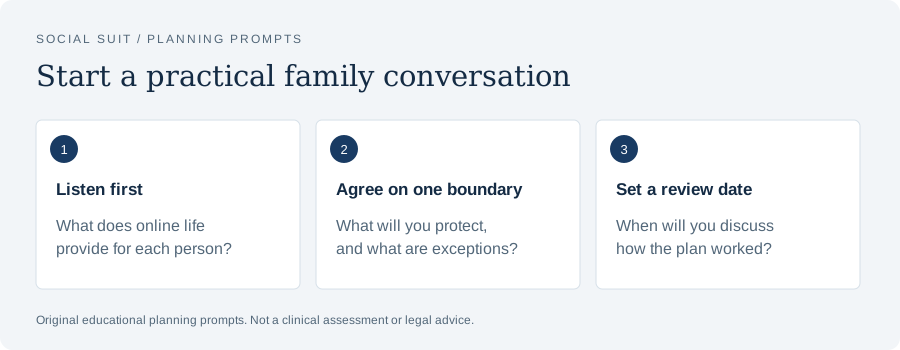
- Listen firstWhat does online life provide for each person?
- Agree on one boundaryWhat will you protect, and what are exceptions?
- Set a review dateWhen will you discuss how the plan worked?
Ask questions that can produce a real answer
Broad questions can be difficult to answer. “Is social media harming your mental health?” asks a teenager to make a complex causal judgment. A more concrete question is, “Have you had a conversation there that made it hard to sleep?” or “Do you feel pressure to reply when you are doing something else?” These questions focus on experiences the teenager can describe. They also leave room for a negative answer without implying that the young person has failed to recognize a problem you already decided exists.
Use one question at a time and allow a pause. An adult who asks five questions without waiting may sound more interested in conducting an interrogation than having a conversation. If the teenager gives a short answer, you can ask whether they want to explain more. Sometimes they need time to find words; sometimes they do not want to discuss the topic at that moment. If the issue is not urgent, offer another opportunity. Repeatedly demanding a fuller answer can make the conversation less informative rather than more.
Ask about a specific recent moment when appropriate. “What happened in the group chat yesterday?” may be useful if the teenager mentioned it voluntarily. Do not require a complete archive of private conversations merely because you are curious. Focus on the information needed to understand the concern. You can ask who was involved in broad terms, whether anyone felt unsafe, and what happened next. Private details about unrelated friends may not be necessary. Respecting that distinction models the same care with information that you want the teenager to learn.
Some questions are easier to answer indirectly. You might ask, “What makes it difficult for people your age to put a phone away?” This can open discussion without requiring an immediate personal disclosure. Do not then treat every general example as a confession. If the teenager describes a concern among peers, discuss it on that basis. You can later ask whether anything similar has happened to them. The conversation should make room for exploration rather than forcing every sentence into an admission of wrongdoing.
Listen without agreeing to everything
Listening means trying to understand the account accurately. It does not mean approving harmful conduct, accepting an unsafe request, or promising to keep every disclosure secret. You can summarize what you heard: “The messages matter because plans change quickly, and you worry about missing the update.” Then ask whether that summary is correct. A careful summary can reduce the feeling that the teenager must repeat themselves while helping you identify the practical problem behind the disagreement.
If you disagree, state the disagreement specifically. “I understand why you want to stay in the chat, and I am concerned about messages arriving through the night” preserves both the social purpose and the sleep concern. It creates room for a plan that addresses the timing without automatically removing the relationship. “That is ridiculous” closes that space. The teenager may still dislike the boundary, but they can understand what it is intended to protect and propose an alternative that serves the same purpose.
Do not compete with the teenager’s account by immediately presenting your own adolescence as the standard. You may have useful experiences, but the current communication environment has features that did not exist in the same form when you were young. A brief comparison can help if it shows empathy. A long story about how you managed perfectly without these tools may imply that their difficulties are unnecessary. Ask what makes the present situation hard, then use your experience only where it clarifies rather than replaces their perspective.
You can acknowledge a point without conceding every rule. If the teenager says that adults use phones during dinner too, examine the observation. It may be true. You can agree to change your own behavior while keeping the shared goal. This is not losing authority; it is making the agreement more coherent. Explain legitimate exceptions, such as urgent work or care responsibilities, without turning them into unlimited permission for adults to browse. A boundary is easier to respect when its purpose applies to everyone affected.
Separate privacy from secrecy and safety
Teenagers reasonably develop a desire for privacy. That desire does not automatically signal danger. A private conversation with a friend, an unfinished creative project, or an embarrassing question may be something they do not want to share widely. Ask what information you actually need to fulfill your caregiving role. You may need to know how to reach them, what platform they use, or whether a concerning interaction occurred. You may not need every detail of every ordinary exchange.
Discuss supervision openly. Explain what you monitor, what tools are in use, and what would lead to a closer review. Where possible, avoid surprise inspection as the default form of conversation. The appropriate level of oversight varies with age, development, history, and current risk. A young child and an older teenager may need different arrangements. If a safety situation requires immediate access, explain the reason and focus the review on the relevant concern. Do not use the event as an excuse to expose unrelated private information publicly.
Make clear that seeking help is different from hiding harm. A teenager may fear that reporting harassment will lead to losing the only device they use to contact friends. Tell them how you will respond to a disclosure. You can say that safety comes first, that access may need to change in a specific way, and that you will explain the change. Avoid promising that no consequences are possible. Promise instead that the response will focus on protection and support rather than humiliation.
If the teenager asks you to keep a dangerous situation secret, do not make a promise you cannot keep. Explain that you may need help from appropriate adults or services to keep them safe. Share information only with people who need it for that purpose. A serious disclosure is not material for a public family post or a group chat. Respectful handling of information can preserve trust even when you must take action the teenager did not want.
Talk about sleep in terms of a usable routine
Sleep conversations work better when they identify the transition that is difficult. Is the teenager browsing after the intended bedtime, receiving late messages, using the phone as an alarm, or completing assignments online? These are different situations. A blanket rule may miss the function that needs to remain available. Ask what happens between deciding to go to bed and actually beginning the routine. Then choose a change that addresses that sequence.
An agreement might involve silencing nonurgent notifications, placing an optional charger away from the bed, or finishing a message check before a particular step in the routine. Preserve essential contact and accessibility tools. If a device is needed as an alarm, discuss alternatives or settings that fit the actual device. Technical interfaces change, so use current official instructions when configuring controls. The family goal should be clear even if the tool changes: protect the opportunity to sleep without removing necessary functions.
Ask what the teenager expects to miss by being unavailable. A group may make plans late, or a friend may expect immediate replies. Help them think through a statement about availability and a direct route for genuinely important updates. Do not assume that one declaration will change the group’s habits instantly. The teenager may need support handling reactions. A boundary can be socially difficult even when it is sensible, and acknowledging that difficulty makes the discussion more realistic.
If sleep problems continue despite routine changes, seek appropriate professional advice. Do not treat every difficulty sleeping as proof that the phone is the sole cause. School demands, health, stress, environment, and other factors may matter. You can observe the role of a device while keeping the larger picture open. The teenager should understand that the purpose is to support sleep, not to win an argument about which explanation is correct before help becomes available.
Talk about friendship and pressure to stay available
Ask how friends interpret a delayed reply. The teenager may say that no one cares, or describe a group in which silence is treated as rejection. The second situation deserves more than a instruction to mute notifications. Discuss how the teenager can communicate availability and what a respectful friendship would allow. You can help draft a short message such as, “I am offline during homework; message me directly if plans change.” Keep the wording natural for the young person rather than insisting on an adult script.
Distinguish ordinary disappointment from pressure or coercion. A friend may wish someone replied sooner without behaving abusively. Repeated threats, humiliation, or demands for continuous access are different concerns. Ask what happens when the teenager sets a limit. If there are threats or harassment, use appropriate safety support and reporting options. Do not frame every uncomfortable interaction as a time-management failure that the teenager should handle alone. The nature of the behavior determines the response.
Help the teenager identify different channels for different purposes. A busy group chat can remain muted during a shared activity while a direct message handles transport changes. An event organizer can confirm plans earlier. Friends can agree that overnight replies are not expected. These are options to discuss, not guarantees that a group will cooperate. If the arrangement fails, examine why and consider a different route. The important point is that belonging does not have to depend on constant monitoring.
Avoid suggesting that online friendship is less real than offline friendship. That framing can make a teenager defend the relationship instead of discussing the pressure. You can ask whether a relationship feels supportive, whether boundaries are respected, and whether contact leaves them feeling safe. Those questions apply in either setting. A useful boundary protects the teenager’s ability to participate in the rest of life while preserving relationships that genuinely help them.
Discuss comparison, popularity, and appearance carefully
Ask how the teenager feels after particular kinds of content. They may describe inspiration, amusement, envy, pressure, or a mixture. Do not tell them what their reaction must be. A post can be enjoyable on one day and upsetting on another. Encourage them to notice that variation. If appearance-focused content repeatedly leaves them feeling worse, discuss options such as muting accounts, changing the type of content they seek, or taking a break from the relevant feed. These steps can reduce exposure but are not a treatment for a health condition.
Avoid reassurance based only on appearance. Telling a teenager they are prettier than someone online can reinforce the idea that value depends on ranking bodies. You can acknowledge the feeling and broaden the conversation: what do they value in friendships, skills, interests, or the way people treat each other? Do not demand that they stop caring about appearance entirely. The goal is to make room for other dimensions of worth and to recognize when a comparison is dominating attention.
Discuss numbers without treating them as a measure of a person. Followers, likes, views, and replies reflect platform activity, audience, timing, and many other factors. They are not a complete account of talent, friendship, or importance. Ask whether checking the numbers has begun to interfere with an activity the teenager enjoys. A creative project may become less satisfying when every decision is made for a reaction count. Help them consider a version of the activity that remains meaningful even when it is not posted.
If there are signs of disordered eating, persistent body distress, or another serious concern, seek qualified care. Do not attempt to assess severity from appearance alone, and do not use an app cleanup as the entire response. The teenager may need support that goes beyond content choices. Keep the conversation factual, compassionate, and focused on accessing help. A caregiver can notice changes and offer support without diagnosing the young person or asking them to prove that the distress is serious enough.
Respond to an upsetting disclosure before solving everything
If a teenager says something upsetting happened online, first acknowledge that telling you was useful. Ask whether they are safe now and what they need immediately. A calm response can make it easier to understand the situation. Avoid beginning with “Why were you there?” or “I told you this would happen.” Those questions may belong to a later discussion of boundaries, but they do not address the immediate need for support and can make the teenager less willing to share necessary information.
Ask only what is needed at first. You may need to know whether there is a threat, whether the person can contact them, and whether content is still accessible. You do not need to hear every distressing detail repeatedly. For cyberbullying, StopBullying.gov’s reporting guidance recommends preserving relevant evidence, avoiding forwarding abusive messages, blocking the person, and reporting through appropriate routes. Follow current guidance for the type of incident. If the material may be illegal or involves exploitation, seek official advice about handling it rather than copying or circulating it casually.
Explain the next action before taking it when circumstances allow. You might help use a reporting tool, contact a school professional about a school-related issue, or seek medical or safety support. Tell the teenager what information will be shared and with whom. Do not promise that a platform will remove content immediately or that one report will resolve every consequence. You can promise to take the concern seriously, help navigate the available steps, and check in about what happens next.
If there is immediate danger, act on safety rather than continuing a general discussion. In the United States, call 911 for a life-threatening emergency. For a suicide or mental-health crisis, call or text 988 or use the official 988 Lifeline chat. These resources do not replace local emergency action when someone is in immediate physical danger. Once urgent support is in place, the family can revisit routines and boundaries. The initial priority is safety and access to appropriate help.
Build a small agreement together
Choose one issue for the first agreement. If homework interruptions are the concern, define a focused period with necessary digital tools preserved. If shared meals are repeatedly interrupted, identify which notifications can wait and how essential contact will work. If bedtime drifts, agree on a transition and an ending cue. A small agreement is easier to understand than a complete overhaul containing many rules at once. It also makes the review clearer because you know which change you are assessing.
Write the purpose, the behavior, exceptions, and a review date. For example: the purpose is a focused start to homework; the behavior is keeping unrelated browsing closed while completing the first task; the exception is a message needed to clarify the assignment; the review is after several school days. This is an illustration, not a universal recommendation. The task’s length and the teenager’s needs should determine the arrangement. A clear agreement can be adjusted if it proves unrealistic.
Ask the teenager to suggest a way to meet the same purpose. If they dislike your proposed method, they may have an alternative that works. Evaluate it by the outcome rather than by whether it was your idea. A teenager might suggest a shorter work interval, a different charging place, or a direct message route for urgent plans. You can accept an alternative that protects the priority while retaining nonnegotiable safety requirements. Participation is meaningful when suggestions are genuinely considered, not merely requested before the adult repeats the original rule.
Specify what happens after a lapse. A missed boundary should lead to a proportionate, predictable response and a discussion of the obstacle. Avoid creating a permanent record of mistakes or making every lapse grounds for public humiliation. If the rule is repeatedly missed, ask whether it is clear, feasible, and supported by the environment. The answer may still involve firmer limits, but it should arise from the situation. An agreement works better as a guide for behavior than as a collection of opportunities to catch someone failing.
Make adult behavior part of the discussion
Teenagers notice when adults demand attention while checking their own phones. Examine your behavior before presenting a shared boundary. You may have essential work or care responsibilities, but those do not make every adult interruption necessary. Explain a genuine exception briefly, complete the task, and return to the conversation. If you lose track of time, acknowledge it. This makes the distinction between necessary use and optional browsing visible rather than asking the teenager to accept an unexplained adult exemption.
You can model a repair after a lapse. Say, “I meant to check one work update and stayed longer than I intended. I am putting it away now.” The statement is specific and does not require a dramatic apology. It shows that a person can notice a pattern, stop, and make an adjustment. A teenager may be more willing to discuss their own difficulty when the adult does not present self-control as something only young people lack.
Do not use your own behavior as a reason to abandon every boundary. Adults and teenagers can have different responsibilities and developmental needs. Explain those differences concretely. An adult’s late work call may be necessary; browsing during every family meal may not be. The teenager does not need access to private employment details to understand the purpose. Similarly, a young person may need a device for an accessibility function without having to disclose that information publicly. Consistency means applying a coherent purpose, not forcing identical behavior in every circumstance.
Invite respectful feedback about the household plan. A teenager can point out that a shared event is repeatedly delayed by adults or that reminders arrive in a harsh tone. Listen for the practical issue even if the delivery is imperfect. You can address tone separately while still considering the observation. A plan that includes adults’ responsibilities is more credible because it recognizes that family routines are shaped by everyone, not just by the youngest person’s device use.
Handle disagreement without turning the conversation into a contest
Disagreement does not mean the conversation failed. A teenager may understand the rule and still dislike it. State the reason, acknowledge the cost, and identify what remains open to discussion. For example, the household may require a shared meal without optional browsing while allowing the teenager to choose between two meal times. Separating the purpose from the adjustable details reduces the chance that every objection becomes a challenge to adult authority.
If voices rise, pause when it is safe to do so. Say when you will return to the topic rather than ending with a vague refusal to discuss it. A pause gives both people a chance to settle and think. It should not become a method for avoiding the issue indefinitely. When you return, begin with the specific point that needs resolution. Avoid replaying every sentence from the earlier argument. The aim is an agreement about the next step, not a verdict about who expressed frustration first.
Watch for questions that are actually accusations. “Why do you always choose your phone over us?” leaves little room for an answer. “What makes it hard to leave the chat at dinner?” can reveal a solvable issue. You can be firm without making the teenager defend a sweeping claim about their priorities. If a boundary is necessary, state it directly. Do not disguise a nonnegotiable decision as a question in which every answer except agreement will be rejected.
When the same conflict repeats, consider whether another problem is driving it. The teenager may not know how to begin homework, may fear exclusion, or may lack privacy in the household. The adult may feel unsupported in managing chores or worried about a safety issue that has not been named. A conversation about the device can become a proxy for these concerns. Identify the underlying issue and involve appropriate support if needed. Repeating the same rule more loudly is unlikely to resolve a problem the rule does not address.
Follow up without constant monitoring
Set a brief review after the agreement has had a realistic chance to operate. Ask what was easier, what was difficult, and whether the intended outcome occurred. If the goal was fewer interruptions during a meal, discuss the meal. If the goal was a clearer homework start, discuss whether the first task began. Do not expand the review into an audit of every online activity unless a specific safety concern requires it. A focused review keeps the conversation connected to the purpose of the agreement.
Allow the teenager to describe obstacles before presenting your conclusions. They may have discovered that an essential school message arrives during the planned quiet period, or that the chosen location does not work for an accessibility need. Adjust the arrangement when the explanation is relevant. If the obstacle was simply an unwanted habit, discuss a cue or environmental change that supports the boundary. The response should match the problem rather than treating every difficulty as defiance.
Notice effort and practical improvement without making praise conditional on a perfect record. You might say that a meal felt easier to share or that the teenager handled a delayed reply thoughtfully. Focus on the action and its effect. Avoid comparing siblings or turning one successful evening into proof that future difficulty is inexcusable. People learn routines through repeated use and adjustment. A supportive review can acknowledge progress while still addressing a concern that remains.
Keep the door open for a different kind of conversation. The teenager may initially discuss timing and later disclose harassment or distress. Do not assume that a routine agreement covers every issue because it worked for a week. Ask occasionally whether anything online has become uncomfortable or confusing, and remind them how they can seek help. The continuing relationship matters more than completing a single impressive discussion. A useful first conversation establishes a way to return when circumstances change.
Questions caregivers often ask
What if my teenager says everything is fine? Accept the answer as their current account while explaining the observation that concerns you. You can say, “I am glad you do not feel upset by it. I still noticed that sleep has been difficult, so I want us to address the routine.” Do not demand a distress disclosure to justify a practical boundary. At the same time, do not assume that a short answer proves there is no concern. Keep the conversation available and seek professional guidance when significant changes or safety issues warrant it.
Should I ask to see the phone? The answer depends on age, development, your existing agreement, and the specific concern. Begin by identifying what information you need and why. Where possible, review relevant material together and avoid searching unrelated private conversations. If there is an urgent safety risk, immediate supervision may be necessary. This guide cannot determine the appropriate level of oversight for every family. A pediatrician, mental-health professional, or relevant safety service can help with circumstances that go beyond ordinary routine disagreements.
What if they know more about the platform than I do? Ask them to explain the relevant feature, and consult current official resources for settings or reporting. You do not need to master every trend to discuss respectful behavior, privacy, sleep, or safety. Avoid pretending expertise you do not have. A direct statement that you want to understand is more credible. If a technical explanation is unclear, ask what the feature allows someone to do and what practical risk or benefit follows from it.
How long should the conversation last? Long enough to understand one issue and decide the next step, rather than long enough to exhaust every subject. A short useful discussion can lead to another later. If the teenager is tired, distracted, or emotionally overwhelmed, consider a different time unless safety requires action now. Do not use duration as proof of seriousness. The measure is whether both people understand the concern and whether the next action is clear.
Conversation starters for different situations
For an ordinary check-in, ask what has been enjoyable online recently and whether anything has become annoying or stressful. For a sleep concern, ask what happens after they intend to stop for the night. For friendship pressure, ask what people expect when someone is unavailable. For a confusing piece of information, ask how they would check whether it is reliable. Each question points to a specific experience or skill rather than requiring a sweeping confession about social media.
If you need to explain a new boundary, lead with the observation and purpose. “We have been interrupting our meals with optional checks, and I want a short period where we can talk” is clear. Then invite a workable method. If you need to respond to a disclosure, begin with support: “I am glad you told me. Are you safe right now?” The wording can be adapted to your family’s ordinary language. A script is useful only if it sounds natural enough that the teenager believes you mean it.
After a disagreement, use a repair statement that owns your part. You might say that you interrupted, made an assumption, or used a label before understanding the situation. Then return to the practical concern. Owning the mistake does not require withdrawing a necessary boundary. It makes the next discussion more accurate. Ask what the teenager understood the rule to mean; misunderstandings about exceptions or timing may be contributing to the conflict.
For related guidance, read our articles about a family technology agreement, group-chat pressure, and supporting a child after an upsetting online experience. Each develops a specific part of this conversation. If you are exploring serious documented harm and potential legal review, the separate Social Suit legal-options page offers general eligibility information and a route to an independent intake provider. This communication guide does not diagnose a condition, establish legal eligibility, or guarantee an outcome. Its purpose is a clearer, safer conversation that can continue as the young person’s circumstances change.
Sources and further reading
These primary resources provide context. Our practical examples and planning suggestions are original educational material, not validated treatment protocols. Linked organizations do not endorse Social Suit.