 Social Suit
Educational information, not individual medical or legal advice. Practical examples are hypothetical and do not describe clients or study participants. This article is not represented as reviewed by a clinician or attorney. How we prepare our guides.
Hidden activity is a reason to investigate carefully
Discovering that a child concealed online activity can provoke a strong reaction. You may feel frightened, angry, or uncertain about what else you do not know. Before acting, separate the discovery from your interpretation. A hidden account, deleted conversation, or unexplained use can have several meanings. The child may want privacy, fear punishment, feel embarrassed, or be dealing with a genuinely dangerous interaction. The discovery warrants attention, but it does not by itself establish which explanation is correct. A careful response begins with the facts you have and the immediate safety questions that matter.
This guide helps caregivers structure that response. It does not diagnose a child, determine whether a crime occurred, or replace individualized safety advice. If there is an immediate threat, exploitation concern, or serious health risk, seek appropriate help promptly. Ordinary conversation suggestions should not delay emergency action. For less urgent situations, a calm investigation can produce better information than a confrontation in which the child must defend themselves before explaining what happened.
Think about what you actually observed. Did you see an unfamiliar account, notice a purchase, find that a setting changed, or receive a report from another person? Each observation suggests different questions. Write a brief factual description if that helps you avoid adding assumptions. You do not need to create a permanent dossier of the child’s mistakes. The purpose is to keep the initial conversation accurate, particularly when emotion makes it easy to treat a possibility as a fact.
The central question is how to protect the child while making future help-seeking more possible. A response that produces silence may feel decisive without making the situation safer. A response that ignores a real risk is also inadequate. You need both clarity and support: understand the relevant activity, assess the risk, take proportionate action, and explain the next step. Those actions can coexist with accountability for a broken rule. Safety support should not depend on a child proving that they behaved perfectly before the incident.
Check immediate safety before discussing honesty
Ask whether anyone is threatening the child, pressuring them, trying to meet them, requesting private material, or able to contact them in a way that feels unsafe. Use plain, focused questions rather than a long list delivered without a pause. You may need to know whether the interaction is continuing and whether the child is safe now. The amount of detail needed depends on the situation. Do not require a child to describe distressing content repeatedly merely to satisfy curiosity.
If the child indicates immediate danger, act through appropriate emergency or safety services. In the United States, 911 is the route for a life-threatening emergency. If the concern is a suicide or mental-health crisis, 988 provides crisis support, while immediate physical danger may still require emergency services. A general family discussion is not enough for an urgent situation. Once safety support is in place, you can revisit supervision, trust, and household rules.
Do not promise absolute secrecy. Explain that you may need help from people who can protect the child, and that you will share information carefully for that purpose. A child may fear that everyone at school or in the family will learn what happened. Tell them who you intend to contact and why when circumstances allow. Avoid public posts or broad group messages about the child’s experience. The goal is appropriate support, not exposure.
If you cannot determine whether a risk is urgent, seek qualified guidance rather than relying only on your interpretation of a screenshot or account name. Relevant official resources, a healthcare professional, a school safety professional, or an appropriate law-enforcement or child-protection service may help, depending on the facts. This guide cannot choose the right service for every incident. Describe the factual concern without spreading unnecessary private material, and follow current official instructions about handling sensitive content.
Distinguish privacy from a broken agreement
Privacy is not the same as concealment of danger. A child may have a harmless conversation or creative project they do not want to share widely. A teenager may reasonably seek more personal space as they develop. Ask whether the activity violated a clear existing agreement or merely surprised you. If the household never explained which accounts need adult approval, the child may not have understood the expectation. That does not settle every safety question, but it matters when deciding how to respond to the rule issue.
Review the language of the agreement before assigning a motive. A statement such as “Use the internet responsibly” leaves many decisions undefined. A child may interpret it differently from an adult. If the rule was specific, ask what made it difficult to follow. If it was vague, clarify the future expectation. Avoid retroactively treating an unstated preference as if it had always been an explicit rule. Clear boundaries are easier to uphold fairly than expectations that become visible only after a conflict.
Different ages and developmental needs require different supervision. A young child’s unfamiliar account may call for direct adult involvement. An older teenager’s ordinary private exchange may call for a more limited discussion. History and current risk matter too. This guide does not provide a universal threshold for access or monitoring. If you need help balancing protection and privacy in a complex situation, consult an appropriate professional who understands the child’s circumstances.
Explain the information you need. You might need to understand who can contact the child, what the platform allows, or whether a concerning exchange occurred. You may not need to inspect unrelated conversations. A focused review supports the safety purpose and reduces unnecessary intrusion. If closer supervision is required, state why, what it covers, and when it will be reviewed. A clear scope is more useful than an indefinite declaration that the child has lost all privacy.
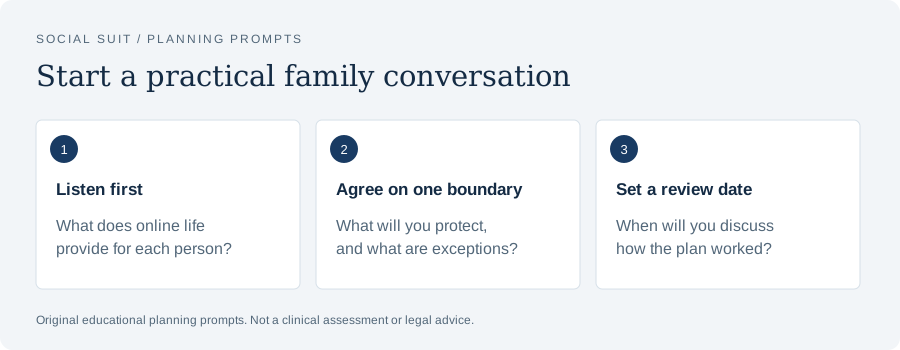
- Listen firstWhat does online life provide for each person?
- Agree on one boundaryWhat will you protect, and what are exceptions?
- Set a review dateWhen will you discuss how the plan worked?
Begin the conversation with the discovery, not a verdict
Use a direct description: “I noticed an account I did not know about, and I need to understand what it is used for.” This states the concern without announcing that the child is deceptive in every area of life. Ask them to explain the account or activity. Allow time for an answer. If they appear frightened or embarrassed, acknowledge that the conversation may be difficult while retaining the need to address safety and the household expectation.
Avoid questions whose only acceptable answer is an admission to your interpretation. “Why are you lying about everything?” asks the child to accept a sweeping verdict before giving information. “What were you worried would happen if you told me?” can reveal the reason for concealment. The answer may be uncomfortable for you. They may say that they expected a disproportionate punishment or that previous disclosures led to humiliation. Consider that information without assuming it removes every responsibility for the child’s choice.
Ask one question at a time. A rapid sequence of demands can make it harder to remember the event and easier to respond defensively. If the child cannot explain immediately, decide whether a short pause is safe and practical. For a nonurgent issue, returning at an agreed time may help. For an active threat, you may need relevant information now. The distinction should follow the risk, not the adult’s desire to complete the entire conversation in one sitting.
Summarize what you heard and ask whether it is accurate. You might say that the child wanted contact with friends, believed the rule would prevent it, and therefore used another account. The summary does not approve the choice. It shows that you understand the sequence. Once the facts are clearer, you can address the rule, the social need, and any safety concern separately. This prevents one label from obscuring several different problems that require different responses.
Ask why openness felt difficult
A child may hide activity because they expect an automatic loss of all access. They may fear that a private conversation will be shared with relatives, that an embarrassing mistake will be mocked, or that an adult will misunderstand the platform. These fears may or may not reflect how you intended to respond. Ask about them directly. You can explain your intention while acknowledging the effect of a previous response. The useful question is what would make relevant information easier to disclose next time.
Do not promise that disclosure will never lead to a restriction. Some risks require a change in access or supervision. Promise a response focused on safety, clear explanation, and proportionate action. The child can understand that a dangerous contact may need to be blocked while still knowing that the disclosure will not become public entertainment. A realistic promise is more dependable than a broad reassurance you cannot keep when a serious situation emerges.
If the child says they were embarrassed, reduce unnecessary exposure. Ask what information is needed for the current concern and leave unrelated details alone. You may need appropriate professional support, but not every family member needs the story. If the child made a mistake, discuss the action and the next step rather than attaching an identity label. A person can learn from a choice more easily when the conversation leaves room for a different future behavior.
If the child says the rule felt unfair, ask which part and why. A legitimate need may have been blocked, or the rule may simply conflict with a preference. Evaluate the explanation by the purpose of the boundary. You can revise a rule that did not fit the situation while still addressing the decision to conceal. Changing a rule after new information is not necessarily surrendering authority. It can demonstrate that boundaries have reasons and can become more accurate.
Understand the platform’s role without pretending expertise
Ask what the platform allows the child to do. Is it primarily messaging, public posting, gaming, viewing content, or sharing creative work? Can unfamiliar people contact them? Are messages visible to a group or only to one person? The answers help identify the relevant risk. You do not need to know every trend, but you should not assume that a feature works the way another app does. Interfaces and safety controls change, so consult current official resources for technical details.
Let the child explain a feature when it is safe and appropriate. Avoid treating every technical fact they know as evidence of wrongdoing. Familiarity may simply reflect ordinary use. At the same time, do not rely exclusively on the child’s account of safety settings if the concern requires verification. You can review the relevant controls together and explain what you are checking. A collaborative review can teach a skill while still giving the adult necessary information.
Separate the activity’s function from the platform’s name. The child may use a second account to communicate with a small group, experiment with a creative style, or avoid an audience they find uncomfortable. Those purposes are different from using an account to conceal a dangerous contact. Ask what the account is for before deciding the response. If the platform has age requirements or account rules, review the current official terms rather than guessing. Do not encourage the child to evade a requirement.
If an unfamiliar person is involved, focus on the actual conduct. A display name or profile image does not establish identity. The child may believe they know who someone is without having reliable information. Ask how contact began, what the person requested, and whether there was pressure or secrecy. If the behavior raises an exploitation or safety concern, seek appropriate official support. A general conversation about account privacy is not an adequate substitute for responding to the specific risk.
Handle evidence carefully
For cyberbullying, StopBullying.gov’s reporting guidance advises keeping relevant records, avoiding forwarding abusive messages, blocking the person, and using reporting routes. The purpose of a record is to support an appropriate response, not to build an audience for the incident. Note dates, context, and relevant identifiers where appropriate. Keep information secure and limit access. Avoid repeatedly exposing the child to the material while organizing it. Ask what is necessary for the reporting process rather than copying every item indiscriminately.
Some material requires special care. If content may be illegal, intimate, or involve exploitation, seek current official guidance before downloading, copying, or sharing it. Do not treat a generic instruction to preserve evidence as permission to circulate sensitive images. The appropriate handling depends on the material and jurisdiction. This article cannot provide a legal determination. Contact a relevant official service for instructions and describe the concern without spreading the content to unrelated people.
Do not delete relevant information impulsively before understanding whether it is needed for a safety report. Equally, do not keep unnecessary private material indefinitely. Once the appropriate process is clear, follow its guidance about records. A family agreement may include a general help pathway, but it should not contain the detailed incident archive. Separate practical routine expectations from sensitive evidence so that an ordinary household document does not expose private information.
Explain the record’s purpose to the child when circumstances allow. They may fear that the material will be used to punish them or shown publicly. Tell them who needs access and why. If you cannot promise a particular outcome, say so. You can still commit to careful handling and appropriate support. The child should understand that preserving relevant information is a step in addressing the incident, not a demand that they repeatedly revisit it for the adult’s reassurance.
Make reporting a specific step, not a promise of instant resolution
If platform reporting is appropriate, use the current official process for the relevant behavior. Categories and interfaces can change. Review what information the report requires and avoid adding unrelated private details. Help the child understand what will be submitted. A report may lead to a review, removal, restriction, or no immediate action; do not promise a result you cannot control. Keep a record of the report reference where useful and consider what support is needed while the process continues.
If the incident is connected to school, an appropriate school professional may need to know. Explain the factual concern and ask about the current reporting and support process. Avoid assuming that the school can control every platform interaction or guarantee a particular disciplinary outcome. The school may still help with effects on attendance, learning, peer relationships, or safety. Keep the focus on the child’s needs and relevant conduct rather than seeking public punishment through a broad message to other families.
If threats, exploitation, or other serious behavior are involved, seek the appropriate official route. The response may require more than a platform report. A child should not be expected to negotiate with a threatening person or pay someone to make the situation disappear. Do not contact an alleged perpetrator impulsively if doing so could increase risk. Obtain suitable guidance about the next step. This guide offers general structure, not case-specific instructions for handling a dangerous interaction.
After reporting, check in with the child about practical effects. Can the person still contact them? Is school or sleep affected? Do they need a trusted adult available at a particular time? The incident may continue to matter even if the content disappears. Support should not end merely because a button was clicked. Conversely, avoid making every later conversation about the incident. Let the child have ordinary activities and privacy while ensuring that relevant help remains available.
Choose supervision that matches the concern
Closer supervision may be necessary, but define its purpose and scope. You might review contact settings, approve new accounts, restrict a specific function, or check the relevant interaction together. The appropriate choice depends on age, development, history, and current risk. Avoid treating every concern as a reason for unlimited inspection of all activity forever. An indefinite rule can leave the child without a clear path back to ordinary privacy and may encourage further concealment.
Explain what changes now and what will be reviewed later. If a specific account is unsafe, state the reason. If a purchase control is needed, connect it to the transaction concern. If an adult needs to review contacts for a period, identify the relevant condition for review. Preserve necessary school, safety, accessibility, and supportive communication where possible. Removing every function can create unrelated problems and may make the child less willing to seek help next time.
Do not rely on monitoring tools as the entire response. A control can limit a function, but it does not necessarily teach the child how to recognize pressure, ask for help, or evaluate a message. Pair the technical measure with a clear conversation and a support pathway. Current official documentation can help configure the tool accurately. Check what data the tool collects and who can see it. A supervision product should not introduce unnecessary exposure of the child’s private information.
If you are unsure about the level of oversight, seek guidance from an appropriate professional familiar with the child’s situation. A generic article cannot determine what is proportionate after a serious incident or in a complex developmental context. Describe the observed behavior and your concern rather than presenting a diagnosis you have inferred from phone use. The goal is a plan that protects the child and supports learning, with review points that keep it connected to the actual risk.
Address the broken rule separately from the harm
A child may have broken an agreement and also been harmed. Both facts can be true. Begin with safety and support, then discuss the rule when the situation is stable enough. Do not imply that harm was deserved because the child ignored a boundary. That message can make future disclosure harder and confuses accountability with blame for another person’s conduct. The child can take responsibility for a choice without accepting responsibility for someone else’s threats, harassment, or exploitation.
Ask whether the rule was clear, feasible, and connected to a purpose. If it was, explain the proportionate response to breaking it. If it was unclear, revise the expectation and discuss how to ask for clarification. A consequence should have a recognizable scope and endpoint. “You will regain access when I trust you” gives little guidance. A defined review condition, essential functions preserved, and specific behavior to practice provide a clearer path.
Avoid consequences that publicly expose the incident. A social-media post about the child’s mistake, a family group announcement, or a humiliating demonstration may create additional harm. Handle accountability within appropriate private channels. If another person needs information for safety or a formal process, share what is necessary for that purpose. The distinction protects the child’s privacy while allowing adults to fulfill their responsibilities.
Review whether the response supports the intended lesson. If the concern was an unauthorized purchase, payment access and approval procedures are relevant. If it was an unsafe contact, contact controls and help-seeking skills may matter. A broad removal of unrelated activities may feel severe without teaching the needed skill. The response can be firm, but it should remain connected to the behavior and the next safer decision.
Preserve supportive connection during a change
A child’s online relationships may include people who genuinely support them. Before reducing access, identify which contacts and functions matter. You may need a safer route to a friend, relative, school group, or accessibility resource. Do not assume that all connection is harmful because one activity was concealed. A plan can restrict the concerning interaction while keeping appropriate support available. The practical alternative should be clear before the change takes effect where circumstances allow.
For a teenager, ask how plans are communicated. If a group chat carries transport changes or school information, identify a direct route for essential updates. The teenager may still dislike the restriction, but a usable substitute reduces unnecessary disruption. Do not require them to explain the private incident to every friend to justify being less available. A simple statement about a changed routine may be enough. Protect the young person’s ability to set a boundary without making their experience public.
If the child is isolated or relies on an online community unavailable locally, consider that need carefully. The community may require a safer access arrangement rather than complete removal. A qualified professional can help when the situation is complex. This guide cannot assess the safety of a particular group. The point is to examine the function and risk separately, preserving beneficial support where possible while responding directly to the concern that prompted the change.
Check how the child feels after access changes. They may experience relief, anger, loss, or a mixture. Acknowledge the feeling without assuming it determines whether the boundary is necessary. Ask what would make the transition more manageable within the safety requirement. A child can be upset by a sensible limit and still need the limit. Respectful support makes the adjustment more understandable and reduces the chance that the only available response becomes another hidden account.
Repair trust through observable steps
Trust is easier to discuss when it refers to specific behavior. Instead of demanding that the child prove they are trustworthy in general, identify what needs to change. They might ask before creating an account, tell an adult when a contact pressures them, or use the agreed purchase process. Adults also have responsibilities: explain supervision, keep private information private, respond proportionately, and return to the review when promised. Trust develops through these actions rather than through a single emotional declaration.
Choose a review date and criteria. The child should know what information the family will discuss and what might change afterward. Avoid moving the endpoint without explanation. If a new risk emerges, explain why the plan needs revision. If the agreed behavior occurs, recognize it and consider the next appropriate step. A review process should be meaningful. It is not fair to invite participation while deciding in advance that nothing can ever change.
Do not require constant confessions about every ordinary online moment. The child needs to understand what information is relevant to the agreement. A request to disclose new accounts or concerning contacts is different from a demand to narrate every harmless conversation. Excessive reporting can make the plan feel like surveillance rather than learning. Focus on the behavior that addresses the concern and preserve appropriate privacy elsewhere.
If you made an avoidable mistake in the response, acknowledge it plainly. Perhaps you used a label, shared information too widely, or interrupted before understanding the facts. Correct what you can and explain the next step. Owning the mistake does not require abandoning a necessary safety boundary. It demonstrates the same responsibility you ask of the child: notice the action, understand its effect, and change the behavior. A caregiver’s repair can make the trust process more credible.
Keep the conversation available after the first discussion
The child may not share everything at once. Embarrassment, uncertainty, fear, or difficulty finding words can affect disclosure. Let them know how to return to the topic. You can offer a later conversation, a written note, or another trusted adult when appropriate. Do not interpret every delay as a deliberate effort to deceive. At the same time, do not postpone necessary safety action while waiting for a complete narrative. Use the information needed for the current risk and keep a route open for more.
Check in briefly about the practical situation. Ask whether contact continues, whether the new arrangement works, and whether anything has become uncomfortable. Avoid turning each check-in into an interrogation. The child should have room for ordinary life as well as support. A repeated demand to revisit every detail may increase distress without producing useful information. Let the purpose of the check-in determine the questions.
Watch for changes in functioning that may need professional attention. Sleep, school participation, appetite, mood, and social withdrawal can all provide context, but they do not establish a diagnosis by themselves. If concerns persist or become significant, seek qualified support. Explain the reason to the child and share relevant observations. Do not assume that restoring account access or removing an app resolves every consequence of the experience.
Keep the household’s general technology agreement separate from the incident response. The agreement can include a help pathway and revised routine, but it should not become a public record of the child’s private experience. Update only what the family needs for future decisions. Sensitive records should be handled appropriately for their purpose. This distinction helps the child move forward without encountering the incident every time they read an ordinary household rule.
Adapt your response to the child’s developmental needs
Younger children may need concrete explanations, close supervision, and direct help using a reporting or blocking tool. Avoid asking them to make complex judgments about identity, commercial persuasion, or a threatening person without support. Use short statements about what happened and what will happen next. A young child may not understand the significance of an account setting or a request. The adult’s role is to provide protection and teaching at a level the child can use.
Older teenagers may need a more collaborative discussion about privacy, peer relationships, and the practical consequences of a restriction. Collaboration does not remove adult responsibility for safety. It acknowledges that the teenager has information and preferences relevant to the plan. Ask them to propose a way to meet the safety purpose, then evaluate it. If the alternative does not address the risk, explain why rather than treating the suggestion itself as defiance.
Accessibility, communication differences, and developmental conditions may affect how the child understands a rule or explains an event. Give time, use appropriate supports, and avoid assuming that a limited answer means unwillingness. If you already work with professionals who know the child, seek guidance consistent with their needs. A generic conversation script may require substantial adaptation. The response should be understandable and usable, not merely identical to what another family does.
If the child moves between households, make essential safety arrangements clear without recruiting them into adult disagreements. Appropriate caregivers may need relevant information, but the child should not be responsible for deciding which adult is right. Where communication is unsafe, legally constrained, or affected by coercion, seek appropriate guidance. The goal is protection and clarity for the child, not perfect consistency achieved at the cost of safety or existing obligations.
Questions caregivers ask about hidden accounts and deleted messages
Does a hidden account prove that my child is in danger? No. It creates a reason to ask what the account is for, who can contact them, and whether a clear rule was broken. The answer may involve ordinary privacy, embarrassment, peer contact, or a serious risk. Do not assume the safest or the worst explanation before examining the facts. If the conduct or content raises an immediate concern, seek appropriate support promptly. A display name alone does not establish identity or safety.
Should I take the device away immediately? The answer depends on the risk, the child’s age and needs, and the device’s essential functions. A specific restriction may be necessary, but a broad removal can also block schoolwork, safety contact, accessibility, or supportive relationships. Identify what must stop and what needs an alternative. If you are unsure after a serious incident, seek qualified guidance. This article cannot determine the right access plan for every situation.
What if the child denies everything? State the observation you have and the information needed for safety or the agreement. Avoid escalating into a contest over a sweeping label. You may need to verify relevant facts through appropriate supervision, but keep the scope connected to the concern. If the issue is not urgent, a calm return to the conversation may produce more information. If there is an active threat, act on the safety need rather than waiting for a complete admission.
How do I know when trust is restored? Use the observable criteria you agreed to review, not a feeling the child cannot influence. Has the specific behavior changed? Are the safety controls working? Does the child know how to ask for help? Are adults following their own commitments? Trust may develop gradually, and the appropriate level of privacy can change with age and circumstances. A clear review makes the process more understandable than an indefinite restriction with no stated path forward.
A calm response plan to keep available
First, identify the discovery and check immediate safety. Second, ask the child what the activity is for and what made disclosure difficult. Third, review only the information needed for the relevant concern. Fourth, seek appropriate support or reporting where necessary and handle records carefully. Fifth, explain the specific change in access or supervision, preserving essential functions where possible. Finally, set a review and a way for the child to return with more information. The order can change when an urgent risk requires immediate action.
Write the next step in plain language after the conversation. The child should know what happens today, who will be contacted, and when the family will revisit the plan. Do not end with a vague statement that everything is now different. Clear actions reduce uncertainty. If you do not yet know a technical or legal answer, say that you will obtain appropriate guidance. Uncertainty is better handled openly than covered by a confident promise the family cannot fulfill.
For related guidance, read our articles about talking with a teenager, supporting a child after an upsetting online experience, and keeping supportive online connection during a family reset. Those topics address communication, immediate support, and access changes separately. If serious documented social-media harm has led you to explore potential legal review, the separate Social Suit legal-options page explains that route. This article does not establish legal eligibility, diagnose a condition, or determine responsibility for an incident.
Your response can be firm and compassionate at the same time. You can address concealment, protect the child, and revise a rule that did not fit. The aim is not to make every online activity visible forever. It is to create a safer pattern in which relevant risks are recognized, appropriate help is available, boundaries have reasons, and the child has a clear way to act differently next time. That pattern depends on the adult’s conduct as well as the child’s choices.
Avoid making account knowledge the measure of every relationship
A caregiver can know the relevant account and still miss a problem occurring through another route. Equally, a child can have appropriate private conversations without being unsafe. Keep the goal connected to judgment, support, and clear help-seeking rather than treating a list of accounts as complete protection. Ask what the child would do if someone pressured them, a message became threatening, or a friend shared private information. Their understanding of the next action matters alongside the settings.
Practice one ordinary example when the immediate situation is settled. You might discuss how to decline a request, ask a trusted adult for help, or stop a conversation that becomes uncomfortable. Do not reenact a distressing incident in detail or demand that the child prove they will never make another mistake. A short practical discussion can identify a missing skill and make the support route familiar. The household plan should leave room for new questions as platforms and friendships change.
Sources and further reading
These primary resources provide context. Our practical examples and planning suggestions are original educational material, not validated treatment protocols. Linked organizations do not endorse Social Suit.