 Social Suit
Educational information, not individual medical or legal advice. Practical examples are hypothetical and do not describe clients or study participants. This article is not represented as reviewed by a clinician or attorney. How we prepare our guides.
Give the first phone interaction a defined purpose
Starting the morning without an immediate feed check means deciding what the phone is for before recommendations decide what occupies your attention. It does not require ignoring an alarm, a transit warning, a caregiving message, or a tool you need to communicate. Those functions can remain available. The practical boundary sits between a purposeful action and an open-ended browsing session that begins before you have chosen anything else. Identify that boundary in your actual morning rather than borrowing a routine designed for someone with different responsibilities.
Begin with one recent weekday. What was the first thing you needed from the phone? What screen appeared next? At what point did the original task finish? If you dismissed an alarm and opened videos, the transition happened almost immediately. If you answered a family message and then browsed the app's home page, the legitimate task came first. These are different sequences and may need different adjustments. A rule against all early phone use would conceal the difference, making it harder to preserve useful access while reducing unwanted expansion.
Choose a small first action that belongs to you. It might be sitting up and orienting yourself, getting dressed, preparing food, checking an established care plan, or writing the first task on paper. The action does not need to impress anyone. Its value is that it gives the morning a deliberate beginning. You can then decide when a feed fits, if you want one. The aim is a workable order of events, not a competition to see who can remain offline longest after waking.
Keep health claims proportionate. A morning browsing experiment cannot diagnose anxiety, explain all fatigue, or guarantee a particular mood. The NIMH guidance on caring for your mental health discusses setting priorities and making time for activities that support well-being. This article develops a practical way to choose the first part of a day; it does not substitute that routine for clinical assessment. If the morning is difficult because of persistent symptoms, health support may matter alongside any change to app use.
Map the first twenty minutes without judging them
Write the sequence of an ordinary morning in the order it happens. Include waking, dismissing an alarm, necessary care, messages, preparing to leave, and the first feed opening. Estimate durations if they are easy to recall, but do not interrupt the morning repeatedly to produce an exact log. The sequence is often more useful than the total minutes. It can reveal that scrolling happens while waiting for the bathroom, while food heats, or after a reply that should have ended the phone interaction.
Mark each step as necessary, chosen, or accidental. Necessary means it supports a real obligation or need. Chosen means you intended it and would still select it after considering the available time. Accidental means it emerged from another action without a clear decision. These categories apply to an event, not to your character. A social conversation can be chosen and valuable. A transit check can be necessary. A recommendation session can be accidental even when the content is enjoyable. The distinction helps you identify what to preserve and what to change.
Look for the earliest point where a simple change would help. If the phone becomes a feed immediately after the alarm, prepare the post-alarm action. If a group chat leads to recommendations, clarify the message task and its exit. If waiting creates an empty interval, choose a waiting activity. You do not need to redesign the entire morning at once. A change at the repeated transition can protect several later activities by preventing the initial delay from growing into a rushed departure.
Use a concrete account when discussing the problem with someone who shares the household. 'I lose track after answering messages and then rush breakfast' gives them useful context. 'My morning is ruined by technology' is less specific and may imply a solution that does not fit their needs. Ask for help only with an identifiable step, such as leaving the kitchen table available for breakfast or agreeing on a time for routine family updates. The mapping should lead to a practical arrangement rather than another argument about who uses a phone too much.
Separate essential tools from the feed entrance
List the tools you actually need before starting the day. These may include an alarm, weather, transportation, calendar, authentication, messages from a particular person, an accessibility feature, or work scheduling. Then identify how you access each tool. A direct route is usually easier to keep purposeful than a route that passes through recommendations. For example, check a timetable in the transportation service's official tool rather than opening a social feed to see whether someone has posted about delays, when the direct route meets the need.
Arrange the first screen around those tasks if your device allows it. Move optional feed apps away from the most immediate position, reduce unnecessary previews, or use a supported shortcut to the tool you need. The precise controls vary, so rely on current device instructions rather than assuming a universal menu. You are designing a starting route, not making the phone unattractive as punishment. The important tool should remain easy to use. The optional feed can require an additional deliberate action after that tool's job is done.
Prepare information the night before when doing so reduces a predictable morning search. Save the address for an appointment, set the alarm, or note the first departure time. Do not turn preparation into late-night browsing under a new name. Gather the specific item and stop. If a live update is necessary in the morning, leave a clear reminder of what to check. 'Confirm the train status before leaving' has an endpoint. 'Catch up on everything' does not.
If one app contains both necessary messages and a feed, use the narrowest workable route. Enter the conversation directly when possible, read the relevant message, reply if required, and leave. Avoid assuming every platform offers the same shortcuts or separation. If the design continually sends you into content you did not intend to view, consider whether the necessary contact can use another agreed channel. The decision should preserve the relationship and its purpose. It should not force someone else to adopt a new service without discussing what would work for them.
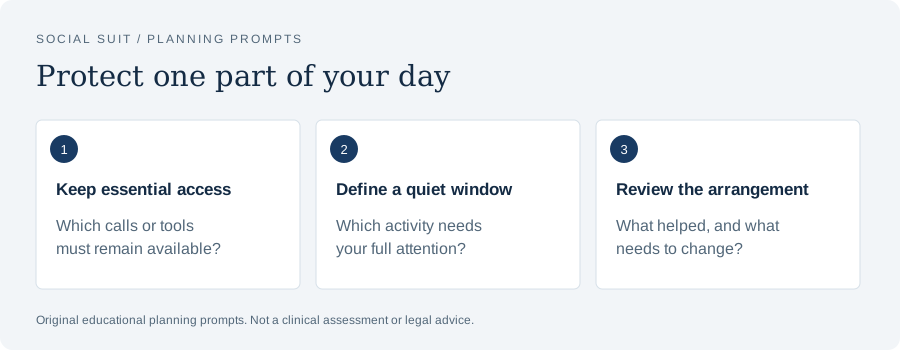
- Keep essential accessWhich calls or tools must remain available?
- Define a quiet windowWhich activity needs your full attention?
- Review the arrangementWhat helped, and what needs to change?
Choose a first action with a visible finish
A useful first action ends clearly. Getting dressed ends when the clothes are on. Preparing a simple breakfast ends when the food is ready. Writing one priority ends when the sentence is written. A vague action such as 'be mindful' can be meaningful to some people but may not tell you when to proceed. Choose something you can recognize without checking an app. The action should fit your energy, mobility, and household responsibilities so that it remains available on an ordinary difficult morning.
Keep the action smaller than the morning you wish you had. If you already rush to catch a bus, a long exercise sequence may create another source of lateness. If you wake to caregiving needs, an uninterrupted half hour may be unrealistic. A short action can still establish intention: gather the day's essentials, drink something appropriate for your routine, or read the note containing the first necessary task. The purpose is to create a usable opening, not to add an achievement requirement before you are allowed to check a message.
Tie the action to an existing cue. After dismissing the alarm, place the phone in its resting spot and begin dressing. After completing required care, look at the written departure plan. After turning on the kettle, prepare the food rather than opening recommendations. A cue should point to an action that can begin immediately. If the action requires supplies you routinely cannot find, prepare those supplies or choose a simpler task. The plan should remove a decision from the morning instead of adding several new decisions.
If you want to change the first action later, do so based on experience. Perhaps writing a priority feels unnecessary on days when the schedule is already clear, while checking the bag prevents repeated searches. Perhaps breakfast comes later because of work hours. Retain the principle of a defined, chosen start while adjusting its form. A routine becomes more useful when it reflects the actual point where you have room to decide. Its value does not depend on copying a particular creator's morning sequence.
Preserve important messages without reading every conversation
Decide which messages need attention before other morning activities. A caregiver may need an update. A parent may need a school closure notice. A worker may need a shift change. Identify the relevant person, channel, and reason. Then decide which conversations can wait for the planned message check. This prevents 'I need to check one thing' from expanding into every chat, notification, and comment. The distinction is based on actual timing needs rather than on which message has the brightest badge.
When a necessary message arrives, give it the response it needs and close the interaction. If the answer requires more work, write the next action and choose when to do it. For instance, a relative's question about a later appointment may need a short acknowledgment now and a detailed answer after breakfast. State that timing if useful. A message can be handled responsibly without beginning a continuous conversation that consumes the rest of the preparation period. Clear expectations help both people understand the pause.
Do not interpret every delayed response as neglect. A friend may have sent a funny clip late at night without expecting an immediate morning reaction. A colleague may have used a convenient moment to write an ordinary request. If you are guessing about urgency, ask during a suitable conversation. Clarify what counts as urgent and how that should be signaled. Repeated checking is a weak substitute for that agreement because it requires you to infer expectations from every new notification.
If a household relies on your early availability, protect the route it actually needs. Keep the appropriate alerts or checking step in place and test it. A morning feed boundary should not accidentally silence an established emergency or care arrangement. Conversely, receiving one necessary update does not oblige you to browse everything else on the platform. Return to the chosen sequence after the required contact. The useful skill is ending a completed interaction even when the app offers many ways to continue.
Plan for the waiting intervals
Morning waiting is a common opening for a feed. Food heats, another person uses the bathroom, a bus is not due yet, or a machine starts. The interval may be too short for a large task but long enough for recommendations to begin. Identify one or two waiting moments that repeatedly lead to browsing. Choose an alternative that fits the duration and the setting. It might be checking a paper list, gathering keys, looking out the window, or simply waiting without adding a task.
An alternative does not have to produce something. The purpose of the interval may be to let you settle before the next responsibility. Do not replace every feed opening with another obligation and then wonder why the new morning feels exhausting. A short pause can remain a pause. If a simple physical action is comfortable and appropriate, it can provide a change of activity, but no particular movement is required. Choose based on what the moment needs and what you can safely do.
If you deliberately choose entertainment during a waiting interval, select a finite item and an endpoint that matches the wait. A saved short article may be easier to finish than a live recommendation stream. A timer can remind you, but it is useful only if you respond to it. Tie the endpoint to the next event: when the food is ready, close the item and eat; when it is time to leave, put the phone away. Do not wait for the feed to signal completion because it may not provide one.
Review whether the waiting plan actually protects the next step. If you still miss the bus because the entertainment item continues, the chosen format may be a poor fit for that interval. Try removing the entertainment from that particular wait rather than banning it from the whole day. If gathering keys works but reading a long message does not, keep the simpler action. The trial should reveal which activities fit a short gap and which create a demand to continue after the gap has ended.
Use a departure-based boundary on busy weekdays
When the morning has a fixed departure, work backward from that event. Identify what must be completed before leaving: care tasks, food, clothing, documents, transportation checks, and any necessary message. Then decide where optional browsing could fit without displacing those steps. You may find that the best answer is after leaving, during an appropriate passenger interval, or later in the day. The feed boundary should protect the departure and preparation, not create another rigid rule unrelated to the actual schedule.
Write a minimum version for late mornings. If you oversleep or a child needs unexpected help, the routine should shrink to essentials. A minimum version might be alarm dismissal, necessary care, dressing, and a direct transportation check. Optional feed browsing remains deferred because there is no available buffer. This is an operational decision about limited time. You do not need to compensate for the shortened routine by completing a long personal development exercise before leaving. Protect what the situation requires.
Leave a small margin where possible. A morning plan that allocates every minute precisely may fail when an ordinary delay occurs. You cannot control every delay, but you can avoid assigning the buffer to an open-ended feed by default. If preparation finishes early, choose deliberately what to do with the remaining time. Perhaps you leave sooner, sit quietly, or read a saved item with a clear stopping point. Unused time is not a problem that must automatically be filled with recommendations.
If commuting involves driving, do not make the feed's delayed place the driver's seat. Finish needed navigation setup before moving and follow applicable safety requirements. A passenger or public transportation interval may offer different options, but it still needs a purpose and endpoint. The morning boundary should not shift an unwanted behavior into an unsafe context. Choose a later window that genuinely fits your day, and be willing to defer entertainment longer when travel conditions make it unsuitable.
Design mornings for caregivers without idealizing quiet
A caregiver's first minutes may belong to someone else's needs. A child may need help immediately, or a dependent adult may have an established routine. In that situation, 'take the first ten minutes for yourself' may not be realistic. Choose a boundary around the phone within the care sequence instead. Keep the necessary communication tool available, complete the required task, and avoid opening unrelated recommendations during the transition. A deliberate morning can coexist with responsibility; it does not require pretending the responsibility is absent.
Identify which checks are part of care and which are reassurance loops. A confirmed update from the person assisting you may be necessary. Reopening the same conversation several times while no new information is expected may not improve the arrangement. Clarify when an update will arrive and what happens if plans change. That agreement can reduce uncertainty more effectively than constant refreshing. If an actual care plan requires repeated checks, follow it and ask the appropriate professional about any burdens or ambiguities.
Prepare a place to capture nonurgent ideas that arise while helping someone. You may remember groceries, school forms, or an appointment question. Write a brief note or use an accessible capture tool, then return to the task. Opening a social platform to remind yourself can introduce a much longer interaction. A trusted capture method gives the thought a later destination. Review it once the immediate care period is over so that the alternative remains reliable rather than becoming a collection of forgotten notes.
Discuss shared responsibilities during a calm period. If you and another person both begin the day by checking messages about who will do what, a clear agreement the evening before may remove the need for repeated negotiation. Confirm what remains flexible and what requires a live update. Do not assume every morning can be scheduled perfectly. The aim is to reduce avoidable uncertainty, leaving attention for the real changes that occur. A feed boundary works better when household coordination has its own dependable route.
Adapt the plan to shift work and irregular schedules
Define morning as the period after your main sleep, even when it occurs in the afternoon or evening. A conventional sunrise routine may be irrelevant to someone who works nights. The important sequence is waking, meeting necessary needs, and beginning the next part of your day. Set the feed boundary around that sequence. If people send messages during your rest period, tell relevant contacts when you will review ordinary messages and which route is available for something genuinely urgent.
Use a sequence rather than one clock time when your shifts vary. For example, complete essential care, eat or prepare what your schedule requires, and check the day's first commitment before entering entertainment feeds. That order can survive different wake times better than a rule tied to seven in the morning. If fatigue or scheduling makes the sequence difficult, simplify the first action. The plan should be workable after a demanding shift, not depend on the energy of a relaxed day off.
Review whether the preceding sleep period offers enough opportunity for rest. The NHLBI healthy sleep habits guidance treats sleep scheduling and the sleep environment as important considerations. A morning phone boundary cannot compensate for a schedule that routinely leaves inadequate rest opportunity. If work or other duties create that problem, discuss possible support or adjustments with the appropriate person. Treat feed use as one practical behavior within a larger set of conditions rather than the sole explanation for every difficult start.
For variable days, prepare two versions: a short obligation day and a more flexible day. The short version protects necessary tasks and departure. The flexible version can include a planned browsing window after the first chosen activity. Avoid using the flexible version as permission for indefinite scrolling simply because there is no immediate appointment. Decide what you want the extra time to support. Rest, connection, and entertainment are valid choices, but they remain choices when they have a place in the day rather than silently becoming the whole opening.
Handle news and updates with a question
Some people open a morning feed because they want to know what happened overnight. That purpose is understandable, but the feed may mix news with arguments, advertising, personal updates, and recommendations. Define the question you need answered. Is there a local safety notice, a transportation disruption, a school closure, or a particular developing event? Use a reliable direct source suited to that question. A broad search for everything important can become an endless session because no amount of information completes it.
Choose the amount of review appropriate to the decision. A closure notice may require a yes or no answer and a change of plan. A complex public issue may deserve later reading when you have time to compare sources. The first minutes after waking may not be the best place for that deeper work. Save the question and choose a later window. You are not refusing to stay informed; you are matching the information task to the time and attention it requires.
If distressing content repeatedly captures the morning, stop and identify whether continued exposure helps you make a necessary decision. Reading many versions of the same alarming claim may not add useful information. A direct official update may be enough for the immediate action. If you want a fuller understanding, set a later research task with specific sources and an endpoint. The practical approach in a practical way to reduce doomscrolling can help separate information needs from repeated checking that leaves no clear next step.
Avoid forwarding upsetting material merely to prove that you have seen it. If someone needs a warning or update, share the necessary information with appropriate context rather than distributing graphic or speculative content. Keep the morning task bounded: confirm, decide, and move on. A feed can make every item feel like something you must investigate immediately, but your actual responsibilities may be much narrower. The useful question is what action depends on this information today, and whether the source you are using can reliably support that action.
Keep social connection while changing the timing
A morning exchange with a friend can be valuable, especially when schedules or distance make that the easiest shared time. Do not classify every early social interaction as unwanted simply because it occurs on a phone. Ask whether the interaction is chosen, whether it has an understood duration, and whether it fits the next responsibility. A direct conversation can remain in the morning routine while recommendations are deferred. The boundary should protect connection that matters rather than removing it indiscriminately.
If a conversation regularly becomes longer than the available time, state the endpoint at the beginning. You might say that you can talk until it is time to prepare for work and will return later. Use an endpoint you can honor. When it arrives, close kindly and follow through on any promised later contact. This makes the pause understandable to the other person. Abrupt disappearance without explanation can create uncertainty, while an unlimited exchange can displace necessities. A clear agreement is a practical middle path.
For a group chat, decide whether you need the full overnight history before starting the day. Sometimes one summary or a direct question is enough. If the group expects immediate attention, discuss that expectation rather than assuming it. Different members may have different schedules. You can ask people to use a distinct route for time-sensitive coordination and allow ordinary discussion to wait. Do not volunteer to monitor the group continuously unless that is a role you actually want and can fulfill.
If the feed is your usual route to finding a friend's update, consider a more deliberate subscription or direct visit that avoids unrelated recommendations where the platform permits it. The exact tools vary. What matters is the distinction between looking for one person's information and opening an unlimited stream. When the platform cannot support a narrow route, save the visit for the planned browsing window. Keeping a relationship does not require giving every surrounding recommendation the same place in your morning.
Test one change for a week
Select one change: a first action before feeds, a direct route to essential tools, or a specific time when optional browsing begins. Avoid changing everything at once. A narrow trial lets you see whether the chosen transition actually matters. If the problem is alarm-to-feed movement, test that route. If it is an overlong message check, test the message endpoint. The plan should have a visible behavior you can observe after a few ordinary mornings without turning the experiment into an all-day tracking assignment.
Record three useful observations after the opening period. Did the necessary tasks happen? Did the feed begin before or after the chosen first action? Was the morning more manageable, unchanged, or disrupted by the new arrangement? Include a short context note when something unusual occurred. Do not treat an emergency morning as equivalent to a routine weekday. The record should help explain conditions, not produce a score that makes you feel worse. A small amount of honest information is enough to guide the next adjustment.
Review the trial halfway through if it creates a practical failure. A blocked care message, missed transit update, or inaccessible tool should be corrected promptly. You do not need to preserve an unsuccessful setting merely to complete seven days. Restore the required function and continue with a narrower boundary. The experiment exists to support the morning. It should not demand that you tolerate avoidable problems in order to demonstrate commitment to a rule.
At the end, decide whether to retain, revise, or abandon the tested change. Retain it if it protects the chosen activity and preserves access. Revise it if the principle helps but the action is too large or the route is awkward. Abandon it if it solves a problem you do not actually have or creates a cost greater than the benefit. That is a useful outcome, not a failure of character. The next version should respond to what happened rather than to a generalized ideal of how disciplined mornings are supposed to look.
Recover when the feed comes first
If you notice that you have opened a feed before the chosen first action, close it at the next reasonable point and begin the action. The entire morning does not need to be discarded. You can still dress, eat, prepare, or complete the required check. Avoid the idea that once the routine is broken there is no reason to stop scrolling. A boundary is useful partly because it tells you how to return after an interruption. The next action remains available even when the original order changed.
If you are already late, use the minimum version and defer the analysis. Do not search for productivity advice while the departure time approaches. Complete the essential steps and review the opening later. A practical review asks how the feed began and which condition can be changed. Perhaps the phone stayed in your hand after the alarm. Perhaps the first action required supplies that were missing. Perhaps an overnight preview created a compelling unanswered question. Each explanation suggests a different adjustment.
Make the recovery step easy enough to use repeatedly. Place the phone, identify the next necessary action, and start it. You may want a short written cue near the place where you usually browse. The cue should state what to do, such as 'after alarm, dress,' rather than accuse you of wasting time. Self-criticism adds another demand without clarifying the route forward. A concrete cue can reduce negotiation at the point when you are already trying to regain the morning.
For a more detailed review, use what to do after a scrolling setback. Bring the morning sequence into that review and choose one correction. If repeated setbacks are connected to distress, exhausted schedules, or other concerns, consider whether the habit plan needs support beyond an app setting. A routine can be improved while acknowledging the conditions that make it difficult. You do not have to choose between practical change and asking for help.
Use a different plan for weekends and travel
On a day with no early departure, choose what you want the opening period to contain. Perhaps it is breakfast with someone, an unhurried shower, a household task, or simply a quiet interval. Complete that chosen opening before deciding on the feed. Without a departure deadline, optional browsing can expand because nothing signals the next step. Give the day a visible transition even if the schedule is relaxed. The purpose is to retain a decision point, not turn a rest day into a workday.
If you intentionally choose a longer browsing session on a free morning, name it as entertainment and decide when it ends. You might stop before an outing, after a finite saved item, or when it is time to eat. A larger allowance can still have a boundary. Review whether it fits what you wanted from the day. If it regularly displaces the activity you value, adjust that particular window. Do not assume that a weekday rule must apply unchanged, but do not let the absence of work erase every chosen priority either.
Travel can make early phone use necessary. You may need booking details, directions, arrival messages, or local alerts. Prepare a short information list for the morning and use direct sources. Once the travel task is complete, return to the sequence. A hotel or guest room may change the device placement, so decide where the phone will go after the alarm. A portable boundary depends on purpose and order rather than on having the same furniture every day.
After travel, remove temporary exceptions that no longer serve a need. A booking app alert or expanded message check may have been useful for one trip. Keeping it indefinitely can create a new route into morning browsing. Review what remains necessary and restore the usual first action. Keep any change that improved accessibility or reliability. The goal is to learn from the exception, preserving useful adjustments while letting temporary demands end when the situation that justified them is over.
Coordinate the morning with the evening
The morning begins partly with decisions made before sleep. A charged device, a set alarm, a prepared departure item, and a clear location for the phone can reduce early searching. Choose only the preparation that addresses a repeated problem. If you routinely open several apps to find an appointment address, save that address. If the alarm dismissal leads into a feed, plan where the phone goes next. The evening task should be finite so it does not become a new browsing session that undermines the next day's start.
For the physical arrangement, keeping the phone away from the pillow explains how to preserve alarms, accessibility, and essential overnight contact while changing the browsing route. A morning boundary and an overnight placement can support each other, but they remain separate decisions. You may keep the device close for a necessary function and still avoid opening recommendations when you wake. Evaluate the actual sequence instead of judging it by a single distance rule.
If evenings regularly run late because of feeds, the morning may feel harder regardless of its design. Address that sequence through protecting the last hour before bed, while remaining open to other reasons for difficult waking. Do not claim that every tired morning is caused by social media. A useful description notes when the evening ended, what rest opportunity was available, and what the next morning required. Those observations can guide practical adjustments or a conversation with a healthcare professional.
Keep preparation modest. A bag ready by the door and one written first task may be enough. Long checklists can fail when the evening is demanding, leaving you with guilt and the same morning searches. Start with the item that most often triggers phone use before you are ready. If that works, add another only when it addresses an identified need. The connection between evening and morning should reduce effort across both periods rather than simply move a large planning burden from one tired moment to another.
Recognize concerns that need more than a routine
If waking is consistently difficult, you feel significantly distressed, or daily functioning is affected, consider appropriate professional support. Describe the symptoms and their impact rather than presenting a feed habit as a complete diagnosis. A morning plan may help with one behavior while a clinician considers sleep, mood, medication effects, health conditions, or other factors relevant to your circumstances. You do not need to finish a week-long trial before seeking care when the concern already warrants attention.
When an online experience involves serious harm, separate immediate support from habit planning. A person facing harassment, threats, or another concerning experience may need safety support, reporting, or qualified advice. For questions about a possible legal claim, Social Suit's legal process information explains preparation topics without determining eligibility or promising an outcome. Keep facts and interpretations distinct, and ask about secure sharing before sending sensitive information. The morning routine is not a substitute for responding appropriately to the underlying harm.
Keep your measure of success connected to a real activity. Did the first necessary task happen without a long detour? Did you leave with the items you needed? Did a chosen conversation fit rather than expand indefinitely? These results matter more than whether you obeyed a fashionable rule about never touching a phone before breakfast. A useful boundary makes the day easier to begin while protecting functions that belong there. It should leave room for deliberate entertainment later, if that fits your preferences.
Choose tomorrow's version in one or two sentences. State the essential phone task, the first action that follows it, and when optional feeds become available. For example, you may dismiss the alarm, complete the care routine, and check entertainment after preparation is finished. The specific sequence is yours to adapt. What makes it useful is that it creates a decision before an unlimited stream begins, gives necessary contact a clear route, and provides an ordinary recovery step when the opening goes differently than planned.
Sources and further reading
These primary resources provide context. Our practical examples and planning suggestions are original educational material, not validated treatment protocols. Linked organizations do not endorse Social Suit.