 Social Suit
Educational information, not individual medical or legal advice. Practical examples are hypothetical and do not describe clients or study participants. This article is not represented as reviewed by a clinician or attorney. How we prepare our guides.
Start with the job the overnight arrangement must do
Keeping a phone away from the pillow is a small environmental decision with several possible purposes. You may want to stop checking recommendations each time you wake, avoid answering ordinary messages from bed, or make the transition to sleep less tangled with online activity. Before moving anything, identify the particular behavior you want to change. A charger across the room is useful only if it helps with that behavior while preserving the functions you actually need. Distance by itself is not a measure of a successful night.
Consider the difference between reaching for an alarm and reaching for an app. The alarm has a defined job: alert you at a chosen time. A recommendation feed can continue offering new material without a natural stopping point. When both sit behind the same screen within easy reach, completing the alarm task may lead into browsing. The aim of a new arrangement is to make that transition less automatic. You can still use a phone as an alarm while deciding that the bedside surface is no longer the place where entertainment starts.
Choose a concrete observation for your first experiment. For example, you might record whether you opened an entertainment feed after getting into bed, whether you could hear the alarm, and whether a necessary contact reached you. Those observations cover both the boundary and the essential functions. They are more informative than judging the room by how tidy or technology free it looks. An arrangement that photographs beautifully but prevents you from receiving a caregiving call is not a good arrangement for your circumstances.
This guide offers practical planning, not an explanation for every sleep difficulty. Pain, stress, illness, work schedules, environmental noise, and sleep disorders can all require attention independent of phone placement. The NHLBI guidance on healthy sleep habits includes a quiet period before bed and attention to light and the sleep environment. Moving a phone can support a routine, but it does not establish the cause of symptoms or guarantee better sleep. Keep that distinction clear while evaluating your own results.
Inventory what must remain available
List the functions you use overnight before choosing a location. Common examples include an alarm, calls from particular relatives, emergency contact, a required on-call notification, accessibility controls, a prescribed monitoring system, audio used for a specific purpose, and the ability to request assistance. Write functions rather than app names. An app may provide several things, and some of them may be optional. Naming the job allows you to preserve the necessary part while changing the part that repeatedly brings you back into a feed.
For each function, note whether it requires seeing the screen, hearing a sound, touching the phone, or keeping the phone within a particular range. An alarm may work from a shelf nearby. A communication aid may need to remain within reach. A monitoring system may have device-specific requirements that you should confirm with its official instructions or the professional who supports it. Do not experiment casually with a medically important connection. The browsing boundary should adapt to an established care arrangement, including whatever proximity that arrangement requires.
Separate a confirmed need from a concern that can be clarified during the day. If you are unsure whether a relative would telephone or send a social platform message in an emergency, ask them which route they use. If work has an on-call procedure, obtain the actual procedure. Checking every channel all night because something might be important can become an expensive substitute for a clear communication agreement. The answer may still involve keeping the phone nearby, but it should be a deliberate decision based on the route that matters.
Then identify functions that can wait. A promotional alert, a comment on a nonurgent post, a suggested video, and a routine group chat usually do not need the same overnight treatment as an agreed emergency call. Avoid assuming that every unread item is an obligation. Write a morning destination for the items you choose to defer: after breakfast, during a planned message check, or once work begins. Deferral becomes easier to understand when the item has a later place, rather than feeling as if you must either answer immediately or ignore it forever.
Choose distance that fits the room and your mobility
The best distance is the smallest change that meaningfully interrupts the unwanted action without creating an access problem. Some people can place the phone on a dresser and retrieve it easily. Others may use a wheelchair, have limited reach, experience dizziness on standing, or need assistance to move safely. For them, requiring a walk across the room may be an unreasonable design. A reachable shelf, a closed stand, or a position outside the direct line of sight can provide a different kind of interruption without making essential use difficult.
Look at the route you would use in darkness. Avoid trailing cables across that route or putting a device where reaching for it requires balancing on furniture. Choose a stable surface suitable for the equipment. Follow the device manufacturer's charging and ventilation instructions. The purpose of the experiment is to reduce unnecessary interaction, so introducing an awkward physical maneuver would work against the purpose. If a placement seems safe in daylight but confusing when half awake, test a simpler option rather than making the setup increasingly elaborate.
A small room still offers choices. The phone might sit on the far end of a desk rather than immediately beside your head. It could face away from the bed, rest inside an open organizer with the charger secured, or remain on a reachable table while the entertainment app is moved off the first screen. You do not need to purchase furniture to begin. The meaningful change is in the route between the impulse to check and the action of opening a feed, not in the number of feet between device and pillow.
Try the setup while fully awake. Lie or sit in your usual position, identify how you would request help, and check whether you can operate the controls you need. If another person shares the space, ask whether the position blocks their movement or places light in their view. Make these checks before relying on the arrangement at night. A daytime rehearsal can reveal a cable, volume, or access issue without the pressure of a missed alarm or an urgent call. Keep the rehearsal brief enough that it is easy to repeat after changes.
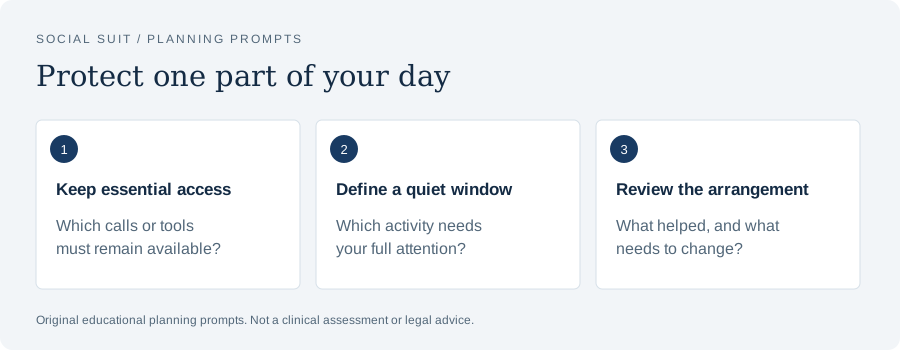
- Keep essential accessWhich calls or tools must remain available?
- Define a quiet windowWhich activity needs your full attention?
- Review the arrangementWhat helped, and what needs to change?
Protect alarms without reopening the whole phone
If your phone is your alarm, configure and test the alarm before putting the device away. Check the intended time, sound, volume, power supply, and whatever setting controls the alarm in your particular setup. Do not assume that a setting called silent, focus, or do not disturb behaves identically on every device. Use current official instructions for the features you rely on. A simple trial alarm during the evening is a more useful check than confidence based on what an older phone used to do.
Decide how you will dismiss the alarm in the morning. If reaching the device leads directly into scrolling, the phone placement has moved the browsing location without changing the sequence. You might dismiss the alarm and immediately place the phone back on its stand, then complete a chosen morning action. Or you might use a separate alarm if that is available and accessible. The choice depends on your needs. A separate clock is an optional tool, not a requirement that you should buy before you can try a boundary.
Plan for predictable exceptions such as an unusually early appointment or travel. Set the alarm while you are alert, and consider a backup if missing the event would have serious consequences. A backup can be another appropriate alarm or an agreed call from someone who has offered to help; it should not become a burden imposed on another person without agreement. The overnight browsing plan needs enough flexibility to support real obligations. You can resume the usual arrangement after the exception instead of treating one different night as proof that the routine has failed.
When an alarm wakes a partner or roommate, discuss the sound and placement together. Moving a device farther away may require a louder alarm, which could disturb someone else. A wearable or another accessible alert may be a better option for certain people, but its suitability should be tested rather than assumed. The practical question is who needs to hear or feel the alarm and who should be able to continue resting. Solve that shared problem explicitly instead of expecting the other person to tolerate an avoidable disturbance for the sake of your experiment.
Define an overnight contact route
Tell the small number of people who might need to reach you what route remains available. A useful message is specific: ordinary chat replies will wait until morning, but urgent calls should use the agreed number. This does not require announcing a personal boundary to every follower. It requires making sure that someone with a legitimate urgent need does not rely on a channel you have intentionally quieted. The explanation should match your circumstances, including any responsibility you have for another person or for a work role.
Test the route with the relevant person during the day. If you configure an exception for a contact, check the actual notification while the phone is in its overnight location. Do not infer that adding someone to a list necessarily makes every kind of message from them audible. Their call, text, and social app message may behave differently. Note the route that passed the test. If the person later changes numbers or the device updates, review the arrangement rather than assuming that a previously successful test applies forever.
Avoid making the exception list so broad that it recreates the original problem. Including every group, colleague, and account because one of them could conceivably post something important means almost nothing has been deferred. Begin with the people and routes tied to actual responsibilities. If the list must be large, look for an organized escalation route: one designated caller, an official on-call system, or another arrangement suitable to the role. The solution may be collective communication rather than another personal setting.
Be clear about what you can and cannot promise. If you are not the designated emergency contact, you should not imply that you will reliably answer every overnight message. If you are the designated contact, the arrangement must honor that responsibility. A boundary should help other people understand your availability, not create false reassurance. For ongoing duties, discuss what happens if the primary route fails and who else can assist. Those conversations reduce the need to inspect optional feeds in case a serious request has somehow appeared among unrelated updates.
Give unfinished thoughts a place outside the feed
Many bedtime phone checks begin with a legitimate thought: remember an appointment, add an item to tomorrow's list, or capture a question. The problem emerges when the reminder tool shares space with a feed. Put a simple alternative within your usable reach if that fits your needs. A paper notepad can hold a short reminder without offering recommendations. A voice or accessibility tool may be more appropriate for someone who cannot comfortably write. The alternative should reduce effort, rather than demand a detailed nightly journaling project.
Use a deliberately small note format. Write the task, the next action, and the earliest appropriate time to address it. For example, 'appointment: check the confirmation after breakfast' is sufficient. You do not need to open the calendar immediately if the item can safely wait. When a detail is genuinely time sensitive, use the required tool and return it to its place afterward. The distinction is between capturing something so you can disengage and launching an investigation whose endpoint keeps moving.
If your chosen note method is on the phone, prepare a direct route to it. Open the note you need before bedtime, use a shortcut supported by your device, or choose another accessible approach that does not require passing through social content. Avoid claiming that one arrangement is universally possible; features and accessibility needs vary. After recording the thought, close the tool and restore the overnight position. It may help to say the next action plainly: 'The reminder is saved; this is finished for tonight.'
Review those notes at a sensible time the next day. If you never return to them, you may stop trusting the alternative and resume checking the phone to make sure nothing is forgotten. The review need not be long. Transfer an appointment, discard an idea that no longer matters, or place an unresolved question on the day's list. A reliable daytime follow-through makes the nighttime capture method credible. It also reveals whether your reminders are ordinary planning items or worries that deserve a separate conversation and more support.
Distinguish waking up from needing to browse
An overnight awakening can happen for many reasons. Do not treat the fact that you woke as evidence that the phone caused it, or assume that a successful placement will prevent every awakening. Instead, decide what you want to do with the device if you are awake. Perhaps essential contact stays available while entertainment remains deferred. This is a behavior plan about one choice during wakefulness. It is not a prescription for insomnia, and it should not replace advice from a clinician when sleep problems are persistent or concerning.
Prepare a brief response to the ordinary impulse to check. You might notice the thought, confirm that there is no agreed urgent signal, and leave the phone in place. You might use a necessary accessibility function without opening other apps. Avoid turning the moment into a test of moral strength. The goal is to make the next action clear enough that you do not have to negotiate with every notification. A simple rule tied to an actual purpose usually offers more guidance than telling yourself never to touch the device under any circumstances.
If you do pick up the phone, identify the job before unlocking it. Is there a call to return, a required check to complete, or a reminder to capture? Once that job is complete, return the device to the chosen location. An unplanned check does not require an unplanned hour. You can end the sequence at the next reasonable point. This approach preserves the ability to respond to a real need while reducing the assumption that any legitimate phone use grants the feed unlimited access to the rest of the night.
When wakefulness becomes an ongoing problem, discuss it with an appropriate healthcare professional. The NHLBI page on insomnia treatment describes options beyond ordinary habit changes, including treatment approaches selected for the person's circumstances. Do not keep moving your charger farther away as a substitute for evaluating symptoms. Bring a concise description of your sleep pattern, daytime impact, and relevant routines. The phone arrangement can be part of that description without becoming a complete explanation for it.
Make entertainment finish before the device is parked
If you want to watch or read something in the evening, give the activity a beginning and an endpoint outside the bed. Choose the item deliberately and decide what happens afterward. A single saved article, a finite episode, or a conversation with a known purpose has a clearer boundary than opening recommendations and waiting to feel finished. The endpoint should be linked to an action you can carry out: close the app, set the alarm, and place the device where it will remain overnight.
Keep the parking sequence short. An elaborate shutdown ritual can become another task you postpone, especially after a demanding day. You may only need to check the alarm, connect the charger, and confirm that the urgent route is available. Put those checks in the same order until they are familiar. If something repeatedly interrupts the sequence, identify that specific interruption. A new message preview, a reminder badge, or a recommendation on the home screen may need its own adjustment rather than a completely new routine.
Avoid adding another entertainment device simply to satisfy the appearance of a phone boundary. If moving the phone leads you to watch the same feed on a tablet under the covers, the relevant behavior has continued. On the other hand, an appropriate audio device used for a finite purpose may be useful in your circumstances. Judge the substitution by its actual role and consequences. Ask whether it preserves a needed function, provides a defined activity, or merely moves endless browsing onto a different screen.
If the transition before bed is the difficult part, pair the placement experiment with the practical sequence in protecting the last hour before bed. The two decisions answer different questions: what belongs in the evening, and where the phone rests overnight. You can address one at a time. Begin with the point where your intention most often changes, then extend the routine only if that first adjustment helps. This keeps the experiment manageable enough to evaluate after an ordinary week.
Build an accessibility-first version
For some people, a phone is a communication aid, a control for the environment, or an essential connection to assistance. Keeping it outside reach could reduce independence or create risk. In that situation, begin with the necessary access and work outward. The entertainment boundary might involve screen layout, selected alerts, an app limit with appropriate exceptions, or a direct shortcut to an essential function. The device can remain physically close while the unwanted route becomes less convenient. Physical distance is one possible tool among several.
Ask which interaction is difficult and which interaction must remain easy. Someone who uses voice control may not benefit from a closed box. Someone who relies on a large display may not benefit from a tiny substitute alarm. Someone who cannot repeatedly sit up may need the screen visible from bed. Design around those facts. If you already have professional support for assistive technology, bring the browsing problem to that person as a practical configuration question. Do not dismantle a working support system simply because common advice assumes independent movement.
Test the adjusted arrangement in the situations that matter. Can you request help without an entertainment screen obscuring the needed control? Can you dismiss an alarm without navigating through unrelated alerts? Does a quiet setting also silence something you depend on? Record any access failure and restore the necessary function promptly. A successful plan should preserve or improve usability for the important task. Reduced screen minutes cannot compensate for losing a communication function that makes the night manageable.
Include another person in testing only when you want their help and have agreed on the role. A family member can assist with a setting or check a call route without taking over the device or monitoring every interaction. Keep authority and privacy clear. The aim is a usable arrangement chosen with the person, not a confiscation routine. This matters particularly when a disabled adult's access needs are misunderstood as excuses for entertainment. The practical question remains the same: how can necessary access and a chosen browsing boundary coexist?
Plan for caregivers and people on call
A caregiver may need to respond to a child, an older relative, or another person during the night. The phone may carry an agreed alert or provide a way to request assistance. Begin by identifying the genuine overnight duty, including its hours and the channels involved. Then separate that duty from optional checking. Being responsible for one person does not necessarily require viewing every recommendation, group message, or work discussion. The placement plan should preserve the care route while giving unrelated material a daytime destination.
If several people share the responsibility, clarify who is primary on a particular night. Vague shared responsibility can cause everyone to check repeatedly and still leave uncertainty about who will respond. A simple handoff states who is available, what signals matter, and when the role changes. Do not invent a system that conflicts with a clinical care plan or employer procedure. Work within the arrangements already governing the responsibility and ask the appropriate person to resolve ambiguities. A phone boundary is only as sound as the duty it protects.
For a worker on call, test official notifications and understand escalation requirements before changing overnight settings. If the role demands immediate response, the phone may need to stay within reach. You can still avoid opening nonwork feeds after checking the required message. Prepare any needed login or charger early so a work alert does not begin with a search through several distracting screens. After completing the work task, restore the agreed state. The boundary is around unnecessary expansion, not around refusing a responsibility you have accepted.
When the duty changes from night to night, use two clearly named arrangements rather than trying to remember a complex series of temporary exceptions. One arrangement might preserve the on-call route; another may quiet routine work alerts when you are not responsible. Review the actual settings each time until the process is reliable. If frequent changes create mistakes, simplify. A slightly less restrictive but dependable arrangement may serve you better than a strict one that accidentally blocks important contact on the one night you need it.
Share the bedroom without policing each other
When two people share a bedroom, their devices may serve different purposes. One person may need an alarm, another may use an accessibility tool, and either may have a different work schedule. Discuss the effects that actually cross the shared space: sound, light, charging cables, and conversations that wake the other person. Avoid making screen placement a judgment of character or a demand for access to the other person's account. A shared arrangement can address disturbance while leaving each person responsible for their own private activity.
Use a concrete request. For example, ask whether routine videos can end before lights go out, or whether the screen can face away from the other person's position. If a required alert must remain audible, discuss how to reduce its effect on the person who is not on duty. A request about an identifiable disturbance is easier to negotiate than a broad accusation that someone cares more about their phone than the relationship. It also makes success observable: less light in the other person's eyes, fewer unnecessary sounds, or a clear handoff after an alert.
Do not hide, lock, or move someone else's device without agreement. Even an apparently helpful relocation can disrupt an alarm, care connection, or sense of control. If the other person wants assistance, agree on what that assistance means. Perhaps you remind each other to set alarms or keep a shared charger station organized. Assistance should remain voluntary and specific. The room can support a boundary without becoming a site of surveillance, arguments over screen-time reports, or unilateral enforcement.
If you live in a crowded home, focus on what you can control. You may not be able to eliminate everyone else's sounds or create a private charging area. A stable spot within your own space and selected notification changes can still address your browsing sequence. Do not make an ideal room a prerequisite for beginning. At the same time, acknowledge constraints when evaluating results. A night disrupted by household noise is not a fair test of whether moving your own phone changed the urge to open a feed.
Use a realistic seven-night trial
Choose a week that resembles your usual life rather than one filled entirely with unusual travel or emergencies. Record the starting arrangement briefly, then decide on one placement change. If you simultaneously remove several apps, replace the alarm, change bedtime, and alter every notification, you may not know which change caused a problem or helped. A focused trial makes troubleshooting easier. You can add another adjustment later if the first change leaves a clearly identifiable route into unwanted browsing.
Each morning, record three short observations: whether essential functions worked, whether you browsed after settling down, and whether the arrangement created an access or household problem. Add context only when it matters, such as being on call or sleeping somewhere different. Avoid repeatedly checking the clock during the night to produce a precise record. The record is a practical aid, not a research study. Rough observations can still tell you that the alarm was audible, that a charger was awkward, or that the first screen kept drawing you into recommendations.
Review the trial by looking for patterns rather than a perfect score. If the first two nights involved forgotten charging but the remaining nights worked, improve the charging cue. If you repeatedly retrieved the phone to write reminders, place a suitable capture tool nearby. If essential calls failed, restore them and revisit the setting before continuing. These are design findings. Treating every problem as lack of commitment would conceal the information you need to create an arrangement that can survive ordinary fatigue and competing responsibilities.
At the end of the week, keep the parts that worked and choose one next adjustment. You may decide that the phone should remain close but face away, that alerts need a narrower list, or that a separate alarm is worth trying. You may also conclude that placement was not the main point of difficulty. That conclusion is useful if it is grounded in observation. A reasonable experiment can rule out an unhelpful strategy and redirect attention toward the evening sequence, daytime workload, or support that you actually need.
Handle an unplanned check without making the night longer
Suppose you retrieve the phone to check tomorrow's weather and find yourself watching several clips. When you notice, stop at the next possible point and return the device. Do not spend another half hour analyzing the lapse on the same screen. The useful review can wait until daylight. A nighttime setback becomes more costly when it turns into searching for motivational advice, comparing yourself with strangers, or writing an elaborate new plan while you are trying to rest. A short return to the chosen arrangement is enough for that moment.
In the morning, identify the opening that led to the feed. Was weather available through a direct tool, or did you open a social platform to ask someone? Did a notification preview lead to a comment thread? Did you move the charger but leave the phone within the same habitual reach? Answer with a description rather than a self-judgment. Then modify one link in the sequence. A direct weather shortcut or a quieter preview setting may solve a more specific problem than increasing the distance again.
Preserve useful contact when adjusting after a setback. If a friend sent an important message and the app also offered recommendations, you do not necessarily need to block the friend. You might move the conversation to a more direct route, finish the reply without opening the home feed, or agree on when nonurgent conversation will happen. The adjustment should fit the trigger. Removing every relationship from nighttime access may be excessive when the actual problem was the recommendation screen encountered after a legitimate exchange.
For a broader review of setbacks, what to do after a scrolling setback provides a way to separate the event from judgments about yourself. Use that review after you are rested enough to think clearly. The practical question is which condition made the unwanted action easy and which change would help next time. You can retain a useful overnight arrangement even when one night went differently. A boundary becomes more resilient when it includes a workable recovery step.
Adjust for travel, shift work, and changing rooms
When sleeping somewhere unfamiliar, do a short arrival check. Identify a stable charging surface, the route to the door or bathroom, the power supply, and the alarm arrangement. Keep the plan simple enough to reproduce without carrying specialized equipment. A hotel room, guest room, or temporary lodging may not offer your usual layout. Choose the equivalent function: a spot that keeps essential access available and makes casual browsing less immediate. Do not measure success by whether the room matches your home setup exactly.
For shift work, define the arrangement around your sleep period rather than around conventional nighttime hours. Essential contact may need to remain available during the day, while routine alerts are deferred because you are resting. Tell relevant people your actual availability. A message sent at noon can still interrupt your sleep if noon falls inside your rest period. The boundary should reflect the life you are living. If work scheduling makes rest difficult, that issue may require a workplace discussion beyond anything a phone position can solve.
If you move between two homes or share custody responsibilities, make a minimal version for each location. Keep the same basic sequence even if the furniture differs: confirm essential functions, choose the resting place, and defer optional feeds. A written reminder in your own bag may help when arrivals are busy. Avoid requiring another household to enforce your routine unless they have agreed to help. The arrangement is more portable when it depends on a few clear decisions instead of a particular desk, charger, or room arrangement.
Review exceptions after they end. Travel often creates a temporary habit of checking booking updates, directions, and messages from bed. Once those needs are gone, return the phone to the usual role. You do not need to keep an expanded notification list because it was useful during one journey. At the same time, retain anything that improved accessibility or reliability. An exception can reveal a better design, so review its actual benefit rather than automatically discarding or permanently adopting every change.
Know when the question has become bigger than placement
Seek appropriate support when the difficulty extends beyond an ordinary habit experiment. Persistent trouble sleeping, significant daytime impairment, distress, or concerns about a medical condition deserve a qualified assessment. Describe what you experience and what you have tried. A professional can consider factors that a phone-placement guide cannot evaluate. You do not need to prove that social media caused a problem before asking for help, and you should not delay care until you have completed a perfect week of observations.
If online experiences involve serious harm, use the help suited to that harm. Account abuse may require platform reporting and support from a trusted person. A health concern may require care. Questions about legal options require a qualified attorney's assessment of the facts and applicable requirements. Social Suit's legal process information can help you prepare questions about a possible claim, but it cannot determine eligibility or provide an emergency response. Keep a factual account and ask how sensitive information should be shared securely before sending it through an ordinary inquiry form.
The placement experiment should remain proportionate. You do not need to prove that you never touch the phone after lying down. You need an arrangement that supports your chosen rest period, preserves essential functions, and reduces the particular browsing pattern you wanted to change. If the arrangement demands constant vigilance, revise it. A practical boundary should simplify decisions at a tired moment. It should not turn the bedroom into a place where every necessary interaction feels like breaking a rule.
Finish by choosing tomorrow's usable version. Specify the location, the necessary alerts, the alarm check, and the action you will take after a nonessential urge to browse. Make the plan concrete enough that another person could understand it without a long explanation, while keeping private details private. Then let the next night's experience inform the next adjustment. The useful outcome is a repeatable decision supported by the room and the communication arrangement, with enough flexibility to handle real needs and enough clarity to keep optional feeds from expanding into every wakeful moment.
Sources and further reading
These primary resources provide context. Our practical examples and planning suggestions are original educational material, not validated treatment protocols. Linked organizations do not endorse Social Suit.