 Social Suit
Educational information, not individual medical or legal advice. Practical examples are hypothetical and do not describe clients or study participants. This article is not represented as reviewed by a clinician or attorney. How we prepare our guides.
Treat the request as a decision separate from the greeting
A direct message can feel personal before you know who sent it. It may use your name, refer to a recent post, or appear to come from a familiar account. Those details can make the greeting plausible without establishing that the request is legitimate. Separate the two. What does the sender want you to do? Are they asking for money, credentials, a code, documents, a link click, secrecy, or a move to another service? Evaluate that action on its own. A friendly opening should not decide whether you grant access or share information.
Some messages are ordinary attempts at conversation, and unfamiliar contact is not automatically a scam. The useful habit is to slow down when a request has consequences. You can read without immediately answering. You can ask a general question without supplying sensitive information. You can verify a claim through an independent route. You can decline. These options preserve your ability to choose. The message's urgency, tone, or familiarity does not create an obligation to act before you understand the situation. A legitimate practical request should be able to withstand appropriate verification.
Imagine receiving a message from a friend's account about a financial emergency. The account name and photograph are familiar, but the request asks you to send money immediately and keep it quiet. Contact the friend through a route you already trust, such as their known phone number, before acting. Do not use a new number supplied in the suspicious message as the only check. The account may be compromised or impersonated. Verification concerns the actual person and request, not merely whether the profile resembles someone you know.
Identify pressure, urgency, and secrecy
Urgency can narrow attention. A sender may claim that your account will be deleted, an opportunity will expire, or a person will suffer unless you respond now. Ask what evidence supports the claim and whether an official route can confirm it. If the request concerns a platform, open the service independently and check its current help or account information. If it concerns a friend, use a known contact route. If it concerns a business, locate official contact details yourself. Verification should not depend entirely on links, phone numbers, or documents supplied by the message.
Secrecy can also be a warning sign when it prevents ordinary checking. A sender may say that you must not tell family, colleagues, a bank, or the platform. There may be legitimate reasons for privacy in some situations, but a request that isolates you from help deserves attention. You can discuss the message with a trusted person while keeping sensitive details limited. You do not need the sender's permission to seek perspective before making a consequential decision. Pressure to act alone is part of the request you should evaluate, rather than a rule you must accept.
Watch for a combination of demands. A message that is urgent, secret, and financially consequential creates a different situation from a casual invitation to discuss a shared interest. The details should shape the response. Do not rely on a single cue such as spelling errors. A polished message can be misleading, and an awkward legitimate message can contain mistakes. Focus on the action, the claimed identity, and the verification route. A careful decision considers substance and consequences rather than expecting every suspicious message to look obviously suspicious.
Verify identity through an independent channel
Independent verification means using information you did not obtain solely from the questionable request. For a known person, use a previously established contact route. For an organization, navigate to its official site or app yourself and locate the relevant contact or account process. Be cautious about search advertisements or lookalike pages when the issue is sensitive; confirm the official destination carefully. The goal is to reach the real person or service without allowing the message to choose every step of the check. A link that claims to verify the sender can be part of the same deception.
If the message comes from a familiar account, consider that accounts can be taken over or copied. A history of genuine posts does not establish who is sending the current request. Contact the person elsewhere when the request is unusual. Ask a straightforward question about what they sent. Avoid sending private information as a test. You do not need to reveal a code or document to prove that you know them. The verification should reduce uncertainty, not create a new exposure while trying to resolve the old one.
For a business or platform, check whether the request matches the official process. A direct message asking for a password or verification code should not be treated as ordinary support. Use current official guidance. If the account claims to be an employee or representative, verify through the organization rather than the individual's profile. A badge, logo, or professional tone can be copied or misunderstood. The relevant question is whether the official service confirms the request through its own established arrangements. If it does not, do not proceed merely because the message looks convincing.
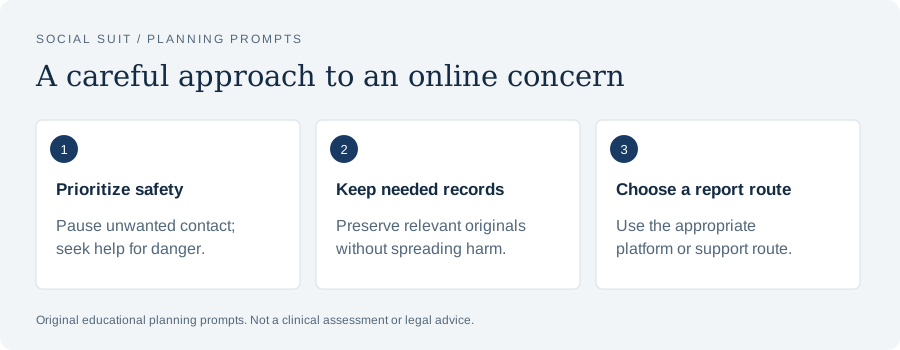
- Prioritize safetyPause unwanted contact; seek help for danger.
- Keep needed recordsPreserve relevant originals without spreading harm.
- Choose a report routeUse the appropriate platform or support route.
Keep passwords, codes, and recovery information private
Credentials and verification information can grant access to an account. Do not share them through direct messages with someone who asks to help, confirm identity, enter a competition, or prevent a penalty. A request may describe the code as harmless or temporary, but its function matters more than the sender's description. If you receive a code unexpectedly, use the service's current official guidance to understand the situation. Do not forward it as proof. A legitimate account process should be handled through the appropriate interface and instructions, not an unfamiliar private conversation.
Recovery information can be sensitive too. A screenshot may show an email address, account identifier, backup code, or other details. Before asking for public or peer help, remove information that is not needed to explain the problem. For actual recovery, independently find the official route. Be cautious about accounts promising guaranteed access restoration in exchange for money, documents, or codes. The offer's confidence does not establish authorization or ability. A person who is locked out may feel urgent pressure, and that pressure can make an unsuitable recovery request seem appealing.
If you already shared a credential or code, respond promptly through the verified service's security process. The appropriate steps depend on what was shared and whether access changed. Follow current official instructions rather than assuming that deleting the message resolves the issue. Review relevant sessions and recovery arrangements as directed. If financial access is involved, contact the relevant institution through its official route. Avoid paying another unfamiliar account to fix the problem. A specific exposure requires a specific response, and a new private promise may create additional risk.
Examine payment requests before taking action
A message may ask for a transfer, gift card, cryptocurrency payment, fee, donation, or purchase. Identify who receives the money and why. Verify the person or organization independently, and review the actual offer through a suitable route. A request from a familiar account still deserves checking if it is unusual. A claimed prize that requires payment, an unexpected investment opportunity, or a promise of easy money should not be accepted because the message is enthusiastic. The decision has financial consequences, and the sender's story is only one piece of information.
The Federal Trade Commission's consumer resources discuss scams that begin on social media, including messages that impersonate people or promote misleading opportunities. Their guidance can help orient you, but your specific situation may require contact with a financial institution or another relevant service. If you are considering a transaction, understand costs, terms, recipient identity, and available protections before paying. Do not let a countdown or threat substitute for that information. A genuine need for help can be addressed through a verified route. An unfamiliar request does not become necessary simply because it claims urgency.
If you have already paid, contact the relevant payment provider or financial institution promptly through its official route and ask about available steps. Outcomes depend on the method and circumstances, so do not assume recovery is guaranteed. Preserve relevant transaction information carefully and report the concern through appropriate channels, including the platform and the FTC's reporting route when applicable. Do not send additional money to a stranger who promises recovery. The aftermath can create another opportunity for exploitation, especially when someone claims that a fee will unlock funds that have supposedly been recovered.
Approach romantic and emotionally intense messages with boundaries
A new online relationship can feel meaningful, and a message does not become suspicious simply because it is affectionate. The concern is how the relationship develops and what it asks of you. Be cautious when trust is accelerated through pressure, secrecy, demands for money, or requests for intimate material. A person may use a compelling story to make checking feel disloyal. You can care about someone and still verify a financial claim or decline a disclosure. Affection does not remove the need for boundaries around access, money, and privacy.
The FTC's resources about romance scams describe patterns in which an online contact develops trust and then seeks money or promotes a misleading investment. Use that general information as a reason to evaluate requests carefully, not as a claim that every online relationship is fraudulent. Consider whether the person respects your refusal and your wish to discuss the situation with trusted people. Repeated pressure after a clear limit is important information. You do not need to resolve the person's complete identity before deciding that a request is unsuitable or that the interaction should stop.
Do not send intimate material under pressure. A private message can be copied, and a promise of secrecy is not a guarantee. If someone threatens to publish material or demands payment, seek appropriate support and reporting rather than trying to negotiate alone. Preserve relevant information carefully when useful, limit unnecessary distribution, and involve a trusted adult when a child or teenager is affected. Immediate safety concerns require urgent assistance. The response should address the coercive behavior, not become a judgment about the affected person's earlier choices or desire for connection.
Evaluate job and collaboration offers through the actual process
A creator, freelancer, student, or job seeker may receive promising offers through direct messages. Some are legitimate, but the offer should be verifiable and understandable. Identify the organization, role, work, payment arrangements, and contact process. Independently locate the business and confirm the offer through an official route when the stakes justify it. Be cautious when a message requests a fee, sensitive documents, credentials, or unusual financial activity before a clear process exists. A flattering introduction does not establish that the work or representative is real.
For a collaboration, ask what is being requested and how the terms are documented. Does the offer explain use of your work, compensation, deadlines, and contact details? Are sponsorship or commercial relationships clear? If the sender pressures you to move immediately to a private payment or login page, pause and verify. You can request information without providing sensitive material. A legitimate opportunity should have an identifiable process. If the explanation remains vague, the practical decision may be to decline rather than spend extensive time investigating a request that cannot state its basic terms.
If you are a minor, involve an appropriate trusted adult in consequential work or collaboration offers. If the arrangement raises legal or financial questions, obtain suitable professional advice instead of relying on the sender's assurances. This article cannot determine whether a contract or offer is legally valid. Its practical framework is to separate praise from terms, verify identity independently, and protect information until the process is understood. An opportunity can be attractive and still require careful review. Taking time to check does not make you unprofessional or ungrateful.
Handle links and attachments as separate choices
A link can be useful, but an unexpected message should not make you click automatically. Consider whether the destination is necessary and whether you can reach the relevant service independently. If the message claims a platform problem, open the platform through your usual route. If it claims a business notice, use official contact information. Avoid entering credentials or payment details into a page reached solely through a suspicious message. A convincing page design is not verification. The safe practical question is whether you are using the real service and its established process.
Attachments can also create risk or expose you to unwanted material. Do not open unfamiliar files merely because the sender says they contain proof or instructions. Use current device and service guidance for handling suspicious content. If the issue involves a work device, follow the organization's relevant process and contact the appropriate support team. Do not forward the file widely to ask whether it is safe. Describe the message and preserve necessary information through a suitable route. The response should avoid multiplying exposure while you determine what to do.
If you clicked a link but did not provide information, the next step depends on what happened. If you entered credentials, downloaded a file, granted access, or made a payment, those are distinct actions that may require specific responses. Follow current official security guidance and seek appropriate technical or financial help. Do not assume that every click has the same consequence, and do not assume that closing the page addresses every action taken there. A factual sequence helps support services give relevant advice. State what you did rather than only saying that something looked suspicious.
Keep a factual record without amplifying the message
If a message may need reporting, preserve relevant details carefully. These can include the account name, message content, time, link, and transaction information when applicable. Keep observations separate from conclusions about identity or motive. A screenshot can help, but review whether it contains unrelated private material before sharing it with anyone. Store records securely and limit access. The purpose is to support an appropriate response, not to create a public gallery of suspicious messages. Wider sharing may expose your information or draw additional attention to the sender.
Do not engage extensively to collect more evidence. Continuing a conversation may increase pressure, distress, or exposure. You can stop responding while preserving what is already available. Do not access another person's account or device without authority. If the material is unusually sensitive or potentially unlawful, ask an appropriate professional how to handle it instead of distributing it. Reporting routes have different requirements, and current official instructions can explain what is useful. More material is not automatically better when obtaining it creates additional risk.
If you warn a community, keep the warning general and proportionate. You can explain the pattern without publishing private details or directing a crowd to attack an account. A moderator may be the appropriate person to notify. If an account impersonates a friend, contact the friend through a known route so they can address it. Avoid making accusations beyond what the record supports. The useful aim is to reduce confusion and obtain assistance. A public confrontation can create a separate conflict while leaving the original access or financial problem unresolved.
Use reporting, blocking, and support for different purposes
Reporting gives a platform information about conduct that may violate its rules. Blocking can limit contact from an account through the service's available arrangements. Muting can reduce visibility or notifications. These controls may have different effects, and none guarantees that every copy or related account disappears. Check current platform guidance when the distinction matters. Choose the action that serves your goal. You may report and block a suspicious sender, preserve relevant information first where appropriate, and still need a separate response to any credentials or money already shared.
Support outside the platform may be necessary. A financial institution can address a transaction according to its process. An employer's support team may handle a work device concern. A trusted person can help you evaluate pressure. Appropriate professionals can advise on serious safety or legal issues. In an immediate danger, contact relevant emergency help. Do not assume that a platform report is a complete response to every consequence. The message may have used the platform, but the resulting problem can involve systems and people beyond it. Match the help to the specific issue.
Keep expectations realistic about outcomes. A report may not produce an immediate explanation or removal. A block may not stop contact through another account. A payment provider may have limited options. These limits do not make the actions pointless; they clarify what each can provide. Review what remains unresolved and seek the next suitable route. Avoid returning to the suspicious sender because an official response is slow. The delay does not make the original promise more trustworthy. Continue through verified channels and keep your own information limited.
Make it easier to pause under pressure
Before a suspicious message arrives, decide that consequential requests can wait for verification. You might use a simple rule: no credentials or codes through messages, no payment based only on an unexpected request, and no private documents until the service is verified. These boundaries are easier to remember than a long catalogue of possible scams. They do not require identifying every deceptive technique. They focus on actions that create access or financial exposure. A message can change its story, but the requested action remains something you can evaluate.
Choose a trusted person or service you can consult when uncertain. A brief conversation can interrupt urgency and help you describe the facts. Keep sensitive information limited in that consultation too. You can say that a known account asked for money under secrecy without forwarding every private exchange to a group. If the issue is technical or financial, use the relevant official support route. Knowing where to ask reduces the temptation to rely on the sender's own instructions. Independent help is particularly valuable when the message insists that checking would spoil the opportunity.
You can also reduce unnecessary contact through current privacy and message controls. Review who can send requests and whether unfamiliar messages appear separately. These settings may reduce some exposure, but they do not replace careful decisions about messages that arrive. A familiar account can still send a misleading request if compromised. An allowed contact can still behave intrusively. Use the controls as part of the plan, alongside verification and privacy boundaries. The goal is a manageable process, not an assumption that one setting prevents every suspicious interaction.
Help someone else without blaming them
If another person has acted on a suspicious message, focus first on what happened and what can be done. Ask what information was shared, whether money was sent, whether a link was used, and whether account access changed. These details guide the response. Blame can make people withhold information and delay help. A convincing message can exploit ordinary trust, urgency, or a desire for connection. The practical need is to identify the exposure and reach the appropriate support route. A factual conversation is more useful than a lecture about how obvious the message should have been.
Offer a limited concrete task. You could help locate the official account recovery page, sit with the person while they contact a financial institution, or help organize relevant records. Do not take control of their account without authority or share the incident publicly without permission. If a child or teenager is involved, include appropriate trusted adults and support. If threats or coercion are present, respond to safety rather than only the transaction. The affected person may need several kinds of help, and each should be connected to the specific concern.
After the immediate response, discuss a simple boundary for future requests. Avoid expecting the person to memorize every warning sign while distressed. Focus on independent verification and protected information. They can contact a known person elsewhere before paying, use official help for account issues, and decline to share codes. A practical process can be learned without turning the incident into a permanent identity as someone who cannot be trusted online. The goal is to restore agency and make the next decision clearer, while addressing current consequences through suitable channels.
A worked example: a message from a familiar account
Imagine a hypothetical person named Taylor who receives a message from a cousin's account. The message says the cousin needs an urgent transfer and cannot speak by phone. It asks Taylor not to tell anyone. Taylor notices that the request is unusual and consequential. They contact the cousin using a number already stored from earlier conversations. The cousin confirms that they did not send the message. Taylor does not pay, preserves the relevant message carefully, and reports the impersonation through the platform's current route. The familiar profile did not establish the identity behind the request.
Taylor also tells the cousin what appeared so the cousin can review their own account or impersonation concern through official guidance. They avoid reposting the private exchange publicly with identifying information. If a family warning is useful, it can explain the pattern briefly without spreading every detail. Taylor's response is not based on detecting a grammatical error or catching the sender in a debate. It is based on verifying the person independently before taking a financial action. That habit remains useful even when the message is polished and closely resembles the cousin's normal style.
If Taylor had already sent money, the response would include promptly contacting the payment provider or institution and asking about available steps. The discovery of impersonation would not guarantee recovery. Taylor would preserve transaction details and avoid paying a new account that promises to retrieve the funds. The hypothetical example illustrates prevention and response as different tasks. Verification can prevent one action, while an completed transaction requires a suitable financial process. Keeping that distinction clear helps avoid the assumption that exposing the message publicly is enough to address every consequence.
A worked example: an account penalty warning
Consider a hypothetical creator named Jules who receives a direct message claiming that their account will be removed within an hour. The sender uses a platform logo and links to a form that asks for login information and a code. Jules feels pressure because the account is important for work. They pause and open the platform through their usual route, then consult current official account and help information. They do not enter credentials through the message's form. The claimed urgency is not accepted as evidence that this is the platform's real process.
Jules reports the message through the available route and reviews account security according to official guidance. They also warn a colleague who manages the account, using a limited factual description. The colleague does not need a public repost of the link. The useful information is that an unexpected request is impersonating support and asking for access details. If Jules had entered information, they would follow the relevant recovery process promptly. Removing the suspicious message alone would not address access already granted. The response should match the action taken, not only the message's appearance.
This example shows why professional pressure can make verification especially important. An account used for income or community work may feel too valuable to risk ignoring a warning. The appropriate answer is not blind trust or blind dismissal. It is an independent check through the actual service. A consequential claim deserves a verified process. Jules can take the account seriously while declining the sender's route. Protecting work access includes refusing to let an unexpected message define the only available way to protect it.
A worked example: a promising new connection
Imagine a hypothetical person named Robin who starts exchanging messages with someone who shares an interest in music. The conversation is enjoyable. After a short period, the person asks for money and says that asking friends for advice would show a lack of trust. Robin separates the relationship from the request. They can value the earlier conversation while declining the transfer and discussing the situation with someone they trust. The sender's reaction to a boundary provides important information. Affection and shared interests do not require financial secrecy or immediate compliance.
Robin reviews the FTC's general information about romance scams and social media scams, then chooses not to continue an exchange that repeatedly pressures them. They use appropriate blocking or reporting tools where relevant. They do not need to prove that every personal detail was invented before ending contact. A request can be unsuitable based on its demands. If intimate material or threats are involved, Robin seeks appropriate support rather than trying to manage the situation alone. The priority is privacy, safety, and suitable assistance, not winning an argument about whether the sender truly cared.
Robin also preserves the useful lesson without dismissing all online friendship. They continue participating in a moderated music group and keep boundaries around disclosure and payment. A troubling interaction does not establish that every future connection will be harmful. It does show why trust should develop through behavior over time and why consequential requests deserve independent evaluation. The ability to pause, verify, decline, and seek support can coexist with an active social life. Caution is most useful when it supports clear choices rather than leaving the person afraid to interact at all.
Use a short decision process for the next message
When a message asks for something consequential, identify the action, claimed identity, pressure, and verification route. Do not share credentials or codes. Do not pay based only on an unexpected request. Do not supply private documents without understanding the service and channel. Independently contact the person or organization when needed. If the request remains unclear or inappropriate, decline. If harm has already occurred, identify the specific exposure and reach the relevant support service. These steps focus on the decision you control, even when the message's story is complex.
The FTC's consumer resources can orient you to common social media and romance scam patterns. Current platform help can explain reporting and account processes. Financial institutions, technical support, and appropriate professionals can address specific consequences. Use each for the function it provides. A general article cannot guarantee whether a particular sender is genuine, and a platform report cannot resolve every transaction or safety issue. Matching the question to the source makes the response more useful. It also avoids relying on the suspicious sender as the only interpreter of what happened.
You can remain open to conversation while protecting information and taking time over important requests. A direct message is an invitation to consider, not an obligation to comply. The next action can be a pause, an independent check, a boundary, a report, or a request for help. Choose it according to the actual conduct and consequences. A clear process is more dependable than expecting every misleading message to announce itself through obvious mistakes. The message may arrive unexpectedly; your decision can still be deliberate.
Notice when the conversation changes its original terms
A message may begin with an ordinary topic and later introduce a consequential request. A discussion about a hobby can become a sale. A collaboration can become a demand for account access. A friendly exchange can become pressure to keep secrets. Evaluate the new request when it appears, even if the earlier conversation felt trustworthy. You are not required to continue under changed terms simply because you already invested time. Consent to conversation is different from consent to payment, disclosure, or access. Each action deserves its own decision.
The sender may frame a refusal as betrayal or inconsistency. They may say that you were friendly before and therefore owe cooperation now. That claim does not establish an obligation. You can explain briefly that you will not provide the requested information or take the proposed action. Avoid a long defense that reveals additional private circumstances. If the pressure continues, end the exchange and use relevant controls or support. The useful boundary is about the action, not a debate over whether you are a good person. An unfamiliar sender does not get to define your responsibilities through guilt.
For a work offer, changed terms should be reviewed explicitly. If the original proposal concerned a paid article and the next message requests a fee or credentials, ask for a clear verified explanation through the official organization. If no satisfactory process exists, decline. Do not let the attractiveness of the first promise make the second request automatic. A real opportunity should remain understandable as its details develop. The same applies to a prize, donation, or community invitation. The part that changes financial or privacy exposure should be checked independently before you proceed.
Create a practical plan for shared accounts
If several people use a club, project, or business account, agree on how unexpected requests are handled. Identify who can approve payments, verify offers, or change access. A sender may contact the person most likely to respond quickly and claim that another member already agreed. Confirm through your own internal route before acting. The message should not become the authority for the organization's process. A short agreement can prevent confusion without making ordinary communication difficult. Everyone should know which actions require an independent check and where to report a concern.
Keep account access within supported arrangements rather than sharing credentials casually. Use current platform guidance for roles and security features where available. If a message asks one member for a verification code, the whole team should recognize that this is access information. Reporting the request internally can help others avoid responding to the same sender. Keep the warning factual and limited. There is no need to forward a dangerous link to every participant when a description and relevant account name will serve. The process should reduce exposure rather than distribute it.
After an incident, review the specific gap. Perhaps nobody knew who could approve a payment, or a public contact route looked like an official recovery channel. Clarify that point and communicate the change. Avoid assuming that a broad instruction to be more careful will resolve the problem. People need a usable process: where to verify, whom to ask, and what not to share. A simple routine can support quick legitimate replies while slowing down consequential requests. The goal is dependable decision making for the account's actual work.
Preserve the value of a careful refusal
A refusal can be complete without proving the sender's entire story false. You can decide that you do not send money through unexpected messages, do not share codes, or do not provide private documents through that channel. These boundaries are based on the action and process. If the sender is legitimate, they can direct you to an appropriate verified route. If they are not, the boundary prevents an exposure. Either way, you do not need to continue a private investigation indefinitely. A concise decision can protect time as well as information.
When you stop responding, return to the activity you intended to do before the message arrived. An unsettling request may continue occupying attention, so a concrete next task can help structure the pause. If a concern remains, seek suitable independent support. You can take the issue seriously without staying in contact with the sender. The useful follow up is through people and services that can address the actual question, not through another round of pressure from the account that created it.
Sources and further reading
These primary resources provide context. Our practical examples and planning suggestions are original educational material, not validated treatment protocols. Linked organizations do not endorse Social Suit.