 Social Suit
Educational information, not individual medical or legal advice. Practical examples are hypothetical and do not describe clients or study participants. This article is not represented as reviewed by a clinician or attorney. How we prepare our guides.
Separate immediate support from changing the feed
An unwanted recommendation can interrupt an ordinary session with something disturbing, intrusive, or unsafe. Your first task is not necessarily to explain why the platform selected it. Begin with what you need now. You may want to stop viewing the material, move away from the device, contact someone you trust, or seek urgent help if there is an immediate safety concern. Feed controls can be useful afterward. They are one part of a response, not a requirement to keep looking until you understand the system. You can leave before making a report or changing a setting.
Different material calls for different responses. A post that feels personally upsetting is not identical to a threat directed at you, a suspicious request, or potentially unlawful content. Describe the concern accurately. Is the issue unwanted exposure, targeted conduct, misleading health advice, private information, or another problem? The answer helps you choose reporting, blocking, privacy review, or appropriate outside support. You do not need a complete legal or technical classification to seek help. But a factual description is more useful than treating every difficult recommendation as the same type of event.
Imagine opening a hobby feed and seeing a distressing image unrelated to the activity you intended. You can close the item immediately. Later, if you have capacity, you can use relevant feedback or reporting controls and check the platform's current help information. The sequence matters. Protecting your attention comes before satisfying the interface's request for more interaction. If the material raises an urgent concern, use suitable assistance rather than waiting for an ordinary recommendation setting to change. The platform may have introduced the exposure, but the next step should fit your needs and the actual content.
Do not treat a recommendation as an assessment of you
A recommendation is content presented by a service. It is not an individual health assessment, a statement of your values, or proof that the platform knows your private circumstances accurately. Systems may respond to viewing and interaction patterns, but their detailed behavior varies by service and can change. Avoid turning an unexpected topic into a conclusion about yourself. Repeated diagnostic videos do not establish a diagnosis. Repeated conflict does not prove that you want conflict. The content may be meaningful to investigate, but its appearance is not evidence that it correctly describes your situation.
It can be unsettling when the feed seems specific. A post may mention a feeling you recognize or a life circumstance that matters to you. Recognition can make the message persuasive, especially if similar items follow. Pause between recognizing a description and accepting its explanation. What information would be necessary to evaluate the claim? Does the post provide evidence and limits? Is it selling something? If you need an individual assessment, use a qualified provider. The feed can prompt a question without becoming the authority that answers it for you.
This distinction also reduces shame. A disturbing recommendation does not mean you caused or endorsed the content. Your practical response can focus on reducing exposure and obtaining support. If you are concerned about how the service uses your activity, review its current explanations and available controls. Do not assume a technical mechanism you cannot verify. You can make a boundary based on the experience you observed even when the reason for selection remains uncertain. The question is what arrangement better serves your use, not whether you can reconstruct every system decision.
Identify the route by which the content arrived
Content can appear through followed accounts, shared posts, search, group participation, notifications, or recommendations. These routes may offer different controls. If the item came from an account you follow, unfollowing or muting may address that source. If it appeared through recommendations, relevant feedback or preference tools may be available. If a group repeatedly permits harmful material, the group's moderation and your participation may need review. If a notification brought you to the item, notification controls may help. Identify the route before choosing an action so the change matches the observed pattern.
Do not assume that one action applies to every route. Blocking an account may not remove similar content from unrelated accounts. Muting a notification may not change what appears when you open the feed. Reporting a rule violation may not function as a general preference setting. Current platform help can explain the supported effects. The labels and behavior vary, so verify when it matters. A narrower action can still be worthwhile, but its limits should remain visible. Understanding what changed helps you evaluate whether another step is needed.
Suppose a friend repeatedly shares material that you find distressing. You may want to preserve direct contact while reducing those shared posts. A mute or another content choice may fit, depending on the service. You do not necessarily need to end the relationship or make a public accusation. If the friend is targeting you or sharing private information, that is a different concern and calls for a response to the conduct. The route tells you where the content came from, while the behavior tells you what kind of problem you are addressing. Both are useful parts of the description.
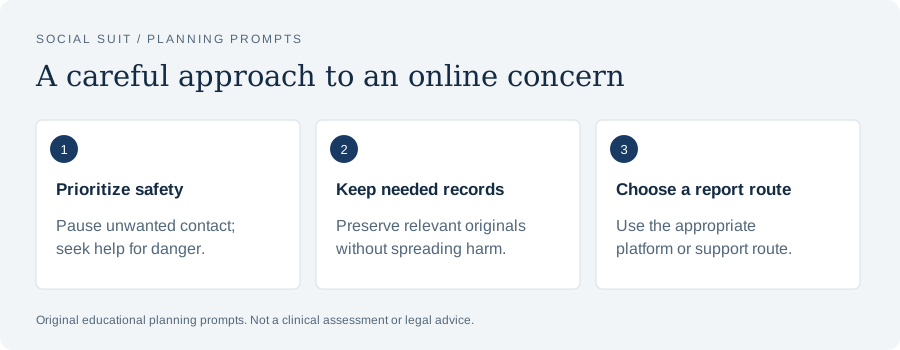
- Prioritize safetyPause unwanted contact; seek help for danger.
- Keep needed recordsPreserve relevant originals without spreading harm.
- Choose a report routeUse the appropriate platform or support route.
Use current feedback tools with realistic expectations
Services may offer controls such as not interested, hide, mute, unfollow, block, preference review, or recommendation adjustments. Check the current official information for the platform you use. A familiar label does not guarantee the same effect across services. Some controls concern one item, some an account, and some a broader category or future suggestions. Use the one that fits your purpose and observe the practical result. Do not assume that a single click guarantees permanent removal of every similar item. The tool may reduce exposure without eliminating it entirely.
When a control is ambiguous, read its explanation before using sensitive material as a test. If you cannot understand what it does, choose a simpler boundary such as leaving the feed or accessing a valued group directly. You can limit exposure while learning the arrangement. The goal is not to become an expert in the recommendation system. It is to find a usable route to the activity you wanted. Current official guidance can help with specific menus, while your own observations can show whether the arrangement works in practice.
Avoid spending a long session repeatedly interacting with distressing content solely to train the feed. That process may create further exposure and may not provide the result you expect. If a few controls do not help, consider a different route or a longer break from that stream. You can still preserve direct messages or useful communities where possible. A feed adjustment is an experiment in access, not a duty to endure more material. Your capacity and the seriousness of the content should determine how much effort you devote to the interface.
Report conduct that may violate the service's rules
Reporting serves a different purpose from expressing a content preference. If an item involves harassment, threats, impersonation, private information, or another concern covered by the service's rules, use the current reporting route when appropriate. Describe the relevant facts and choose the category that best fits the actual conduct. Do not exaggerate the report to make it seem more urgent. If you are unsure, consult the platform's explanation or seek appropriate support. A clear report gives the service useful information, even though it does not guarantee a particular outcome or response time.
Preserve relevant information carefully if it may be needed, but do not distribute unusually sensitive or unlawful material. Ask an appropriate professional how to handle such content rather than forwarding it widely. You can often record a link, account name, time, and factual description without repeatedly viewing or copying the material. The requirements depend on the situation and reporting route. More exposure is not automatically better evidence. Do not access another person's account or device without authority while trying to investigate. The response should remain within appropriate boundaries.
If there is an immediate danger, contact relevant emergency assistance rather than waiting for a platform review. A report button cannot provide every kind of intervention. If a child or teenager is affected, involve an appropriate trusted adult and support the young person. If threats or coercion are directed at you, seek suitable help and review privacy or contact controls where useful. The platform process may be one route, but the actual concern can require support beyond it. Match the response to the conduct and consequences, not only to where the item appeared.
Reduce exposure without amplifying the item
It can be tempting to share a harmful recommendation publicly to criticize it. Before doing so, consider whether the repost exposes more people, identifies someone vulnerable, or draws a new audience to the material. A general warning or a private report may serve the purpose with less amplification. If you discuss the incident with a trusted person, describe what happened without sending unnecessary graphic or private details. Support does not require making another person view the exact content. Choose the amount of information needed for the conversation.
Avoid tagging or directing a crowd at the account. Public confrontation can create a separate conflict and may not improve the original feed. If the content violates rules, use appropriate reporting. If it is merely unwanted, adjust exposure and participation. If it makes a factual claim that you want to examine, consult a reliable source rather than repeatedly engaging with the post. These actions address different needs. A reaction in the comment section is only one possibility, and it may be a poor fit when your goal is to reduce contact with the material.
If you manage a community, set a practical route for members to alert moderators. They should not need to repost harmful content into the main discussion to prove that it appeared. Ask for relevant information through an appropriate channel and handle sensitive material carefully. Explain rules and response limits clearly. A moderated space can still encounter unwanted content, but a usable process may reduce its spread and help members obtain support. The goal is a response that serves the affected people, rather than an expanding public debate over the item itself.
Preserve the useful activity that brought you online
Identify what you wanted from the session before the unwanted recommendation appeared. You may have been checking a club plan, messaging a friend, learning a skill, or viewing art. Look for a more direct route to that function. A bookmarked group, saved tutorial, chosen subscription, or another communication channel may reduce contact with the surrounding feed, depending on the service. The specific option should be verified through current information. You do not have to remove every useful relationship because one browsing route repeatedly creates difficulty. Separate the benefit from the path used to reach it.
This is especially important when online access serves disability, distance, caregiving, or limited local opportunities. A recommendation to leave all social media may remove meaningful support. Explain those benefits if you discuss the concern with a professional or trusted person. At the same time, the presence of benefits should not require enduring serious harm. A balanced plan considers both. You may preserve direct contact, change a group, use a different service, or obtain support for a wider concern. The arrangement should fit actual access needs rather than an ideal routine that assumes everyone has the same alternatives.
Consider a hypothetical person who enjoys a craft group but repeatedly encounters distressing suggestions on the home feed. They check whether the group can be accessed directly and choose that route for a few sessions. They observe whether the change preserves participation and reduces unwanted exposure. The result may be helpful, mixed, or insufficient. Each outcome provides information about practical fit. It does not prove that the platform is universally good or bad. The experiment concerns a specific function and route, and the next decision can remain equally specific.
Notice how your responses affect the session
You may find yourself reading comments, searching for explanations, or opening similar posts after an unwanted recommendation. Those actions can prolong the session even when you dislike the material. You do not need to blame yourself for being curious or unsettled. Simply describe the sequence. The item appeared, you looked for context, the context led to more content, and the session became difficult to leave. This account suggests a boundary around follow up. You might decide to seek reliable information elsewhere or to stop before opening the comments.
Do not make unsupported claims about exactly how each interaction changes future recommendations. Systems differ and their detailed operation may be unclear. You can still observe that a certain path increases your immediate exposure. If reading the comments repeatedly leaves you distressed, you can avoid that path regardless of its long term effect on the system. A practical choice can be justified by the experience you can see. This avoids turning a useful boundary into a speculative explanation of hidden mechanisms. The goal is a better session, not a complete technical theory.
If you want to investigate a factual claim, state the question first. Then choose a primary or authoritative source suited to it. For a health concern, reliable public information and a qualified provider may be appropriate. For a platform control, current official help is relevant. For a legal issue, seek suitable legal advice rather than relying on a creator's interpretation. The unwanted post can identify a question, but it should not choose the only source you consult. Independent information can reduce the need to keep returning to the same recommendation stream.
Avoid interpreting repetition as proof
Repeated exposure can make a claim seem familiar and therefore convincing. A stream of posts may use the same phrase, diagnosis, fear, or promise. That repetition is not the same as independent evidence. The posts may rely on one source, copy one another, or present personal stories as universal conclusions. When a topic matters, examine what supports it. Does a cited study address the actual claim? Does a public health page describe the same population and circumstance? Does the explanation distinguish uncertainty from certainty? Familiarity should prompt checking, not replace it.
Repetition can also make a feared outcome feel inevitable. If every few posts describe a danger, the feed may create an impression that it happens everywhere. The frequency of appearance in your session does not establish the frequency of the event in the world. You can seek relevant evidence through a reliable source and limit the stream if it becomes overwhelming. This is a distinction between exposure and prevalence. It does not tell you that a real concern is unimportant. It helps you avoid estimating the concern solely from how often a service presents it.
For health related claims, keep individual assessment separate from general information. A series of videos describing behaviors you recognize cannot determine what is happening in your circumstances. If distress persists or daily life is affected, ask a qualified professional. Bring concrete examples and mention the useful parts of online life you want to preserve. The National Institute of Mental Health provides general resources about care and finding help. Those sources can orient you, but an individual conversation is the appropriate route for understanding your own health concerns.
Give the break a practical shape
After leaving a difficult feed, choose an ordinary next activity. You might make a meal, return to a task, speak with someone, or spend time away from the device. The activity does not need to remove every feeling immediately. Its purpose is to put your attention into something you chose. If you continue thinking about the content, notice that without assuming the break failed. A reaction can persist while you still follow through on a boundary. The next action can be practical even when the emotional effect takes longer to change.
If the session interrupted sleep or another responsibility, address that concrete consequence. Finish the necessary step, clarify a plan, or return to the routine as far as possible. Later, identify a cue that could help next time. A direct route to messages, silenced notifications, or a scheduled stopping point may be useful. The choice should fit the observed pattern. A vague promise to be stronger is less actionable than changing the route that repeatedly leads to unwanted content. Review the process rather than turning one session into a judgment about your character.
A trusted person can help you regain perspective. You can explain that an unexpected recommendation was upsetting and say what support you want: a conversation, help checking a setting, or assistance with a report. Do not assume they need to see the exact material. Respect their capacity and keep disclosures proportionate. If the concern is serious or persistent, seek appropriate professional help. The break can be a first step, while broader support addresses what remains. There is no requirement to resolve everything through the app before speaking to someone else.
Support children and teenagers after unwanted exposure
If a young person encounters harmful or distressing recommendations, begin by listening and helping them stop exposure. Ask what appeared and what they need without demanding repeated viewing. Avoid making the conversation a punishment for using the service. A young person may be less likely to seek help next time if disclosure leads to humiliation. Clarify that encountering content does not mean they endorsed it. Then consider relevant controls, reporting, privacy, and outside support according to the actual situation. The immediate priority is the affected person, not proving which setting they should have chosen.
Review current platform options together when appropriate. Explain what each control is intended to do and what it cannot guarantee. Discuss direct routes to useful activities and how to ask for help when content becomes uncomfortable. Adults should not assume that frequent app use means complete understanding of menus or recommendations. They may need to check official guidance too. Shared learning can be more useful than a test of knowledge. The goal is a practical plan the young person can use, with trusted support available when the situation exceeds a routine setting change.
If the content involves targeted harassment, threats, coercion, or other serious conduct, use appropriate safety and reporting routes. Do not treat it only as a screen time issue. Involve relevant trusted adults and professionals, and contact emergency help when danger is immediate. Handle sensitive records carefully and avoid distributing harmful material widely. The response may require several kinds of assistance. A platform can address some conduct under its rules, while other services may be needed for safety or care. Match the route to the concern and keep the young person's privacy in view.
Review whether the platform remains suitable for the activity
If unwanted exposure continues despite reasonable changes, consider whether the service is a good route for the activity you want. You may choose a narrower format, another community, a different platform, or a break. There is no obligation to keep adjusting indefinitely. A service can have useful features and still be unsuitable for a particular need or period of your life. Review the actual benefits and costs. The decision should concern what the arrangement provides now, rather than loyalty to an account or the time already invested in it.
Before leaving, preserve appropriate contact routes when useful. Tell trusted people how to reach you, save necessary information through supported methods, and review account arrangements. Do not export or distribute other people's private material without authority. If the move affects a work or community role, coordinate through the relevant process. A planned transition can protect useful relationships while changing exposure. It may be temporary or longer term. The aim is to make the change usable, not to turn departure into a public statement about every person's online life.
If you stay, set a review point. Ask whether the changes reduce unwanted content, preserve useful activity, and fit your day. If the result is mixed, identify the tradeoff. Perhaps a direct route works for a group but not for discovery of new art. You can use different channels for different functions. A nuanced arrangement may be more practical than one broad rule. The review should lead to a decision rather than endless collection of settings. Keep the purpose visible and adjust according to what actually happens.
Keep documentation limited and secure when needed
A record may be useful for reporting a serious incident or discussing its impact. Include relevant dates, account names, links, and a factual description. Separate what you observed from what you suspect about motive or causation. Do not repeatedly expose yourself to distressing material just to make the record more complete. If a screenshot is necessary, keep the original securely and use a redacted sharing copy where appropriate. The appropriate route may have specific requirements, so check current instructions or ask a suitable professional.
Unusually sensitive or unlawful material requires particular care. Do not download, reproduce, or send it widely in an attempt to investigate. Seek appropriate guidance about reporting and handling. A written description or link may be the relevant information, depending on the situation. Do not access another person's account or device without authority. The need to document does not create permission to cross privacy boundaries. The record should support a suitable response while reducing unnecessary exposure for you and others. More copies can create more problems even when the intention is helpful.
Routine mood observations are different from an incident record. If you are simply noticing how a feed affects you, a short note about content type and impact may be enough. You do not need an archive of every unpleasant item. The purpose determines the detail. A light record can help you choose a focused change or prepare for a professional conversation. A safety record may require another process. Keeping the tasks distinct can reduce work, protect privacy, and prevent ordinary reflection from turning into repeated viewing of material you wanted to avoid.
Seek broader support when the effect persists
An app adjustment may reduce one source of exposure without resolving every concern. If distress persists, worsens, or interferes with everyday life, consider qualified help. Describe what happened, how the effect continues, and what else is occurring. You do not need to prove that the recommendation caused a condition before asking for support. The professional can consider the broader picture. Include useful online connections and the changes you tried. This information can help the conversation address both the troubling pattern and the support you want to preserve.
The NIMH resources about mental health and finding help provide general orientation, not an assessment through this article. For immediate danger, contact relevant emergency services. In the United States, calling or texting 988 can connect you with the Suicide and Crisis Lifeline. Use appropriate local resources elsewhere. Routine reporting and preference controls are not emergency response systems. If another person is at risk, seek assistance suited to that concern rather than relying on a comment to reach them. The channel should have the ability to provide the kind of help needed.
You may also need ordinary companionship after a difficult session. A trusted friend can listen, help you make a practical plan, or share an unrelated activity. That support can be valuable alongside professional care where needed. Do not ask one person or one platform to provide every function. Different sources can meet different needs. A clear plan identifies what you can do now, where to seek help, and what can wait until you have more capacity. The effect of content deserves attention without making the feed the only place you look for an answer.
A worked example: changing the route to a valued hobby
Imagine a hypothetical person named Ellis who opens social media to see gardening ideas. The home feed repeatedly inserts distressing material unrelated to gardening. Ellis first leaves when the material appears. Later, they review current controls and provide relevant feedback on unwanted suggestions. They also save a few chosen gardening sources and access a moderated group directly. The experiment is to preserve the hobby while reducing the surrounding stream. Ellis notes whether the arrangement is easy to use and whether it actually limits unwanted exposure over several ordinary sessions.
The direct group route helps, but recommendations still appear in another format. Ellis decides not to use that format for a while and obtains gardening information through a chosen newsletter and the group. They do not keep viewing distressing posts in an attempt to force a perfect feed. The result is a practical change in access, not a complete explanation of the recommendation system. Ellis can value the service's community while declining one path through it. If the content's effect remains troubling beyond the sessions, they can seek suitable support.
After several weeks, Ellis reviews the plan. The hobby remains enjoyable, direct contact is preserved, and less time is spent in unwanted material. They keep the useful arrangement and remain attentive to future changes. If a new feature alters exposure, they can review it separately. The example illustrates a process: stop immediate exposure, identify the route, use appropriate controls, preserve the desired function, and evaluate the result. It does not promise that the same controls work identically on every service or that a feed can be made completely predictable.
A worked example: separating a health question from diagnostic videos
Consider a hypothetical person named Ren who sees several videos claiming that common behaviors prove a particular condition. Ren recognizes some descriptions and becomes worried. More similar videos appear, which makes the claim feel increasingly certain. Ren pauses and writes the actual question: what explains the difficulty stopping at bedtime? They consult a reliable general source and arrange a professional conversation because the pattern affects daily life. They also reduce recommendation browsing and keep direct messages from friends. Repetition in the feed is no longer treated as an assessment.
Ren brings concrete examples to the appointment and explains that the videos prompted concern. They include wider circumstances and useful online activities. The provider can consider the situation individually, rather than being asked to confirm a conclusion from the feed. Ren's platform changes reduce exposure to speculative content, while the professional route addresses the question. These are different functions. The example does not determine a diagnosis or treatment. It shows how a recommendation can become a question generator without becoming the final source of authority about a person's health.
If a video sells a program under urgent fear, Ren evaluates the commercial request separately. They can decline the purchase while still seeking help for the concern. Gratitude for feeling understood does not create an obligation to buy. Similarly, reducing the content does not require dismissing every creator's story. Ren can recognize personal accounts as personal accounts and reserve individual decisions for a suitable process. The goal is a clear route to information and support, with privacy and practical needs included, rather than an expanding stream of labels and promises.
A worked example: supporting a teenager without repeating exposure
Imagine a hypothetical teenager named Quinn who tells an adult about a disturbing recommendation. The adult asks what happened in general terms and helps Quinn stop viewing it. They do not demand that Quinn reopen the material several times to demonstrate it. Together, they review the relevant platform guidance and decide whether feedback or reporting fits the content. They discuss a direct route to the useful activity Quinn had intended. If the concern involves threats or other serious conduct, they seek appropriate assistance rather than treating it only as a recommendation preference.
The adult also explains that encountering content does not make Quinn responsible for the sender's behavior. They identify a trusted route for future questions and keep the discussion private. If records are needed, they handle them carefully and avoid public amplification. This response makes disclosure a way to obtain help rather than a reason for humiliation. It does not guarantee that Quinn will never see unwanted content again. It creates a practical support process for the next incident and a clearer understanding of the controls available now.
Later, they review whether the changes preserved useful participation and reduced exposure. Quinn can explain what worked and what remained difficult. The adult listens to those details instead of assuming that a completed setting change solved everything. A plan may need adjustment or broader support. The example shows why the affected person's experience should remain central. Technical controls are valuable tools, but the response also depends on trust, privacy, access, and a realistic route to assistance when the concern exceeds what a menu can provide.
Choose the next action according to the actual concern
The next step may be closing the item, using feedback, reporting conduct, blocking an account, reviewing settings, changing the route to a valued activity, or seeking support. These actions are not interchangeable. Identify whether the problem is unwanted exposure, unsafe conduct, a misleading claim, or a broader effect on daily life. Use current official information for platform controls and appropriate sources for health, financial, legal, or safety questions. A clear description makes the response more practical. You do not have to solve the entire feed before addressing the part that matters now.
Keep realistic expectations. A setting may reduce exposure without guaranteeing elimination. A report may take time. A direct route may preserve a community but limit discovery. A break may help with one stressor while another remains. These limits are reasons to review the plan, not reasons to give up every action. Ask what changed, what stayed useful, and what still needs attention. The decision can be revised as circumstances change. A manageable process is more useful than demanding a perfect recommendation environment or a complete explanation of every item.
Your attention and information remain yours to protect. A recommendation does not require a reply, a repost, a purchase, or an extended investigation. You can leave, verify a claim elsewhere, and ask for help through a suitable route. Preserve useful connection where possible and address serious harm appropriately. The goal is an online arrangement that serves your purposes with less unwanted exposure, alongside support for concerns that extend beyond the platform. The feed may choose what appears; you can choose the next deliberate action.
Review the plan after an ordinary session
Keep one clear reminder of the original purpose, so future adjustments continue serving the activity you wanted to preserve.
Once the immediate concern has passed, test the arrangement during an ordinary session that serves a clear purpose. Did you reach the group or person you wanted? Did the new route reduce detours? Were the controls understandable? Did something useful become harder to access? These observations help you keep a practical plan rather than a collection of settings chosen under stress. If the arrangement works, retain it. If it does not, identify the part that needs adjustment or another source of support. A calm review can clarify what the urgent moment could not, without requiring you to reopen the harmful item.
Sources and further reading
These primary resources provide context. Our practical examples and planning suggestions are original educational material, not validated treatment protocols. Linked organizations do not endorse Social Suit.