 Social Suit
Educational information, not individual medical or legal advice. Practical examples are hypothetical and do not describe clients or study participants. This article is not represented as reviewed by a clinician or attorney. How we prepare our guides.
Start with the person, not the comment thread
Responding to cyberbullying begins with a person who may feel hurt, frightened, embarrassed, or exhausted. The first useful question is often whether they feel safe and who can help them now. A perfectly worded reply, an elaborate evidence file, or a successful platform report comes later. Do not make someone earn support by demonstrating that the incident meets your preferred definition of bullying. Listen to what happened, take their concerns seriously, and ask what they need in the immediate situation. The response can become more specific once safety is clearer. Keep that first check-in simple, private, and calm enough that the person can answer honestly without feeling responsible for managing your reaction.
This guide offers a practical way to organize that response. It is written for affected people, caregivers, friends, and other supporters. It does not replace individualized advice from a school, clinician, lawyer, or appropriate emergency service. Different incidents call for different steps. A repeated insult, a threat, impersonation, exposure of personal information, and an attempt to coerce someone are not interchangeable problems. A safe response identifies the actual behavior and its context instead of treating every harmful interaction as a debate that can be won in public.
Begin by asking permission to help: would the person like you to sit with them, help report an account, contact someone, or simply listen? If the affected person is a minor, a trusted adult should be involved in a way that prioritizes their safety and respects their dignity. Explain that you will not blame them for having an account or replying earlier. A young person may hide an incident if they expect immediate punishment or the loss of every online connection. Supporting them does not mean ignoring risk; it means making disclosure feel useful rather than dangerous.
When there is an immediate threat or emergency, seek appropriate urgent assistance. In the United States, call emergency services for imminent danger. A person experiencing suicidal thoughts or emotional distress can call or text 988 to reach the Suicide & Crisis Lifeline. Do not wait for a platform moderation decision before obtaining help. Online reporting systems and ordinary support email addresses are not emergency services. A safety plan should work even if the account remains visible, the content is not removed immediately, or the person responsible does not cooperate.
Describe the behavior before choosing a response
Write down what actually occurred in plain language. Did someone repeatedly send insulting messages? Did a group exclude and humiliate a person publicly? Was a false account created using their name? Did a post reveal a home address or school schedule? Did someone threaten harm or pressure them to send images? The description should be specific enough that a supporter can understand the problem without having to view every piece of content. Avoid beginning with a broad label and assuming that the label settles which steps are appropriate.
StopBullying.gov describes cyberbullying as bullying through digital devices and online communication. Its reporting resource emphasizes preserving relevant evidence, avoiding responses that escalate the situation, and reporting through suitable channels. Those general steps are a useful starting point, but context matters. The person causing harm may be a classmate, stranger, former partner, teammate, coworker, or someone operating anonymously. The same message can carry a different practical risk when the sender knows where the person lives or has access to them offline. Ask about that connection early.
Separate what is known from what is suspected. A username may suggest a particular person without proving who controls the account. A screenshot may show a message but not its full context. A friend may report that a private group is sharing harmful material, while the affected person has not seen it. Record those distinctions. They do not make the experience unimportant. They help you avoid accusing the wrong person, spreading an unverified claim, or contacting someone who may increase the danger. The response should not depend on pretending to know more than you do.
Ask whether the behavior is ongoing and whether it follows the person across accounts or settings. An incident that appears finished may still have consequences at school or in a group. An account that was blocked may return under another name. Conversely, repeated checking can make a person feel surrounded even when new messages have stopped. Both possibilities deserve attention. A concise incident summary can identify the first known event, most recent event, methods used, offline connections, and immediate concerns. Keep that summary private and factual so it can guide the next conversation.
Reduce exposure without isolating the affected person
Blocking, muting, restricting replies, limiting mentions, or leaving a hostile group can reduce contact in some situations. The right choice depends on what the tool does and what the person needs. Muting may hide content without preventing new messages; blocking may stop some contact but not communication through other accounts or people. Do not assume one setting resolves the whole problem. Review the relevant platform's current help instructions, then discuss whether the change is safe and practical in the person's circumstances. Features and interfaces can change.
Before making a broad account change, consider whether the affected person relies on that account for supportive relationships, school communication, disability access, creative work, or a community they cannot easily replace. The goal is to reduce harmful exposure while preserving useful contact where possible. A temporary plan might include a narrower messaging audience, trusted people checking in by another channel, and a break from one feed rather than every digital connection. The person should not be left alone because the easiest advice was to delete everything.
If someone is making threats, monitoring movement, or coercing the affected person, ask an appropriate safety professional about changes that could have consequences. A visible block, password change, or account deletion might be noticed by the person causing harm. That does not mean doing nothing. It means choosing steps within a safety plan rather than automatically following a generic checklist. Where immediate danger exists, urgent assistance takes priority. A platform tool can be one part of the plan, not the entire plan.
Make exposure reduction concrete. Decide which notifications can be silenced, who can reach the person directly, whether a trusted supporter can help manage nonessential messages, and when to review the plan. Do not ask the affected person to keep opening the content to prove that it remains upsetting. A supporter can sometimes handle administrative follow-up, with permission and appropriate access, so the person does not become their own full-time moderator. Keep the arrangement limited and transparent. Helping should not turn into secret surveillance of all their conversations.
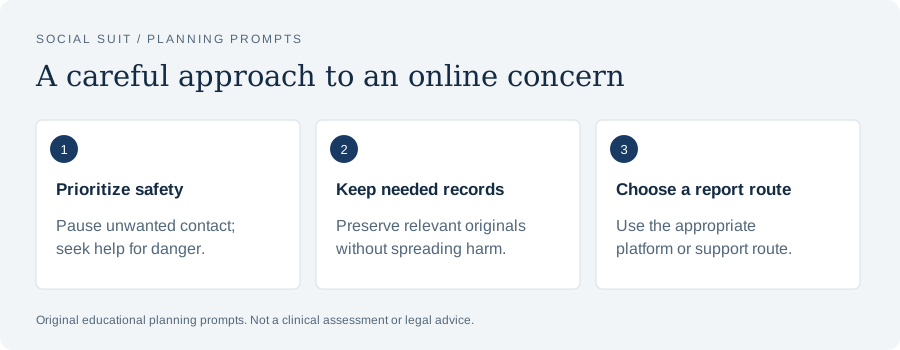
- Prioritize safetyPause unwanted contact; seek help for danger.
- Keep needed recordsPreserve relevant originals without spreading harm.
- Choose a report routeUse the appropriate platform or support route.
Save useful context safely and minimally
Documentation is useful when it helps explain what happened to someone who can act. It is not a contest to collect the largest archive. Consider saving the message, date, account name, link where available, and surrounding context necessary to understand the incident. Keep a note of how the record was obtained. If you create an explanation, label it separately from the original. A screenshot edited to add arrows or a summary should not replace the unedited version. Accurate context matters more than a dramatic presentation.
Avoid repeated exposure while collecting records. A person may become distressed each time they reopen an abusive thread. If appropriate, ask a trusted supporter to help capture the minimum necessary information once. Agree on what they may view and where it will be stored. Do not turn the process into a long interrogation. The affected person's account of the incident can be important even when some messages have disappeared. Write down uncertainty and missing material rather than assuming that every detail must be reconstructed before support or reporting can begin.
Some material should not be downloaded or circulated casually. Explicit content involving minors, threats, exploitative material, and deeply private images require particular care. Do not ask a child to collect or forward explicit images as evidence. Seek guidance from appropriate reporting or safety professionals about documenting the incident without redistributing harmful or unlawful content. A report reference, account information, date, or description may be discussed without sending the material to every person involved. The desire to demonstrate harm does not justify creating additional copies that expose or endanger the target.
Choose storage with privacy in mind. A public cloud link, shared classroom drive, or group chat may expose evidence to people who do not need it. Use access controls and a limited set of recipients. Consider keeping a simple log of reports and responses, including the date, platform reference number if supplied, and action taken. This can prevent the affected person from having to explain everything again when a follow-up is needed. Documentation should support the response while staying bounded enough that it does not become another source of harm.
Report through the channel that can address the actual problem
A platform report is useful when the concern involves content or behavior covered by that platform's rules. A school conversation may be relevant when classmates or school participation are involved. Appropriate law enforcement or other safety channels may be necessary for threats, exploitation, stalking, or immediate danger. A clinician can help address distress and functioning. These routes can coexist because they address different parts of the problem. Do not assume that a content removal request resolves offline safety or that a school response substitutes for urgent help.
When reporting to a platform, use a category that matches the behavior as accurately as possible. Include the information requested and avoid adding unrelated private details. If the report form allows a short explanation, describe the specific conduct, whether it is repeated, and any context necessary to understand it. Keep a copy of the confirmation if available. Do not promise the affected person that the platform will remove the content. Explain that reporting asks the service to review the issue and that other support steps can continue while the result is pending.
If a report is declined or no action is visible, review the current appeal or follow-up options rather than repeatedly submitting an identical report without a plan. The explanation may reveal that the platform did not understand the context or that a different category is appropriate. It may also show the limits of the platform's rules. A lack of removal does not establish that the person's distress is invalid. Conversely, removal does not guarantee that copies elsewhere have disappeared. Keep the focus on the person and the practical risks remaining.
Record who is responsible for each follow-up. A family might assign one adult to communicate with the school and another to help with account reports, while the affected person chooses a trusted contact for emotional support. This is more manageable than everyone sending overlapping messages. If the person is an adult, ask their permission before contacting others except where immediate safety obligations require action. A coordinated response can reduce confusion and preserve agency. The plan should be understandable to the affected person, not a process carried out around them without explanation.
Prepare for a school conversation with clear requests
If an incident involves students or affects participation at school, organize a concise summary for the appropriate school contact. Include the behavior, dates or approximate period, how it affects the student, any immediate safety concerns, and the help requested. Ask which policy and reporting procedure apply. Schools have different responsibilities and processes, and requirements can vary by location. Do not rely on a general article to tell you exactly what a school must do. Obtain the relevant policy and ask how the school interprets it for the specific situation.
Useful requests are concrete. The family might ask who the student can approach during the day, how reports of further contact will be handled, whether seating or activity arrangements need consideration, or how private information will be protected. Ask how the school will avoid making the student responsible for confronting the person causing harm. A plan that only tells the student to ignore messages may not address ongoing intimidation or disruption. Discuss what a safe school day would look like and which adults are responsible for implementing the plan.
Clarify confidentiality and communication. Who will receive the incident summary? What information must be shared with other students or families? How will the affected student be informed about decisions? What can the school tell the family about actions involving another student? There may be limits on what the school can disclose, but those limits should not prevent discussion of the affected student's support and safety. Ask for a designated point of contact and a reasonable follow-up date. Written notes can help everyone remember the agreed steps.
After the meeting, send a brief factual summary through the appropriate channel if needed. Identify the actions agreed, who will carry them out, and what should happen if a new incident occurs. If the plan is not working, provide specific examples of the remaining problem rather than assuming that one meeting settled the issue. A useful follow-up describes a new message, a repeated offline interaction, or a missed support step. Keep the tone focused on safety and participation. Public pressure campaigns can expose a student's privacy and should not be treated as the default response.
Support the emotional aftermath without demanding a quick recovery
The effect of cyberbullying can persist after a message is deleted or an account is blocked. A person may worry that others saw the content, feel reluctant to return to a group, or expect another incident. Do not use the technical fix as proof that they should now feel fine. Ask how the experience is affecting sleep, concentration, school or work, relationships, and willingness to participate in activities. Those questions can help identify what support is needed without telling the person what diagnosis they should have.
Offer specific, low-pressure help. You might sit with the person while they contact a trusted adult, help them plan a manageable return to an activity, or arrange ordinary time together that is not centered on the incident. Ask whether they want to talk now and accept that they may prefer a break. Repeatedly asking for the full story can make support feel like another interview. It is possible to acknowledge the harm and continue normal connection. The person is more than the incident and should not have every interaction reorganized around it.
If distress persists, worsens, or interferes with daily life, a qualified healthcare professional can help assess the situation. You do not need to prove that a particular platform caused a clinical condition before asking for support. Describe the events and their impact, including other relevant circumstances. The NIMH help resource provides information about finding mental health care and crisis support. A clinical conversation can identify options suited to the person rather than relying on a creator's advice, a comment thread, or a generic promise that an online break will fix everything.
Avoid framing help as evidence that the person is weak or cannot handle social media. Harassment is not a test they failed. A constructive response can include coping skills, changes to exposure, supportive relationships, and professional care where appropriate, while keeping responsibility for the harmful behavior with the person engaging in it. Ask the affected person what makes a check-in feel supportive. A brief predictable conversation may be better than constant monitoring. The aim is to restore safety and participation, not to make distress disappear on someone else's schedule.
If you are a friend or bystander, do not amplify the attack
A bystander can help without turning the incident into a larger public spectacle. Do not like, repost, quote, or forward abusive content merely to show disapproval. Those actions can increase its reach and reveal it to people who would not otherwise have seen it. If you need to show a trusted adult what happened, share the minimum necessary through an appropriate private channel. Check with the affected person where possible. Supporting them does not require giving the harmful post a new audience.
Contact the affected person privately with a clear message that does not pressure them to explain everything. You can say that you saw something concerning, that it was not okay, and that you are available to help. Offer choices such as reporting together, involving a trusted adult, or spending time away from the thread. Avoid making them responsible for reassuring you about how upset you feel. A useful response reduces the person's burden. It does not demand a detailed story, immediate forgiveness, or a public declaration of what should happen next.
If it is safe to challenge harmful behavior within a group, keep the intervention brief and focused. A simple statement that the group should stop sharing humiliating material can be more useful than a long argument that attracts additional attention. Do not expose the target's private information while defending them. Do not threaten retaliation or organize a counterattack. If the situation involves threats, exploitation, or an unsafe power imbalance, get appropriate adult or professional help. The bystander's safety matters too, and no one should be expected to handle a dangerous situation alone.
Follow up after the visible incident has faded. Public attention often moves on while the affected person remains anxious about school, work, or community participation. Invite them into ordinary activities without making the invitation conditional on discussing the harm. If they want assistance, ask which task would actually help. A supportive friend might walk with them to a school contact or help identify a trustworthy reporting channel. Being useful is often quieter than posting an impressive condemnation, but it can do more to restore a person's sense of belonging.
Address impersonation and exposed personal information as separate risks
Impersonation can create confusion about what the affected person has said or done. A fake account may use their photograph, name, or other details to contact others. Begin by documenting the account and reporting impersonation through the platform's current process. Inform a limited group of relevant people through a trusted channel if needed, explaining that the account is not authentic. Avoid reposting the fake profile broadly. The correction should help people avoid being misled without making the impersonating account more visible than necessary.
If personal information has been exposed, identify what is actually visible and what practical risks it creates. A phone number, address, school schedule, workplace, or location routine may call for different steps. Ask an appropriate safety professional for guidance when threats or stalking are involved. Review whether public profiles reveal additional information that could compound the exposure. Do not assume that deleting one post retrieves copies already saved by others. Equally, do not speculate about every possible catastrophe. Prioritize concrete risks and the people or services that can help address them.
Account compromise is another distinct issue. If someone may have gained access to an account, use the platform's official recovery and security guidance. Be cautious of messages offering to recover the account for payment or requesting verification codes. Contact the platform through a route you independently know is legitimate. A compromised account can be used to impersonate the person, contact friends, or expose private material. The response should include account security as well as support for the harm already caused. Do not share passwords with a person claiming to be an unofficial investigator.
Keep public corrections short and factual if a correction is necessary. For example, a person might notify a club administrator that a certain account is not theirs and ask that messages from it be disregarded. They do not need to publish medical history, family details, or the full evidence file to establish that point. A trusted supporter can help draft a correction with the affected person's permission. The goal is to reduce confusion and risk while keeping control over personal information, not to win a public argument about the person's character.
Avoid retaliation, public accusations, and forced confrontation
The desire to defend someone can make retaliation feel urgent. However, a counterattack may widen the audience, expose private information, escalate threats, or create a new problem for the affected person. Do not contact the suspected sender's family, employer, or peers impulsively. Do not publish their personal details. Do not organize friends to flood an account with insults. These actions can shift attention away from safety and make the target feel responsible for managing a conflict they did not choose. Pause and identify the actual purpose of the proposed action.
If you believe a conversation might help, ask whether the affected person wants it, whether it is safe, and who should facilitate it. A forced face-to-face meeting can place a young person under pressure to minimize what happened or accept an apology before they feel safe. Some situations require boundaries and formal reporting rather than reconciliation. An apology is not the same as a safety plan, and a promise to stop may not address copies of harmful material or offline contact. The response should fit the situation rather than a preferred story about resolving conflict.
Avoid statements of certainty about identity when the evidence is unclear. An anonymous account may imitate someone else, and screenshots can be incomplete or altered. Share concerns with people who can assess them through appropriate processes. You can describe the behavior and its effect without publicly declaring that a specific person is guilty. This is especially important when minors are involved. A factual report can be serious and urgent while still acknowledging uncertainty about who controls an account. Honesty does not weaken the need for support.
Discuss what success would look like without revenge. It might mean no further contact, a safer school routine, restoration of an account, fewer harmful messages, or access to care. These goals can guide decisions about blocking, reporting, documentation, and communication. They also help supporters avoid turning the incident into their own campaign. The affected person's needs should remain central. A response that makes outsiders feel powerful but leaves the target more exposed has missed the purpose, even if it attracts agreement from a large audience.
Create a short plan for the next incident
A next-incident plan can reduce the pressure to decide everything while distressed. Agree on what the person should do if another message arrives, which supporter they can contact, and when urgent help is needed. The plan might be as simple as not replying immediately, saving a minimal record if safe, muting the thread, and contacting a designated adult. Write it in language the affected person can use. Avoid a complicated list that requires them to become a technical expert in the middle of a difficult moment.
Define thresholds for different responses. A new insulting message might follow the routine reporting plan. A threat mentioning a location, coercion involving private images, or a concern about immediate self-harm may require urgent assistance. The exact thresholds should be discussed with appropriate professionals where relevant. Do not make the affected person solely responsible for interpreting every risk. Tell them they can ask for help even if they are unsure. A plan that demands certainty before involving anyone can discourage disclosure at precisely the time support is needed.
Review who can access the records and communicate with services. A caregiver may be able to help a minor, while an adult may prefer a friend to assist only with limited tasks. Keep permissions specific. Helping with a report does not automatically authorize reading unrelated private conversations. If a supporter will monitor a thread temporarily, agree on the purpose, duration, and how the affected person will be informed. The arrangement should restore control rather than replace cyberbullying with intrusive supervision that the person cannot question.
Choose a review date for the plan and update it when circumstances change. If the sender switches accounts, the school schedule changes, or the person no longer feels safe using a particular channel, revise the response. If no new incident occurs, decide whether some restrictions can be relaxed while preserving useful safeguards. A plan is not a permanent sentence to avoid the internet. It is a way to respond predictably while the person rebuilds safety, connection, and confidence. Ask what is helping and what has become unnecessarily burdensome.
An example of a coordinated response
Consider an illustrative situation in which a student receives repeated mocking messages from a group connected to school. The student is worried about returning to class and has stopped participating in an activity they used to enjoy. A caregiver first asks about immediate safety and listens without demanding that the student hand over every account. They agree to save a few representative messages with context, reduce notifications from the group, and identify an adult the student trusts at school. The example is a planning illustration, not a real client story or guaranteed solution.
The caregiver prepares a short school summary: the approximate start of the messages, the group involved, the student's concern about class participation, and the support requested. They ask for a designated contact, a plan for reporting further incidents, and help maintaining access to the activity. They do not demand that the student confront the group publicly. The school explains its process and the limits on sharing information about other students. The family records the agreed steps and sets a follow-up date, keeping the conversation focused on the student's safety and participation.
At home, the student's supportive connections are preserved through a different channel. A friend checks in privately rather than reposting the messages to condemn them. A caregiver helps handle administrative follow-up so the student does not have to reopen the thread each night. If sleep problems or distress continue, the family seeks a healthcare conversation. They describe the pattern honestly, including other pressures in the student's life. The clinical appointment is not delayed until the platform report is resolved, and it is not framed as proof that the student should qualify for a lawsuit.
The family reviews the plan after a week or another agreed interval. They ask whether new contact occurred, whether the school steps were implemented, and whether the student feels more able to participate. If a new account appears or a threat develops, they reassess with appropriate help. If the immediate problem has quieted, they continue ordinary supportive activities rather than repeatedly revisiting the evidence. The coordinated response works toward specific goals. It does not require the student to appear completely recovered or promise that one report will end every consequence.
Common questions about responding to cyberbullying
Should you reply to defend yourself? There is no universal answer, but a pause is often useful before responding. Ask what the reply would accomplish, who might see it, and whether it could increase exposure or risk. A factual correction sent to a relevant person can serve a different purpose from an argument with an abusive account. If you are unsure, discuss the proposed response with a trusted supporter. You are not required to debate someone into treating you appropriately, and silence in a public thread does not mean agreeing with the abuse.
Should you delete your account? Consider the account's useful connections, the need to preserve relevant information, and the safety consequences of a visible change. A narrower restriction or temporary break may be enough in some situations; a different approach may be appropriate in others. If a serious incident could involve legal or investigative questions, ask qualified people about preservation before broad deletion. Do not make an account decision solely because someone else thinks the problem would be simpler if you disappeared from the platform. The decision should support your needs.
What if the school or platform does nothing? Keep a factual record of the report and response, ask about the applicable follow-up or appeal route, and continue other support steps. The absence of a visible action does not make the harm unimportant. It may mean that the service has limited authority, misunderstood the report, or applied a rule differently than you expected. Ask which part of the problem remains and who can address it. A clinician, trusted adult, school support person, or appropriate safety service may have a different role from a moderator.
What if you replied angrily earlier? You can still ask for help. Describe what you said honestly rather than hiding it or assuming that it cancels the harm you experienced. A supporter or professional can help understand the full sequence and identify a safer next step. Accountability for your own response and support for being targeted can coexist. Do not let embarrassment about one message keep you from reporting a threat, exploitation, or ongoing harassment. The aim is to improve safety and clarity, not to decide that only a perfectly calm person deserves assistance.
Keep legal questions distinct from everyday support
Some online harm may raise legal questions, but a blog article cannot determine whether a particular person has a claim or whether a specific platform is responsible. If you want legal advice, consult a qualified attorney about the actual facts and jurisdiction. Do not assume that cyberbullying automatically fits a social media product liability claim or that an advertising page can resolve that question. The conduct of another user, platform features, injuries, evidence, and applicable law may raise different issues. An individualized review is necessary.
The Social Suit /seo page provides general information about potential legal review and an external intake route. Before using that route, identify who receives the information and read the destination's privacy practices. Share only what is necessary for the initial inquiry. A form submission does not guarantee representation, eligibility, compensation, or a filed lawsuit. Do not send the full evidence file or medical records to website support. The companion legal-preparation guide explains questions about timelines, records, fees, and representation that can help make a consultation more understandable.
Regardless of whether you pursue a legal inquiry, the practical response should continue. Safety, supportive relationships, healthcare, account protection, and school participation do not depend on the existence of a lawsuit. A person may decide that a legal process is not right for them while still needing help with the effects of harassment. Another may seek advice while working on a day-to-day support plan. Avoid making compensation the measure of whether harm was real or whether the person deserves care. Those are separate questions with different purposes.
The related guides on protecting personal information, recognizing suspicious messages, and keeping a record of online harm safely offer more focused next steps. Choose the guide that matches the unresolved problem rather than reading everything at once. If you have a safe contact, a concise incident summary, a reporting route, and a plan for further messages, you may already have enough to begin. The response can improve as information becomes clearer. What matters first is that the affected person is supported, heard, and not left to manage the situation alone.
Sources and further reading
These primary resources provide context. Our practical examples and planning suggestions are original educational material, not validated treatment protocols. Linked organizations do not endorse Social Suit.