 Social Suit
Educational information, not individual medical or legal advice. Practical examples are hypothetical and do not describe clients or study participants. This article is not represented as reviewed by a clinician or attorney. How we prepare our guides.
Ask what the break needs to change
A useful break responds to the activity you have just been doing and to what you need before continuing. After a demanding screen task, you may want less information. After repetitive physical work, you may need a comfortable change of position or ordinary rest. After solitary study, you may want a brief conversation. A recommendation feed can provide entertainment, but it is not automatically the best answer to every need. Begin with the question: what should be different when this pause ends?
Name the need in plain language. You might be hungry, thirsty, uncomfortable, restless, mentally tired, lonely, or unsure how to continue the task. Those conditions suggest different choices. Food addresses a need that another stream of videos will not resolve. A short conversation may offer connection more directly than watching strangers. Clarifying the next work step may help when the difficulty is uncertainty. The break does not have to solve every problem, but it should have a plausible relationship to the reason you are taking it.
Choose a modest outcome. You may want to return with the next step written down, with an ordinary physical need met, or after a few minutes away from the information you were processing. Avoid promises that a particular activity will reliably restore concentration or improve mood for everyone. The NIMH guidance on caring for your mental health includes priorities, enjoyable activities, and support as parts of self-care. This guide offers practical break planning around your own observations, not a treatment or a guaranteed recovery formula.
Keep entertainment available as a deliberate option where it fits. The point is to choose it for a reason and give it a workable endpoint. If you want to watch one saved item and can return when planned, that may serve the break. If you repeatedly remain in a feed long after the pause should end, the format is not fitting the available window. That is a useful design finding. You can change the format, timing, or endpoint without turning ordinary enjoyment into a moral failure.
Distinguish a break from abandoning the task
Before leaving the work, identify whether you intend to return. A break has a return plan. Stopping for the day has a closure plan. Changing priorities has a decision about what replaces the task. Confusing these states can create a long interval in which you keep browsing while vaguely expecting yourself to resume. Make the status explicit. If you are done, say so and choose the next part of the day. If you are pausing, write the next action and decide what signals the return.
The return plan should name a task, not merely a place. 'Go back to the desk' may leave you sitting there with no clear next step. 'Open the draft and revise the second paragraph' gives you something to begin. For physical work, the next action might be sorting the remaining stack or preparing the next material. A short resumption note reduces the planning effort at the end of the break. It also lets you take the pause without rehearsing the unfinished task continuously.
If the work has become impossible for the moment, do not disguise the problem as an endlessly extended break. Identify the obstacle. You may need a missing document, a reply, help with instructions, or a different priority. Decide what can proceed and what must wait. Then choose rest or another activity deliberately. A feed can hide the uncertainty because it always offers something easier to do, but it does not resolve the dependency. Naming the blocked task creates a more honest and usable plan.
Respect deadlines and responsibilities without treating all work as endlessly urgent. Sometimes a pause is needed even when much remains. Sometimes the next obligation means the pause must be short. Choose according to the actual situation. If your schedule repeatedly leaves no room for ordinary needs, that may require a broader discussion about workload or support. A more disciplined feed boundary cannot make an unsustainable schedule reasonable. Break planning should reveal those constraints rather than instruct you to ignore them.
Create a small menu matched to common needs
Prepare several options instead of one mandatory break. A useful menu might contain an ordinary needs option, a low-information option, a connection option, and a movement or position-change option that fits your circumstances. Write only activities you can actually do in your usual setting. A plan that assumes a garden, private room, or free kitchen may not work at your job or school. The menu should reduce choice at a tired moment by offering a few realistic routes rather than a long catalogue of ideal activities.
For an ordinary needs break, check what is due: food, water, a bathroom visit, a required care task, or another established routine. Follow any relevant personal or professional guidance. Do not use generic break advice to change medication timing or a care plan. The break can make room for an existing need without becoming a health experiment. Prepare what you can in advance so the pause does not begin with a lengthy search that opens unrelated apps or delays the next necessary task.
For a low-information break, choose something that does not introduce a large amount of new content. You could sit quietly, look at a familiar view, listen to a finite piece of audio, or pause without adding an activity. The choice should be comfortable and appropriate for you. There is no requirement to practice a named technique or feel calm immediately. The practical distinction is that the pause changes the input instead of replacing one demanding stream with another equally open-ended stream.
For connection, select a person and a bounded interaction. A brief conversation with a colleague or a direct message to a friend may meet the need more closely than viewing a general feed. State the available time if that helps. If the person is unavailable, use another option rather than repeatedly refreshing for a response. A break menu works best when no single activity is essential to every pause. The aim is to choose something suitable for the need, setting, and time available today.
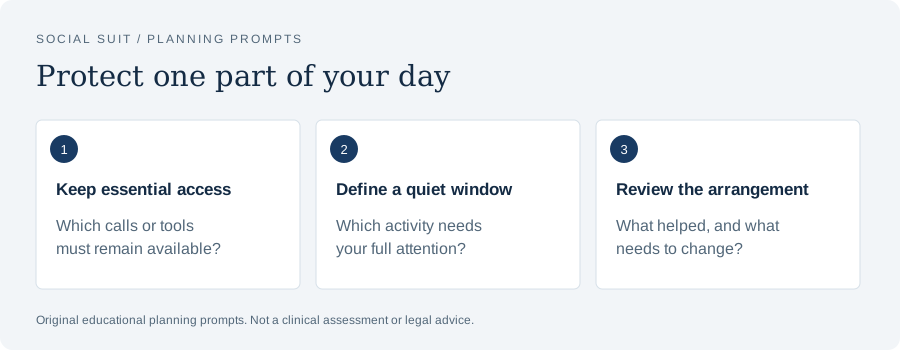
- Keep essential accessWhich calls or tools must remain available?
- Define a quiet windowWhich activity needs your full attention?
- Review the arrangementWhat helped, and what needs to change?
Use endpoints tied to the next event
An endpoint can be a clock time, a timer, a finite item, or the next scheduled event. Choose one that you can detect without constantly checking. If a meeting begins soon, the break should end early enough to prepare for it. If the next task has no external start time, a timer or a written transition may help. The endpoint should be selected before opening entertainment. Otherwise, each new recommendation can become a reason to delay the decision about when the pause ends.
Link the endpoint to an action. When the cue arrives, close the item, put the phone in its chosen spot, and begin the next work step. A cue without an action may simply be dismissed. Write the first step in advance if returning usually feels difficult. The connection between endpoint and task is what makes the break bounded. You are not relying on a feeling that you have seen enough content or become fully ready, because those feelings may not arrive within the available window.
For a finite item, check that its length fits the pause and leaves room for transition. A long article may be valuable but unsuitable for a brief break if stopping midargument repeatedly feels difficult. Save it for a longer period and choose a shorter format now. A direct message can also expand if it opens a complex conversation. Set expectations or choose a different time for that conversation. Finite content is easier to plan around, but it still needs to fit the actual interval.
If you routinely ignore an endpoint, inspect the format and context rather than adding louder reminders indefinitely. Perhaps the feed has no natural exit. Perhaps the next task is unclear or unpleasant. Perhaps the planned pause is too short to meet the need. Each explanation suggests a different correction. A stronger alarm may be useful in some circumstances, but it cannot resolve every mismatch. The plan should make stopping reasonable and beginning the next action clear, not merely increase the number of signals you dismiss.
Change the input after demanding screen work
After working with a screen, ask whether the break should involve another screen at all. The answer depends on access and the task. You may need a phone to communicate or to use an assistive function. You may also have the option to look away from information for a few minutes. Choose the practical change you want. A recommendation feed often introduces new topics, decisions, and emotional cues; if you wanted less input, that format may be a poor match even when it is entertaining.
Consider a pause that leaves the work information behind without creating a new unresolved stream. You might stand or adjust position if that is comfortable, prepare a drink, look at a familiar space, or sit with no additional content. Avoid prescribing one posture or movement for everyone. Mobility, pain, equipment, and environment vary. The relevant question is whether the activity gives you a feasible change from the preceding task. An accessible position change can be as deliberate as a walk when walking is not an appropriate option.
If audio is useful, choose it deliberately. A finite recording can provide a different kind of input, but an endless autoplay sequence may recreate the same expansion problem. Decide whether you will stop at the end of one item or at the return cue. If listening continues into the next task, consider whether it helps or competes with that task. The break's format should be assessed by what happens afterward, not by the assumption that audio is always less demanding than a visual feed.
Record a simple comparison across a few ordinary breaks. Did a low-information pause make the return easier, harder, or unchanged compared with feed browsing? Did it meet the need you identified? You are gathering personal practical observations, not proving a universal effect. If the alternative feels unhelpful, try another that fits the same need. The useful result may be that a conversation works better than quiet for one kind of task, while quiet works better after a difficult meeting. Keep those distinctions.
Make movement optional and appropriate
Some breaks can include movement, but the activity must fit the person's abilities, health circumstances, and setting. A comfortable change of position, a short walk where appropriate, or a familiar movement already suitable for you may provide a useful change. Do not treat a break guide as permission to begin an activity that conflicts with medical advice or creates pain. If you have specific guidance, follow it. The plan should support the pause, not require you to prove that you can perform a standard routine.
Choose a movement with a clear endpoint. Walking to refill a bottle may fit a short interval better than beginning an open-ended outing. Adjusting your work position may be sufficient when leaving is impractical. If you use mobility aids or need assistance, account for preparation and return time. A supposedly quick activity can take longer in your circumstances, and the schedule should acknowledge that. Do not judge the break by someone else's estimate of how long the activity should take.
In a workplace, follow the relevant safety rules and duties. A person monitoring equipment or caring for others may need coverage before leaving. Clarify that coverage rather than simply walking away because a timer ended. If leaving is not possible, identify a permitted pause or position change and discuss the broader need for breaks with the appropriate person. A personal feed boundary does not replace organizational responsibility for a workable environment. The practical plan should preserve safety while making ordinary needs visible.
If movement does not fit the moment, choose another option without treating the break as inferior. Rest, a meal, quiet, or a direct conversation may be more appropriate. The menu exists so that the pause can respond to different needs. Requiring the same activity every time can turn the break into a burden or exclude someone whose circumstances differ. Evaluate whether the chosen activity helped you return or met the purpose of stopping, rather than whether it matched a prescribed image of active rest.
Keep social breaks direct
A desire for connection can lead to a feed even when the feed does not provide the kind of interaction you want. Ask whether you are hoping to speak with someone, see a specific person's update, or simply be entertained by other people's activity. Those are different purposes. A direct call or message may better fit the first. A deliberate visit to a known page may fit the second. A recommendation session may fit entertainment if it has a suitable window and endpoint. Naming the purpose gives you a more useful choice.
For a brief direct interaction, state the time available. You can say that you have a few minutes before returning to a task and will continue later if needed. Follow through on later contact when you promise it. This preserves connection while making the pause understandable. If the conversation becomes important and needs more time, choose whether it should replace the next task. A priority change can be appropriate; what matters is that it is a decision rather than an accidental expansion disguised as a short break.
Avoid repeatedly checking for a reply during the rest of the pause. Send the message, decide when you will check, and choose another activity if no immediate response is expected. Refreshing can turn the connection attempt into a waiting loop that does not meet the original need. Clarify response expectations with the person when appropriate. Friends have their own responsibilities and may not be available on the same schedule. A break should not create pressure for another person to be instantly responsive merely because you have a free interval.
If a group discussion often expands, move the break interaction to a specific question or a later window. You may read a summary, answer the item directed to you, or defer the thread. Do not assume all group activity must be processed before you can return to work. A conversation can remain available without occupying every pause. The boundary should preserve the useful relationship and its purpose while recognizing that the feed or thread may have more material than the break can reasonably hold.
Use entertainment deliberately when you choose it
Entertainment can be a valid purpose for a break. Choose the content or format before opening the app where possible. A saved clip, one familiar creator's update, or a finite puzzle may be easier to fit than an unlimited recommendation stream. Decide the endpoint and the next action. The value of the choice lies in its fit with the pause, not in whether the content is educational. You do not need to justify every enjoyable activity as self-improvement in order to include it deliberately.
Assess the surrounding design. Does one item automatically lead to another? Does opening the content also show comments that you feel compelled to read? Does the app return you to a recommendation screen when the item ends? Those routes matter because they can change the activity after the original choice is complete. Use available controls or a narrower route where practical. If the design makes a brief visit repeatedly difficult, save the format for a longer entertainment period and choose a different break activity.
Do not rely on an item being short as proof that the session will be short. Several brief items can form a long sequence. The endpoint must apply to the session, not just to each piece of content. If you find yourself saying 'one more' repeatedly, return to the agreed cue. Close at the next reasonable point and begin the resumption action. You can note later that the format tends to expand. That finding can guide the next break without requiring a dramatic restriction on the entire day.
If you prefer feeds and want to keep them in breaks, test a bounded version honestly. Choose a short window, a usable reminder, and a clear next action. Record whether you return when planned and whether the break serves its purpose. If it consistently works, retain it. If it consistently expands, revise the window or format. A useful plan should respond to observed behavior. Neither a universal ban nor a universal reassurance that brief scrolling is harmless can substitute for understanding what happens in your circumstances.
Prevent the return from depending on motivation
Before the break, reduce the effort required to restart. Leave the relevant document open, place the needed tool ready, and write the next action. Do this only where it is appropriate and secure; do not leave sensitive information exposed in a shared setting. A task that is ready to resume requires fewer decisions than one that must be reconstructed. The return cue should lead into that prepared action. Waiting until you feel enthusiastic can leave the feed as the easier available activity indefinitely.
Start with a small reentry step. Read the last sentence, check the next instruction, or handle the first item in the remaining pile. The step should be part of the work, not another preparatory ritual that can expand. Once it begins, decide whether to continue the planned interval or revise the task based on new information. The point is to get back into a concrete action. A large instruction such as 'finish everything' may recreate the uncertainty that made the break difficult to end.
If returning is repeatedly unpleasant, examine the task itself. Is it too large, unclear, inaccessible, or unsupported? Does it involve a conversation you are avoiding? A break plan can help with the transition but may not solve those conditions. Clarify instructions, ask for help, divide the work, or discuss priorities. The practical method in single-tasking when your phone is nearby connects an interval to a visible result, which can make the return more specific.
Do not turn every return into a test of character. Some days involve fatigue, unexpected demands, or a task that needs more support. Record the obstacle and choose the next reasonable action. If the work must stop, close it deliberately and decide when or how it will resume. That is more useful than sitting in a feed while feeling vaguely obligated to work. A clear stop can protect rest; a clear return can protect the task. Both are better defined than an indefinite pause.
Plan breaks in a shared household
At home, a work break can become the moment when every household request arrives. A partner, child, or relative may reasonably need something, and you may also need a pause. Clarify the available interval and what belongs in it. Some tasks can be handled now, some need a separate time, and some may require a change of priority. Avoid pretending that a home break is always uninterrupted personal time. Design the plan around the household you have rather than an ideal private room.
If you want connection during the break, choose a brief shared activity or conversation. Put the feed away if it repeatedly fragments that interaction. The purpose is to be available for the chosen exchange, not to prove that phones are absent. Necessary communication or accessibility tools can remain. State when you will return to work so the other person understands the transition. If the household needs more from you than the interval can hold, discuss the broader arrangement at a time when neither person is rushing.
If breaks repeatedly fill with chores, ask whether ordinary rest has a place elsewhere. A household task may be a useful change from desk work, but it is not automatically restorative. Evaluate whether it meets the need that prompted the pause. If you are already overwhelmed by responsibilities, adding another task to every break may make the return harder. A short period of rest can be a legitimate choice. The feed boundary should not force every available minute into labor in order to count as successful.
Keep shared expectations concrete. 'I can help with this now and then return to the draft' is easier to understand than disappearing behind a screen or becoming available indefinitely. Do not ask other people to enforce your break endpoint unless they have agreed to that role. They can support a chosen plan without policing the device. A workable arrangement respects each person's responsibilities and autonomy while making the timing of work, rest, and conversation more predictable.
Plan breaks in jobs with response duties
Some roles require frequent responses or continuous coverage. In those roles, distinguish a permitted break from an unattended duty. Follow the actual procedures and clarify who covers urgent work. If the phone carries required notifications, preserve them. You may still defer nonwork feeds and choose a pause that fits the coverage arrangement. The boundary should make the break more usable without creating a safety or service problem. A general article cannot determine what your role permits, so obtain the relevant expectation from the appropriate source.
Where routine messages can wait, communicate the check schedule. A status or team agreement may indicate when you will review ordinary requests and which route is used for urgent matters. Test the urgent route if you change alerts. Avoid assuming that every colleague expects an immediate answer, but do not assume the opposite when the role has explicit requirements. The related article on making work messages less constant addresses how to clarify those expectations before relying on a personal boundary.
When a work message interrupts a break, decide whether it truly needs immediate action. If it does, handle it and then assess whether the break can resume or should be rescheduled. If it does not, note its place in the next check. Do not let a single ordinary notification turn the pause into processing the whole inbox. The original purpose of the break still matters. A required response and a full message review are different tasks, and the distinction can preserve at least part of the interval.
If work routinely consumes every break, raise the practical issue through the appropriate workplace route. Explain the pattern with examples: what interruptions occur, what duties require coverage, and which ordinary needs are left unmet. A more restrictive entertainment setting may reduce one kind of detour but cannot create staffing or clarify a response policy. The plan should help identify where personal choices end and organizational conditions begin. Keep that boundary clear when assessing why a break did not happen as intended.
Test a break menu over several sessions
Choose a few ordinary sessions and use the menu deliberately. Before each pause, name the need and select the activity. Afterward, record whether the need was met, whether the return happened, and what made the transition easier or harder. A few words are enough. You are comparing practical options for yourself, not conducting a controlled experiment. Context matters: a demanding meeting, a quiet sorting task, and a late-night study interval may call for different breaks and should not be treated as identical events.
Include at least one alternative to a feed so you have something meaningful to compare. If every break uses recommendations, you cannot learn whether another format fits the need better. The alternative should be realistic and appealing enough to try. Choosing an unpleasant activity solely to prove discipline may tell you little about a sustainable plan. You want options you would actually use on an ordinary day. Rest, direct connection, or a finite entertainment item can all be part of the comparison.
Review patterns rather than isolated results. A quiet pause may work after writing but feel unhelpful after a lonely morning. A direct message may be useful when the other person is available but lead to repeated checking when they are not. A movement break may fit one setting and be impractical in another. Retain those distinctions. The menu can include conditions: choose this when you need less information, that when you need connection, and another option when leaving the station is not permitted.
Change one part at a time when a break expands. You might narrow the content, move the feed to a longer window, improve the return cue, or shorten the next task to make reentry easier. If you change everything simultaneously, you may not know what helped. A focused adjustment makes the next observation more useful. Keep the successful parts of the arrangement, including necessary access and a break activity that meets a real need, while revising the route that repeatedly sends the pause elsewhere.
Recover from an overlong feed break
When you notice that the break has become a feed session, close it at the next reasonable point. Identify whether you can still return to the planned task or need to revise the schedule. Do not spend the remaining available time reading advice about the mistake. The immediate action is to stop the expansion and choose what happens now. If a deadline is close, use the smallest necessary work step. If the task is no longer feasible today, close it deliberately and plan the next opportunity.
Review later using the sequence. What need prompted the break? What content did you choose? What endpoint did you set? What happened when the endpoint arrived? This identifies where the plan changed. Perhaps there was no cue, the next task was unclear, or a conversation became genuinely important. Different explanations deserve different responses. A factual review is more useful than calling yourself undisciplined because it points toward an adjustment you can test next time.
If the feed repeatedly expands despite reminders, choose another break format for the short intervals. Preserve feed entertainment in a window large enough to hold it, if you still want it. This is a fit decision about time and design. It does not require a declaration that you will never use social media again. A direct message, finite saved item, or low-information pause may offer a more workable endpoint between tasks. Select the substitute based on the original need, not merely on what seems most virtuous.
The guide on what to do after a scrolling setback can support a broader review when the pattern affects several parts of the day. Bring concrete examples rather than a totalizing judgment. An overlong break may reveal a task problem, a need for rest, an unclear response expectation, or a feed format that is difficult to end. More than one factor can matter. The next plan should address the observed conditions while leaving a simple recovery step for the next time the sequence changes.
Match late-day breaks to the next destination
Near the end of work or study, decide whether the next destination is another interval or the end of the day. A break before one final task may need a clear return cue. A transition into the evening may need a closure note and an intentional next activity. If you keep treating the evening as a temporary pause from unfinished work, you may remain neither rested nor working. Define what is ending, what remains for tomorrow, and what you want the next part of the day to contain.
If the next destination is bedtime preparation, avoid assuming that the same feed format used in an afternoon break fits that period. Decide what entertainment belongs there and what can wait. The NHLBI healthy sleep habits guidance recommends a quiet period before bed and attention to the sleep environment. That supports considering the sequence, without proving that one feed session caused a particular sleep problem. Use the guidance alongside your circumstances and seek professional advice for persistent concerns.
The practical steps in protecting the last hour before bed can help when a late break repeatedly becomes another long session. The relevant question is whether the pause has a return, an ending, or a transition to rest. Choose the state deliberately. A device can remain available for essential contact while optional recommendations have a different destination. The evening boundary should support your needs rather than extend a workday indefinitely or make ordinary entertainment feel prohibited.
For irregular schedules, use the same distinction around your actual rest period. A person working nights may reach this transition in the morning. Conventional clock labels matter less than what comes next. Close the current work, preserve essential communication, and choose a break or rest activity suitable for that destination. If scheduling leaves little opportunity for rest, address that larger issue where possible. A break menu can support a transition but cannot solve every constraint imposed by work, care, or health.
Seek support when breaks cannot address the concern
For recurring sessions, keep the menu where you can use it without opening another app. A short note might name one option for quiet, one for connection, and one for ordinary needs. Remove choices that repeatedly prove impractical in the setting. If the menu requires a long search, special equipment, or someone else's immediate availability, simplify it. The purpose of preparation is to make the pause easier to choose at the moment you need it, not to create another project to manage between tasks.
If fatigue, distress, pain, or difficulty functioning persists, seek appropriate professional advice. A break experiment can describe what you notice, but it cannot assess the cause. Bring observations about when the difficulty occurs, what activities precede it, and what changes you have tried. Do not postpone care because you think you first need to find the perfect break. Ordinary self-care and qualified support address different parts of well-being, and both may be relevant to your circumstances.
When online experiences involve serious harm, respond to that harm directly. Platform reporting, a trusted support person, healthcare, or qualified legal advice may be appropriate depending on the situation. Social Suit's legal process information provides preparation topics for questions about a possible claim without determining eligibility or promising an outcome. Keep factual observations distinct from conclusions, and ask about secure sharing before sending sensitive records. A break boundary should not become a substitute for support that the underlying experience requires.
Choose the next break with four details: the need, the activity, the endpoint, and the return action or closure plan. Keep those details brief enough to use during a demanding day. You may choose rest, connection, necessary care, or entertainment. What makes the plan useful is the relationship between the choice and the pause's purpose, together with a clear way to leave the activity when the available interval ends. That gives you a decision point where an open-ended feed would otherwise keep offering reasons to continue.
Sources and further reading
These primary resources provide context. Our practical examples and planning suggestions are original educational material, not validated treatment protocols. Linked organizations do not endorse Social Suit.