 Social Suit
Educational information, not individual medical or legal advice. Practical examples are hypothetical and do not describe clients or study participants. This article is not represented as reviewed by a clinician or attorney. How we prepare our guides.
Begin with the concern that brought you to the conversation
You can ask a professional for help with social media use without first proving that you have an addiction or choosing a diagnosis. Start with what troubles you. Perhaps you stay online after intending to stop, miss responsibilities, lose sleep, feel distressed after certain content, or find that checking interrupts activities you value. A concrete description gives the conversation a useful starting point. The professional can consider the behavior alongside your wider circumstances. Your role is to explain the experience as accurately as you can, rather than establish the clinical answer before the assessment begins.
The number of minutes on a device may be relevant, but it is not a complete account. A long conversation with a distant friend can serve a different purpose from an equally long session in an upsetting recommendation stream. The timing, content, degree of choice, and consequences all matter. If your concern is missing sleep, explain the bedtime pattern. If it is difficulty concentrating, describe what interrupts you and when. If it is distress after a feed, identify the kinds of interactions involved. This detail helps the professional understand why the behavior matters to your life.
Consider a hypothetical person who says only that they use an app too much. That statement may be sincere but leaves many questions open. Compare it with an account that they plan to answer messages after dinner, become absorbed in recommendations, and then postpone a needed task until late at night several times a week. The second description identifies intention, sequence, frequency, and impact. It still does not establish a diagnosis. It simply makes the concern easier to discuss. You can prepare that level of information through a few examples rather than a complete archive of every session.
Choose a suitable starting point for support
An appropriate starting point depends on your location, access, age, existing care, and the nature of the concern. A primary care provider, qualified mental health professional, school or university health service, or reputable local service may help you begin. If you already receive care, you can raise the issue with that provider. The National Institute of Mental Health offers general information about finding help and mental health treatment. Verify current availability, qualifications, costs, and eligibility directly with the service. A directory or public page can orient you, but it does not guarantee that a specific provider is accepting appointments.
If the first service is not appropriate, ask where it can refer you. You do not need to interpret an unavailable appointment as evidence that the concern is unimportant. Providers may have different specialties or capacity. Explain the kind of help you are seeking: an assessment, support with a behavior pattern, discussion of distress, or another concern. This can help the service identify a suitable route. Be clear about practical barriers such as cost, transportation, work hours, language, or disability access. Those details may affect which arrangements are realistic for you.
Online appointments may be useful in some circumstances, but they still need appropriate professional qualifications and processes. Ask whether the provider can serve someone in your location and how privacy, records, and urgent situations are handled. Do not assume that a person offering advice through direct messages is providing professional care. A real service should explain the relationship and its limits. Familiarity with a creator or account is different from verifying a provider. Choose a route that can answer the practical questions required for an individual conversation about your health.
Prepare a few examples that show the pattern
Select two or three ordinary examples that illustrate the concern. For each, note what you intended to do, what occurred, and what was affected. You might include a late night session, an interrupted work task, or an upsetting conversation. Keep the description factual and short. You do not need to record every notification or reconstruct exact durations unless those details are useful. A rough account that accurately explains the sequence may be more informative than a precise number without context. The examples should help the professional ask further questions.
Include an example that went well if it helps show the contrast. Perhaps you can answer messages and leave easily in the afternoon, while evenings are more difficult. Perhaps a creative group remains helpful, while a recommendation feed causes distress. These differences can point toward relevant contexts. They also protect useful activities from being overlooked. An assessment should not assume that every online interaction has the same function. Explain the benefits you would like to preserve as well as the patterns you want to change. That gives the conversation a fuller picture of your goals.
Do not edit the account to match a label you encountered online. If a video described a condition, you can mention that it prompted a question, but include details that do not fit the video's story too. A qualified assessment needs your circumstances, not a selected set of examples designed to prove a conclusion. It is acceptable to say that you are unsure how to interpret the pattern. Uncertainty is a reason for asking questions, not a failure to prepare. Your notes can identify the concern while leaving room for the professional to consider several explanations.
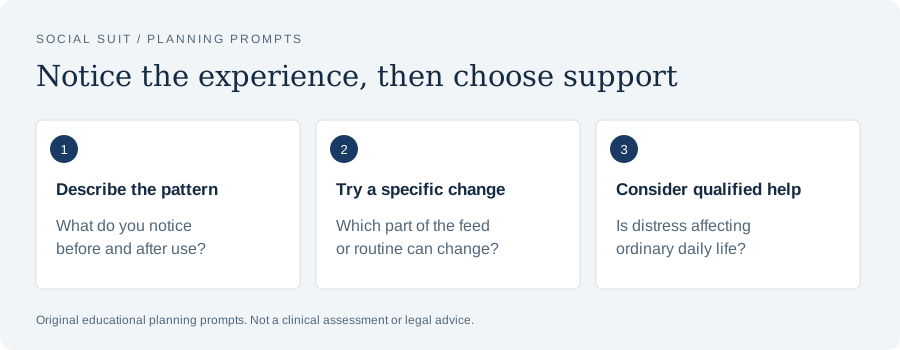
- Describe the patternWhat do you notice before and after use?
- Try a specific changeWhich part of the feed or routine can change?
- Consider qualified helpIs distress affecting ordinary daily life?
Explain when the pattern began and what changed
A timeline can help the professional understand context. Note approximately when you first noticed the difficulty and whether it changed around a move, a new job, a relationship event, a health issue, or another circumstance. You do not need to establish that one event caused another. Describe the sequence and say what you are unsure about. If use has varied over time, explain the variation. A recent increase during a stressful period may call for different questions from a pattern that has been present across several settings for years.
Mention changes in the platform experience when relevant. You may have joined a new community, begun receiving different recommendations, changed notification settings, or taken on work that requires online activity. These details can help distinguish a new exposure from a broader pattern. At the same time, do not assume that the platform change explains every difficulty. Sleep, stress, mood, relationships, and responsibilities may also have changed. A timeline that includes both online and offline events gives the professional more information than one that focuses only on app updates or usage graphs.
If you cannot remember exact dates, use ordinary anchors. You might say the pattern became noticeable after the semester started or during the months following a move. Avoid inventing precision. The purpose is to make the development understandable, not to create a legal chronology. If records are available and relevant, you can consult them privately, but you do not need to collect unrelated sensitive material. Keep preparation proportionate to the conversation. A few accurate landmarks can be enough to begin, and the provider can ask whether more detail would be useful.
Describe impact through everyday activities
Impact is often easier to explain through a specific activity than a broad statement. Instead of saying that social media is destroying productivity, describe that you postpone starting an assignment after opening the app or miss a departure time while reading replies. Instead of saying it harms relationships, explain that you check during a conversation and the other person feels ignored. Instead of saying it ruins sleep, describe your intended bedtime and what happens. These accounts avoid exaggeration while showing why the concern deserves attention. They also identify outcomes you may want to improve.
Include the effect on activities you value, not only obligations. You may miss time for a hobby, avoid a social plan, or feel unable to enjoy a quiet evening because of repeated checking. Those consequences can matter even if work or school performance has not changed. Explain what you want more room for in your life. A goal such as being able to cook dinner without returning to a thread is concrete and understandable. It gives the conversation a positive direction beyond reducing a number. The focus can be on supporting chosen activities and relationships.
Be clear about severity without using dramatic language to earn attention. If the impact is substantial, say so and provide examples. If the concern is emerging and you want to address it early, that is also worth explaining. You do not need to wait for a crisis before seeking help. The professional can consider how much the pattern interferes and what support may fit. A careful account makes it easier to assess than either minimizing the issue or assuming that only the strongest wording will be taken seriously.
Include feelings and wider circumstances
Describe emotional experiences in ordinary terms: worried, irritated, isolated, encouraged, ashamed, overwhelmed, or relieved. Note whether they occur before, during, or after use and how long they seem to last. Timing can provide useful information, but it does not by itself prove causation. If you were already stressed before opening the feed, include that fact. If a particular thread appears to change your mood, describe it. A fuller account allows the professional to consider the interaction between the online experience and the circumstances that surround it.
Mention relevant sleep, stress, health, relationship, or work concerns rather than keeping the conversation narrowly inside the app. The provider may ask about these areas because behavior does not occur in isolation. You can say when a question feels private and ask why it is relevant. Understanding the purpose of a question can make the assessment easier to follow. You do not need to publish these details online to obtain support. A professional conversation offers a different setting, with privacy and record arrangements that should be explained by the service.
Avoid assuming that one explanation must exclude another. A difficult feed may contribute to distress while an existing stressor also makes the feed harder to manage. A useful online relationship may provide support while repeated checking creates interruptions. The professional can help examine these combinations. Your preparation can keep them visible by describing both benefits and costs. A balanced account does not weaken the concern. It helps prevent a simplistic recommendation that removes something valuable or overlooks a broader issue that would remain after a platform change.
Explain what you have already tried
Tell the provider about changes you attempted and what happened. These might include muting accounts, changing notifications, setting time reminders, moving the app, taking a break, or using a different communication route. Describe the intended purpose and the actual result. A time limit may have shortened browsing but made useful messages harder to access. A break may have reduced distress but increased isolation. A notification change may have helped at work but not at bedtime. These details give the professional information about practical fit and tradeoffs.
Do not present an unsuccessful attempt as proof that you cannot change. It may show that the strategy did not match the pattern, that the context changed, or that broader support is needed. Explain the obstacle specifically. You might have relied on a reminder that was easy to dismiss, or removed a service that was also your main route to a community. Specific obstacles can be discussed. A statement that you failed at everything may obscure the parts that did help. Include partial improvements as well as difficulties so the provider can understand what was learned.
Mention any advice, programs, or products you have followed when relevant, particularly if they affect health decisions. Be honest about what you used and why. A professional needs accurate information, and you do not need to defend every earlier choice. If you are unsure whether a program's claims are reliable, bring the question. Do not change prescribed care solely because of a creator's recommendation. Discuss health related decisions with an appropriate provider. This article can help prepare the conversation, but it cannot determine which treatment or medical change is right for you.
Identify useful online activities you want to preserve
Social media may provide family contact, accessibility communities, creative collaboration, work information, or friendship across distance. Explain those benefits explicitly. A recommendation that ignores them may be difficult to maintain or may remove support you need. You can ask how a plan would preserve direct contact while addressing the troublesome pattern. The answer may involve a different route, a narrower boundary, or another source of support. The details depend on your circumstances. The goal is to discuss a realistic arrangement, rather than assume that complete withdrawal is the only meaningful change.
List the functions rather than only the platform names. Messaging a distant sibling, coordinating a club, and following local alerts are different activities even if they occur in the same service. When functions are clear, alternatives become easier to consider. A club may have an email list. A family may use direct messages. An official alert may be available through another page. Some functions may not have an equally accessible alternative, and that matters too. Tell the professional about those limitations. A practical plan should fit the ways you actually communicate and obtain information.
If a benefit coexists with serious harm, describe both without allowing one to erase the other. A group may offer useful advice while also tolerating harassment. A friendship may be meaningful while involving pressure for constant availability. Preserving a benefit does not require accepting every cost. Ask how to evaluate the situation and what support is appropriate. Safety concerns deserve their own response, and they should not be treated only as a routine problem of self control. The professional conversation can help clarify which parts need a behavior plan, which need boundaries, and which need other assistance.
Ask how the assessment will consider the broader picture
A useful question is how the provider will evaluate the concern alongside other circumstances. You might ask what information they need, what possibilities they are considering, and how they distinguish a troublesome habit from another difficulty. You do not need to request a particular diagnosis. Ask for an explanation of the process in language you can understand. If a term is unfamiliar, ask what it means and how it relates to your examples. Clear communication helps you participate in the assessment rather than simply receive a label.
The provider may need more than one conversation or additional information. Ask what the next step is and why it is relevant. If a referral is suggested, clarify what the referred service can provide. If the provider does not work with this concern, ask for an appropriate route rather than assuming the issue cannot be addressed. The assessment should leave you with a clearer understanding of the process, even when an immediate conclusion is not available. Uncertainty can be communicated honestly. A thoughtful explanation should distinguish what is known, what remains open, and what would help clarify it.
You can also ask how your own goals will shape the plan. Perhaps the most important outcome is protecting sleep, returning attention to work, reducing distress from content, or preserving valued relationships. Tell the provider which outcome matters most and what constraints you face. A plan may need to address several areas, but priorities help make it manageable. If a proposed step feels unrealistic, explain the practical obstacle. The conversation can then consider adjustments rather than treating disagreement as unwillingness to receive help. Your circumstances are part of the information needed for a suitable plan.
Discuss options without expecting a universal prescription
General mental health resources describe different kinds of support and care, but an individual plan depends on an assessment. The National Institute of Mental Health's information about psychotherapies can orient you to questions about professional approaches. It does not tell you which approach you need. Ask the provider what an option is intended to address, what participation involves, what limits apply, and how its usefulness would be reviewed. These questions help you understand the recommendation. They also prevent a familiar term from substituting for an explanation of what would actually happen.
If the provider suggests a routine change, connect it to an outcome. Ask whether the purpose is reducing interruptions, protecting a sleep period, changing exposure to distressing content, or another goal. Clarify how to preserve useful activities and what to do if the change creates problems. A plan is easier to follow when you know why a step exists. It is also easier to review. You can report whether the intended outcome improved, whether the step was manageable, and whether unexpected costs appeared. That information can guide the next conversation.
Avoid demanding that one suggestion solve every concern immediately. A practical boundary may address one pattern while broader care addresses another. Improvement can be evaluated through concrete outcomes rather than a promise of complete relief. At the same time, you should be able to ask questions about a recommendation that seems unclear or unsuitable. Appropriate care includes explanation and review. If you are considering changing providers, seek a suitable route and understand any continuity needs. This article cannot direct treatment decisions, but it can encourage questions that make those decisions more understandable within professional care.
Clarify privacy, records, and communication between appointments
Ask the service how confidentiality and records work, including any relevant limits. The details may depend on your age, location, service type, and circumstances. Do not rely on assumptions drawn from a social media interface or another person's experience. If you are unsure what information is recorded or shared, ask directly. You can also ask what communication channels are available between appointments and what kinds of questions they are intended for. A clear process helps prevent confusion about whether a message is monitored or how quickly a reply may arrive.
If you bring screenshots or usage reports, consider whether they include other people's private information. You may be able to describe the relevant event without exposing names or unrelated messages. Ask the provider what material is useful and how to send it securely. Do not post your intake details publicly to obtain a second opinion from strangers. A professional record process and a public comment thread have different functions. Protecting privacy during preparation can be part of making the conversation easier, especially when your concern involves a relationship or a sensitive online incident.
Clarify urgent procedures separately from routine messaging. Ask what to do if a concern becomes urgent and what the service cannot provide outside appointments. In an immediate safety emergency, contact relevant emergency help. In the United States, calling or texting 988 can connect you with the Suicide and Crisis Lifeline. Use appropriate local crisis resources elsewhere. Do not assume that an unread portal message or a provider's social media account is an emergency response route. Knowing the limits in advance allows you to use the right channel when circumstances change.
Prepare for cost and access questions
Practical arrangements can determine whether care is sustainable. Ask about fees, insurance, payment options, cancellation policies, appointment length, and availability. If you have a budget limit, say so and ask about appropriate alternatives or referrals. Verify current details with the service rather than relying on an old directory listing. A provider's general reputation does not tell you whether the arrangement fits your finances or schedule. These questions are ordinary parts of planning care, and they do not diminish the importance of the concern you want to discuss.
Accessibility needs deserve explicit consideration. You may need captions, an interpreter, a physically accessible location, a particular appointment time, or a format that works with limited technology. Tell the service what would make participation possible. You do not have to disclose more than necessary merely to ask about access. If the service cannot meet the need, ask where another route may be available. A plan that is clinically appropriate in theory still needs to be usable. Practical barriers are information for planning, not evidence that you are unwilling to seek support.
If arranging an appointment feels difficult, a trusted person may help with a limited task such as finding contact information or sitting with you while you call. Decide what you want them to know and what you want to handle privately. Support can be useful without giving another person control over the whole process. If you are a minor, an appropriate trusted adult may help navigate access and relevant consent arrangements. The details vary, so ask the service about the process. The aim is to make the next step concrete and appropriate to your circumstances.
Set goals that can be reviewed through daily life
Goals are often clearer when they describe what you want to do. You may want to finish an evening routine without returning to a feed, participate in a conversation without checking notifications, or access helpful messages without becoming absorbed in recommendations. These goals provide observable reference points. A smaller usage total may be one measure, but it does not necessarily show whether the important activity improved. Ask the professional how progress will be reviewed and what information would be useful. The review should connect the plan to the reason you sought help.
Keep room for variation. A busy week, a family event, or a temporary work need may change use. A plan should distinguish meaningful exceptions from the pattern that troubles you. If you spend longer online for an important conversation, that does not automatically mean the plan failed. If a brief session exposes you to serious harassment, a low duration does not mean it was harmless. Amount and impact need to be considered together. Discuss how to interpret these situations so the review remains useful rather than becoming a rigid score of success or failure.
If a goal is not improving, describe the obstacle and bring it to the next conversation. Perhaps the chosen cue does not occur at the right time, or a boundary removes a necessary communication route. Perhaps distress persists even when use changes. These findings can guide review. Do not silently assume that the only response is to make the rule stricter or blame yourself. A professional plan should be able to use new information. The purpose of follow up is to understand what happened and decide what adjustment or further support may be appropriate.
Keep tracking proportionate to its purpose
A short record can support a professional conversation, but it does not need to become continuous self monitoring. Ask what level of detail is useful. You may only need a few examples each week, a note about a particular consequence, or a summary of how a change went. If tracking increases anxiety, shame, or repeated checking, mention that too. A tool should help clarify the concern. It should not create another burdensome pattern that goes unexamined. The provider can discuss whether a simpler approach would provide the necessary information.
Keep observations separate from conclusions. Write that you checked a thread repeatedly while waiting for a reply, rather than that the behavior proves a diagnosis. Write that a session delayed bedtime, rather than that it caused every difficulty the next day. You can include your interpretation, but label it as a question or possibility. This makes the record easier to use and leaves room for professional assessment. It also protects against a feed of diagnostic content shaping every observation before the conversation occurs. Your actual experience is more useful than a borrowed explanation.
Store notes in a place that fits their sensitivity and limit access. Avoid including unnecessary identifiers about other people. If the material concerns a safety incident, ask an appropriate professional how to handle unusually sensitive evidence rather than distributing it widely. Routine behavior notes and a formal incident record are different tasks. You can prepare for care without collecting every upsetting message. The most useful information may be what happened, how it affected you, and what you need help with. More material is not automatically better preparation.
Bring doubts and disagreements into the conversation
You may worry that a provider will dismiss online relationships, focus only on a number, or misunderstand what the platform does for you. State the concern directly and explain the benefit you want preserved. You might say that a community is important because local access is limited, but that recommendations around it are causing distress. This gives the provider a chance to respond to the actual tradeoff. A productive conversation should be able to discuss both useful connection and problematic patterns. You do not need to defend the entire platform to explain one valuable function.
If you disagree with a recommendation, ask for its reasoning and describe the practical issue. Perhaps the proposed change would interfere with work or remove contact with family. The provider may adjust the plan, explain why a step matters, or suggest another route. Disagreement can supply useful information when it is specific. If you continue to feel unheard, consider how to obtain an appropriate second opinion or another provider while accounting for continuity of care. Do not use a creator's certainty as the sole basis for rejecting professional advice. Evaluate the explanation through a suitable clinical conversation.
You can also ask how uncertainty will be handled. The provider may not be able to determine immediately which factor matters most. A clear plan can still describe the next observation, conversation, or referral. Ask what would lead to revising the approach. This makes the process more understandable and avoids expecting an instant answer to a complex pattern. Your concern deserves attention even when its explanation is not simple. Honest uncertainty and concrete next steps can coexist, and a careful assessment should make room for both.
A worked example: seeking help before choosing a label
Imagine a hypothetical person named Casey who repeatedly stays online after intending to stop. Casey watches a creator who calls the behavior an addiction, but is unsure whether that term applies. They arrange an appointment and prepare three examples. One involves recommendations delaying sleep, another involves repeated checking during a work task, and a third involves a useful conversation that ended on time. Casey also notes a recent stressful change and the online friendships they want to preserve. The preparation describes the pattern without selecting the diagnosis in advance.
During the appointment, Casey explains the impact and asks how the assessment will consider wider circumstances. The provider asks follow up questions and discusses a next step appropriate to the assessment. Casey asks what the step is meant to improve and how to report the result. They also clarify costs, communication, and urgent procedures. The conversation does not need to produce a dramatic declaration about every platform. Its value is that Casey now has a process for understanding the concern and reviewing support, with their circumstances included rather than replaced by a video's explanation.
At follow up, Casey reports that one boundary helped with work interruptions but not with late night use. They explain what happened instead of calling the attempt a total failure. The provider can use that information in the ongoing assessment and plan. This hypothetical example does not specify treatment or promise an outcome. It illustrates how concrete examples, clear goals, and review can support an individual professional conversation. The decision to seek help did not depend on proving a label. It depended on a pattern that Casey wanted to understand and change.
A worked example: preserving an important community
Consider a hypothetical person named Dana who relies on an online community because in person activities are difficult to access. Dana is distressed by hostile recommendations and repeated arguments surrounding the community. They worry that asking for help will result in an instruction to leave everything. Before the appointment, Dana lists the functions the community provides: shared activities, familiar conversation, and practical information. They separately describe the content that causes difficulty. This account makes the tradeoff visible and allows the professional conversation to consider the valued connection alongside the concern.
Dana asks whether the plan can distinguish direct participation from surrounding browsing. They explain access limitations and ask about alternatives that are actually usable. The provider's assessment considers the wider situation, and Dana requests clarification whenever a suggestion seems impractical. The process may involve several steps, but it remains connected to Dana's life. A recommendation is easier to evaluate when its purpose and limits are clear. Preserving useful support is a legitimate goal, and addressing harmful exposure is another. The two can be discussed together without assuming that one cancels the other.
If Dana encounters threats in the community, they address those through appropriate safety steps rather than treating them only as a difficulty with mood. They report conduct, seek trusted support, and preserve relevant material carefully when necessary. The professional conversation can include the impact, but it does not replace every other response. Different parts of the situation may require different routes. This example shows why preparation should describe behavior, context, benefits, and safety concerns distinctly. A single time total would not reveal the important features of Dana's experience.
Leave with a next step you understand
Before the appointment ends, summarize what you understand and ask about anything unclear. What is the next action? What is it intended to address? What information should you bring back? When is the review? What should you do if the concern changes or becomes urgent? You do not need a perfect memory of every detail. Ask whether the service provides a written summary or instructions when appropriate. A clear next step turns a general conversation into a process you can follow. It also gives you a reference point for questions that arise later.
Keep the plan connected to the original concern while allowing the assessment to broaden it. You may have arrived because of social media use and discovered that other circumstances also deserve attention. That does not make the original concern mistaken. It means the conversation considered the wider picture. Continue reporting both helpful and difficult changes. Protect useful relationships, address concrete harms, and ask for clarification about care decisions. A professional can assess your situation in a way a feed cannot, but your accurate account remains an important part of that process.
The most useful preparation is often simple: a few examples, an approximate timeline, the impact on daily life, what you have tried, and what you want to preserve. You can bring questions without a diagnosis and concerns without proof of causation. Seek qualified support when the pattern troubles you or distress persists, and use urgent help for immediate danger. Social media may be one part of the conversation. Your life, relationships, responsibilities, and well being provide the context that makes the conversation meaningful.
Keep the first request manageable
If you are uncertain how to begin, contact a suitable service and say that a pattern of social media use is affecting daily life and that you would like to discuss it. You can explain details during the appointment. The first contact does not need to contain your whole history. Its purpose is to establish the next appropriate step and understand the service's arrangements.
Sources and further reading
These primary resources provide context. Our practical examples and planning suggestions are original educational material, not validated treatment protocols. Linked organizations do not endorse Social Suit.